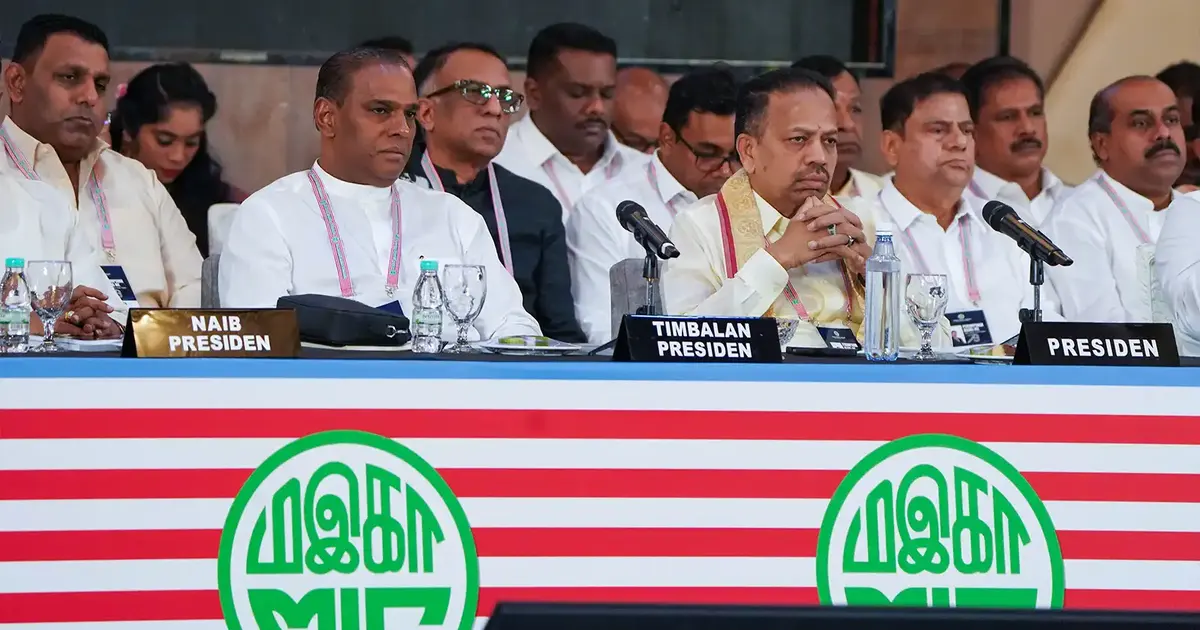
The Malaysian Indian Congress has charted a strategic course for the forthcoming Johor state election, positioning itself to defend two constituencies while relinquishing another to its coalition partner Umno in a carefully orchestrated seat-sharing arrangement within Barisan Nasional. This adjustment to the electoral formula reflects ongoing negotiations within the venerable coalition and underscores the delicate balance required to maintain unity among its diverse membership, particularly as BN seeks to consolidate power in the critical southern state.
MIC's overall footprint in the Johor contest encompasses four seats, a modest but symbolically important allocation for the Indian-based component party. Among these constituencies is Bukit Batu, a seat traditionally associated with the party and viewed as part of its core political territory. The allocation of four seats represents MIC's standing within BN's internal hierarchy and reflects both its historical contributions to the coalition and the contemporary political weight it carries among Malaysia's Indian community.
The decision to defend rather than expand its seat count reflects a pragmatic assessment of the electoral landscape and the realities of coalition politics in Malaysia. Rather than pursuing an aggressive expansion strategy that might strain relationships with other BN components, MIC has opted for a consolidation approach centred on retaining its existing bases of support. This defensive posture may reflect broader demographic trends affecting Indian voters in Johor, changing patterns of political behaviour among this constituency, or simply the demands placed upon coalition members to prioritise overall BN unity over individual component growth.
Umno's inclusion in the seat-sharing equation underscores the continuing primacy of the Malay-Muslim party within Barisan Nasional's structure. The trade-off whereby MIC surrenders one seat to Umno, potentially in exchange for securing the two defensive positions, illustrates how seat allocation negotiations operate at the granular level of coalition management. Such arrangements require detailed discussions about which constituencies are surrendered, which are defended, and how the resulting configuration serves the broader strategic objectives of the coalition as a whole.
Johor holds particular significance for both Umno and BN more broadly. As the southern gateway to Peninsular Malaysia and a state with significant economic and political influence, control of Johor's state assembly carries symbolic and practical importance for the coalition's long-term positioning. Recent electoral cycles have demonstrated the volatility of this state's political preferences, making seat retention strategically crucial for any component seeking to maintain relevance and bargaining power.
For MIC specifically, the Johor election represents an opportunity to demonstrate continued organisational capability and electoral support among Indian voters in a major state. The party has faced considerable pressure in recent years due to shifts in Indian voter preferences and the rise of alternative political voices. Successfully defending seats in Johor provides tangible evidence that MIC retains meaningful grassroots mobilisation capacity and continues to command loyalty within its traditional support base.
The Bukit Batu seat mentioned in the strategic allocation carries particular weight in MIC's calculations. This constituency has historical significance for the party and likely contains a substantial Indian demographic that forms the natural electorate for the component party. Defending this seat is therefore not merely about numerical representation but about maintaining MIC's political relevance in a constituency where it has established institutional presence and community networks.
The broader context of BN's seat allocation process in Johor reflects the coalition's efforts to present a united front against opposition parties who have made significant inroads, particularly in urban and semi-urban areas. By facilitating relatively smooth seat negotiations among components, BN aims to project an image of cohesion and organisational efficiency. However, such negotiations invariably involve disappointment for components seeking larger allocations, and MIC's acceptance of four seats, with only two being actively defended, may represent a compromise between what the party hoped to secure and what other coalition partners were willing to concede.
The implications for Malaysian politics extend beyond Johor's borders. MIC's strategic positioning and electoral performance in the state will signal to other stakeholders the continuing viability of Indian representation within BN's framework. If the party succeeds in defending its allocated seats and mobilising its base effectively, it strengthens the case for maintaining component parties within the coalition structure. Conversely, significant electoral losses would feed ongoing debates about whether the traditional coalition model adequately serves India community interests compared to alternative political arrangements.
For Malaysian Indian voters, particularly those in Johor, MIC's strategic approach invites scrutiny regarding what the party is delivering in terms of representation and advocacy. The willingness to defend specific seats suggests confidence in those constituencies, yet the surrender of one seat to coalition partners may raise questions about MIC's overall political strength and negotiating leverage within BN. These questions become increasingly salient as Malaysian Indian voters continue evaluating which parties and coalitions best serve their interests and policy priorities.
The seat-sharing arrangement also reflects the practical constraints of coalition governance in Malaysia's electoral system. With multiple parties competing for representation, maintaining coalition cohesion requires accepting that not all components can expand simultaneously. MIC's acceptance of a defensive posture, while potentially frustrating for party leadership and activists hoping for growth, demonstrates the organisational maturity required to sustain multi-party coalitions in a competitive electoral environment.