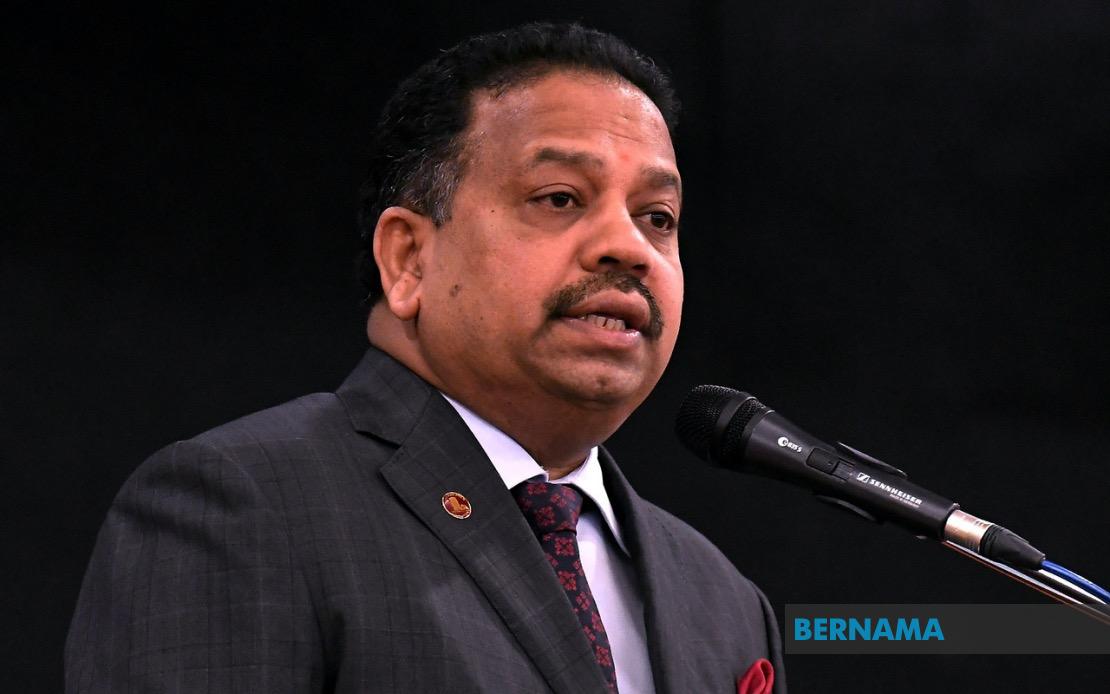
The Malaysian Indian Congress is banking on sustained support from the Indian community in the Johor state election scheduled for tomorrow, with party president Tan Sri S.A. Vigneswaran voicing optimism about the prospects of MIC-backed candidates across contested seats. Speaking at a press conference in Kulai on July 10, Vigneswaran attributed this confidence to the established working relationship between MIC, the federal government, and the Johor state administration in tackling concerns specific to the Indian populace.
The significance of the MIC's positioning in this election reflects broader dynamics within the Barisan Nasional coalition, where the party serves as a crucial channel for engaging Malaysia's Indian minority voters. The 16th Johor state election represents an opportunity for MIC to reinforce its electoral credentials at the state level, where effective collaboration between legislative representatives and government machinery becomes essential for delivering tangible outcomes on grassroots issues. Vigneswaran underscored this point by emphasizing that voters require lawmakers capable of working constructively with the state administration to translate community grievances into actionable policy responses.
MIC fielded four candidates across the election, each representing distinct constituencies within Johor. K. Raven Kumar contested the Kemelah state assembly seat, while V. Rugendran represented the party in Kahang. The Perling constituency saw P. Pannir Selvam as the MIC nominee, and R. Kumaran carried the party's banner in Bukit Batu. This distribution of candidates reflects strategic positioning within constituencies where Indian voters constitute meaningful electoral demographics.
During the campaign phase leading up to polling day, Vigneswaran indicated that MIC adopted what he characterized as a mature political approach, deliberately steering clear of personal criticisms targeting rival candidates. Instead, the party concentrated its messaging on practical solutions addressing everyday challenges faced by Indian households, a strategy that suggests MIC sought differentiation through substantive policy discourse rather than confrontational tactics. This positioning may reflect broader calculations within the coalition about maintaining coalition unity while still pursuing competitive advantage in specific constituencies.
Separately, Vigneswaran addressed claims circulating through a Tamil-language online portal regarding government funding to MIC. The portal had alleged that the party received RM221 million in government assistance, a figure the MIC president flatly rejected as inaccurate and fundamentally misleading in its framing. Rather than denying government support entirely, Vigneswaran clarified the nature and purpose of financial allocations received by institutions associated with MIC leadership.
The clarification centered on AIMST University, a non-profit higher education institution administered through a foundation structure rather than directly by MIC as a political party. According to Vigneswaran, the funding in question comprises annual grants designated specifically for maintaining university facilities and offsetting operational expenses. This distinction carries legal and institutional significance, as it situates the funding within the university's administrative framework rather than as political party funding, a differentiation that carries implications under Malaysia's political financing regulations.
Since Datuk Seri Anwar Ibrahim assumed the Prime Minister's office in 2023, the federal government has allocated RM25 million annually in grants to AIMST University, with the current year included in this commitment. Vigneswaran emphasized that all allocations undergo rigorous audit procedures and are deployed toward specific operational improvements. These investments encompass dormitory upgrades, installation of solar energy systems designed to reduce long-term operational costs, and broader efficiency measures intended to minimize the financial burden on students through lower tuition fees and reduced ancillary charges.
The transparency emphasis in Vigneswaran's response reflects awareness of how funding controversies can erode voter confidence, particularly among communities sensitive to perceptions of preferential treatment or corruption. By detailing the audit trail and specifying how funds are deployed in observable, tangible improvements to campus infrastructure, he sought to reframe the narrative from one of alleged political favoritism to one of transparent institutional support for higher education access among Indian Malaysian youth.
MIC has initiated legal action to address what the party considers defamatory reporting by the Tamil portal. The party's legal representatives received instructions to issue a formal demand letter requiring the portal to correct the published report and retract associated allegations. This legal recourse signifies how seriously party leadership treated the claims, viewing them not merely as political criticism but as factually inaccurate assertions requiring formal contradiction and remediation through legal channels.
The Johor state election occurs within the broader context of Indian Malaysian political engagement and coalition dynamics. The Indian community, comprising approximately seven percent of Malaysia's population, has historically represented a crucial swing demographic in state and federal elections. However, voter turnout and support patterns among Indian Malaysians have proven volatile in recent election cycles, reflecting dissatisfaction with economic outcomes, educational opportunities, and representation quality. MIC's role as the primary institutional conduit for Indian representation within Barisan Nasional positions the party at the intersection of community expectations and coalition commitments.
Vigneswaran's campaign messaging emphasized continuity and institutional effectiveness rather than radical policy departures or confrontational positioning against other coalition members. This approach aligns with MIC's strategic positioning as a stabilizing force within Barisan Nasional, prioritizing coalition cohesion while attempting to demonstrate relevance to Indian voter concerns through collaborative governance frameworks. The success of MIC candidates in the Johor election would constitute a significant mandate to continue this approach in future elections, while disappointing results might prompt internal questions about whether the collaboration-focused strategy adequately addresses Indian community frustrations.
For Malaysian observers tracking coalition dynamics and minority community political engagement, the Johor election outcome offers important indicators about the enduring strength of Barisan Nasional among Indian voters, the effectiveness of MIC's institutional positioning, and whether the Indian community's electoral preferences remain anchored to established coalition arrangements or demonstrate movement toward alternative political options. The election serves as a practical test of whether the government's policy initiatives and MIC's collaborative approach translate into sustained voter confidence or whether structural economic and social grievances override institutional loyalty considerations.

