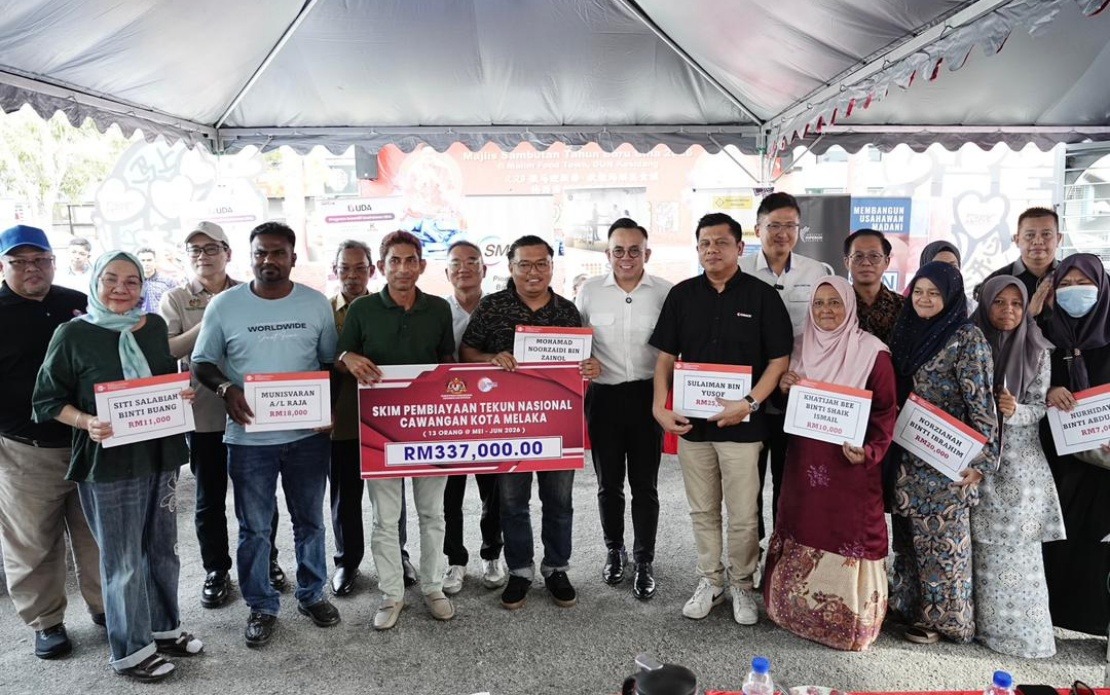
The Ministry of Entrepreneur Development and Cooperatives (KUSKOP) has channelled nearly RM100 million in financing to over 4,300 entrepreneurs in Melaka as of May 31, marking a significant milestone in the state's small business sector development. The approvals underscore the ministry's intensifying push to ensure that business owners throughout the region have adequate access to capital for expansion and growth, thereby generating economic momentum at both the state and national levels.
Minister Steven Sim has framed this financing drive as central to the ministry's broader strategy of nurturing Malaysian entrepreneurship. In his statement, Sim emphasised that capital distribution to business owners creates a multiplier effect throughout the economy. He pointed out that when entrepreneurs receive financing and their businesses flourish, the positive outcomes extend well beyond business proprietors themselves—employees gain stable employment, suppliers receive consistent orders, and local communities benefit from increased economic activity and tax revenue.
The financing flowing into Melaka's business ecosystem is expected to circulate continuously within the national economy, creating fresh investment opportunities and strengthening supply chains. By expanding access to funding, KUSKOP aims to shift more small enterprises from survival mode into genuine growth mode, allowing them to hire additional staff, upgrade facilities, and compete more effectively in their respective markets. This approach aligns with broader Malaysian development objectives that recognise MSMEs as engines of job creation and economic diversification.
During a three-day working visit to Melaka from June 19 to 21, Minister Sim engaged directly with entrepreneurs through various platforms, most notably at the Hebatkan Perniagaan Malaysia Carnival (KHPM). This carnival served as a dedicated engagement space where the minister could interact with traders and business owners, review the performance of various ministry initiatives, and assess the real-world impact of government support programmes on the ground. The visit reflected an administrative approach that prioritises direct contact with beneficiaries over purely bureaucratic oversight.
At Malim Food Town, Sim presided over a substantial meet-and-greet gathering with approximately 50 TEKUN entrepreneurs, representing a cross-section of Melaka's business community. During this event, the minister personally presented nearly RM1 million in fresh financing to 18 individual entrepreneurs through TEKUN Nasional and SME Corp Malaysia. The recipients operated across a diverse range of sectors—food and beverages, wholesale distribution, professional services, construction contracting, retail operations, online commerce, automotive services, and other trading categories—demonstrating the broad applicability of government financing schemes across the economy.
This sectoral diversity is particularly noteworthy for Southeast Asian readers evaluating MSME support mechanisms. Malaysia's approach to business financing does not favour any single industry cluster; instead, it distributes capital according to demand and business viability across multiple sectors. This balanced strategy reduces economic concentration risk while building resilience into the broader entrepreneurial ecosystem. For comparison, several neighbouring economies have occasionally focused financing programmes narrowly on specific industries, which can create distortions and limit opportunities for businesses outside favoured sectors.
The financing activity in Melaka reflects a much larger national picture. Across Malaysia, KUSKOP had approved RM5 billion in financing during the first five months of the year, supporting nearly 180,000 entrepreneurs nationwide. These figures demonstrate that the Melaka approvals represent approximately 2 per cent of the national total, consistent with the state's population and economic contribution relative to other Malaysian states. The scale of this financing movement indicates substantial government commitment and suggests that capital accessibility, rather than business confidence, may increasingly be the determining factor in MSME growth.
Looking forward, the ministry has announced the PowerUp10K initiative, which aims to channel RM15 billion in financing to MSMEs nationwide during the current year. If realised, this target would represent a significant expansion of available capital for small business sectors. For Melaka alone, if the state maintains its current share of national financing approvals, this could translate to approximately RM300 million in MSME financing by year-end—a substantial increase that could materially transform the state's business landscape.
Minister Sim has also articulated a strategic rationale grounded in Malaysia's demographic and cultural composition. He contends that Malaysia's ethnic, linguistic, and cultural diversity constitutes an economic advantage rather than a constraint. This diversity, Sim argued, enriches the local talent pool with varied skills, perspectives, and international networks. The combination of multicultural human capital and geographic positioning within Southeast Asia makes Malaysia an appealing destination for multinational investors while simultaneously enabling domestic businesses to develop export markets and international partnerships more readily than they might otherwise.
This framing carries implications for how Southeast Asian policymakers conceptualise MSME development in pluralistic societies. Rather than viewing diversity as a challenge requiring management, Sim's articulation positions it as a competitive asset in global commerce. Malaysian entrepreneurs with connections to ethnic and religious communities across Southeast Asia, South Asia, and the Middle East can leverage those networks for trade, supply chain development, and market access. Government financing that reaches diverse entrepreneurial groups therefore serves not only domestic economic objectives but also regional trade integration.
The timing of these financing approvals and Sim's Melaka visit reflects broader policy momentum within KUSKOP. After a period where pandemic-related disruptions constrained business lending and government budgets faced competing demands, the ministry appears to be accelerating its deployment of approved financing allocations. The jump from previous periods' approval rates to RM5 billion in five months suggests either increased demand from entrepreneurs or more aggressive ministry outreach—likely both factors are operative.
For Malaysian entrepreneurs and business observers, the significance extends beyond immediate capital availability. The ministry's public emphasis on financing distribution, coupled with direct ministerial engagement with business owners, signals that entrepreneur development remains a policy priority at the highest levels. This sustained institutional focus creates a more predictable environment for small business planning and encourages entrepreneurs to invest in their businesses with reasonable confidence that government support mechanisms will remain available and accessible.
The challenge ahead for KUSKOP involves ensuring that RM15 billion in PowerUp10K financing actually reaches intended beneficiaries efficiently and that entrepreneurs receiving capital deploy it productively rather than allowing funds to remain idle or be diverted into non-productive investments. Previous episodes in regional small business finance have sometimes revealed gaps between approved financing and successfully utilised capital. Monitoring mechanisms and capacity-building support for entrepreneurs may prove as important as financing availability itself in determining whether these capital flows genuinely translate into sustainable business growth and employment creation across Melaka and beyond.

