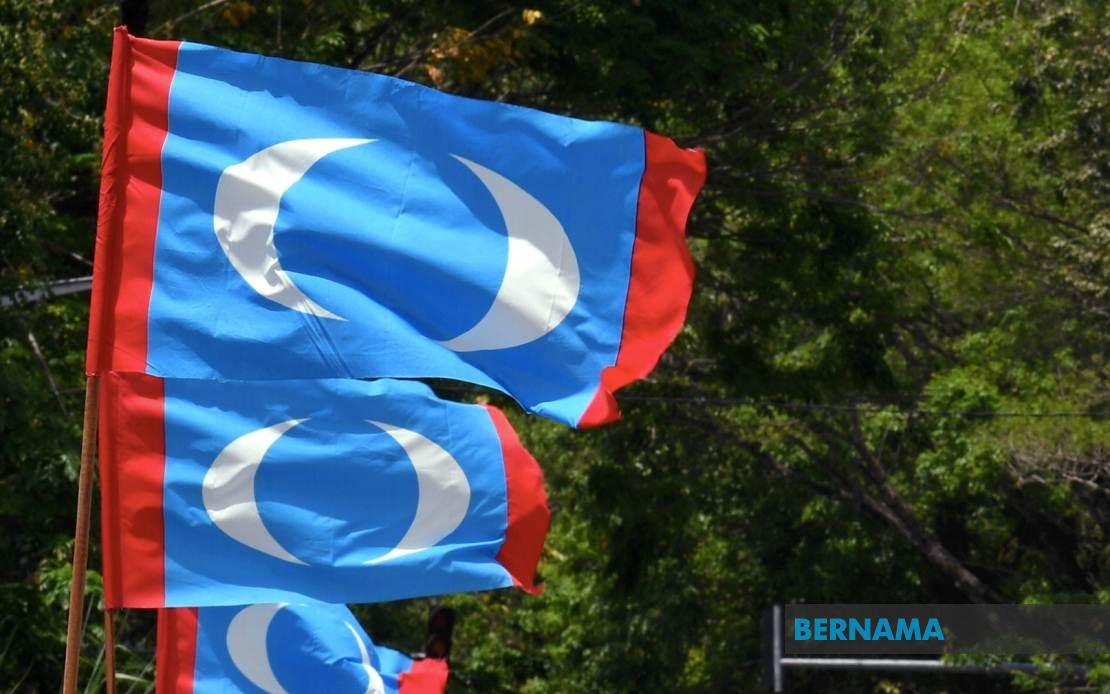
The upcoming Melaka state election represents a critical juncture for Parti Keadilan Rakyat as it seeks to reverse a troubling electoral trajectory that saw the party fail to secure any representation in the state assembly just three years ago. Acting Chairman of the Melaka PKR Leadership Council Adam Adli Abd Halim framed the contest as a "new platform" through which the party can demonstrate renewed viability to Malaysian voters, though the path to recovery demands a fundamental shift in political strategy and messaging.
The stakes are particularly high for PKR in Melaka given the party's complete electoral collapse during the 2021 state election, when Barisan Nasional dominated proceedings by capturing 21 of the 28 available seats while Pakatan Harapan—the coalition to which PKR belongs—managed to retain only five seats in total. Perikatan Nasional secured two seats, establishing a fractured state parliament that has since evolved into a Unity Government arrangement mirroring the federal political settlement negotiated two years earlier. This dramatic diminishment of PKR's presence at the state level stands in sharp contrast to the party's influence within the federal coalition framework, creating an image problem that party strategists now acknowledge requires urgent remediation through this fresh electoral contest.
Adam Adli's articulation of PKR's renewed approach signals a deliberate departure from traditional modes of Malaysian political competition. Rather than relying on the patronage networks and localized power-broking that have historically characterized electoral campaigns across the country, PKR intends to anchor its campaign in substantive policy proposals and clearly articulated ideas designed to resonate with an electorate increasingly weary of transactional politics. This recalibration reflects broader trends within Southeast Asian democracies where younger voters and urban constituencies are demanding greater accountability and policy clarity from competing political forces.
The party leadership has identified a comprehensive policy agenda addressing contemporary concerns that resonate across Malaysia's socioeconomic spectrum. Cost of living pressures—a mounting concern as inflation continues to erode household purchasing power—occupy prominent space in PKR's proposed platform, alongside initiatives targeting youth employment, educational access, affordable housing, wage competitiveness, and mental health services. This multi-layered approach attempts to position the party as responsive to the tangible grievances affecting ordinary Malaysians rather than preoccupied with factional maneuvering or narrow sectarian interests. For a state like Melaka with its ethnically diverse population and significant working-class constituencies, such broad-based messaging carries particular resonance.
Centrally important to PKR's repositioning strategy is its stated commitment to "Justice for All," a conceptual framework intended to emphasize the party's non-sectarian appeal and accessibility to all communities regardless of ethnic or religious background. This principle implicitly responds to criticisms that Malaysian political coalitions, particularly those dominated by Malay-Muslim parties, sometimes struggle to maintain genuine multiracial credentials. By explicitly rejecting the categorization of voters according to religious or ethnic identity and instead trusting in the electorate's capacity to evaluate competing proposals on merit, PKR's messaging attempts to occupy a distinctive rhetorical space within Malaysia's polarized political landscape.
Adam Adli, who serves simultaneously as Hang Tuah Jaya Member of Parliament and Deputy Higher Education Minister, emphasized that party success should be evaluated not through dominance metrics alone but through the tangible policy benefits that accrue to communities. This inverted measure of political achievement—focusing on substantive service delivery rather than seat acquisition—reflects a maturation of sorts within PKR's strategic thinking, acknowledging that in Melaka's contemporary political environment, the party may need to prove value through contribution and advocacy before regaining electoral confidence. Such positioning could appeal to swing voters skeptical of traditional power-seeking narratives.
The broader context surrounding Melaka's electoral timeline adds complexity to PKR's rebuilding efforts. The current state government's mandate expires on December 31, establishing a defined window within which election procedures must occur. This deadline creates temporal pressure that may advantage or disadvantage different coalitions depending on political momentum and administrative readiness. For PKR specifically, the compressed timeframe demands rapid organization and message crystallization across party machinery that has atrophied following three years of minimal state-level representation and influence.
PKR's simultaneous hosting of its 2026 National Congress in Melaka from August 13 to 16 provides a visible platform for party renewal messaging, with Prime Minister and party president Datuk Seri Anwar Ibrahim scheduled to officially open the proceedings on August 15. The Congress's explicit focus on party strengthening ahead of the Melaka election signals that PKR's national leadership recognizes the state contest's significance for the party's broader trajectory. A successful election result in Melaka would generate crucial momentum heading into the next cycle of state elections across Malaysia and contribute to perceptions of PKR's durability within the federal coalition structure.
The challenge confronting PKR extends beyond Melaka's borders, resonating across Southeast Asia where opposition and coalition parties grapple with credibility restoration following electoral reversal. The party's gambit to shift from patronage-driven politics toward ideas-centered competition reflects broader regional trends toward policy-based political differentiation, though implementation remains uncertain. Whether Malaysian voters—particularly in a state where BN's dominance has been pronounced—will respond positively to this intellectual repositioning rather than demanding traditional spoils and resource distribution constitutes the fundamental question animating PKR's electoral strategy.
Successfully executing this shift in political culture requires coherence across PKR's candidate selection, campaign communications, and grassroots organization. Messaging alone cannot reconstruct public confidence without demonstrable commitment at operational levels throughout the party apparatus. The Melaka election will thus serve as both practical test and symbolic gauge of whether PKR can genuinely transition toward the mature, policy-focused political engagement its leadership espouses, or whether traditional electoral logics will ultimately prove more durable than contemporary rhetoric suggests.

