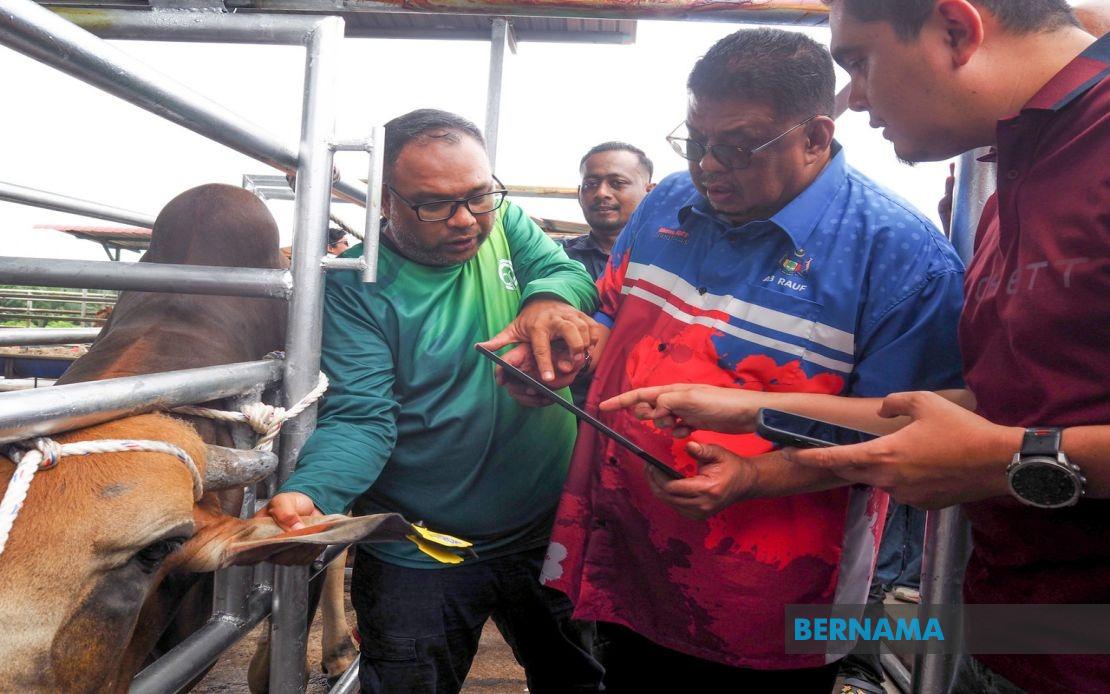
Melaka is taking a technological leap forward in agricultural governance by introducing a QR Tag system designed to overhaul how the state manages and monitors its livestock population. The initiative, unveiled by the state's Chief Minister Department in collaboration with the Melaka Veterinary Services Department, represents a deliberate shift toward digitisation-driven enforcement and accountability in animal husbandry. Chief Minister Datuk Seri Ab Rauf Yusoh championed the scheme, which aims to transform livestock administration into a systematic, transparent operation aligned with Melaka's vision of becoming a smart and livable state.
At its core, the QR Tag system assigns each registered animal a unique identifier embedded in a scannable code. Farmers and veterinary officials can retrieve critical information—breeder name, premises identification, and farm location—simply by pointing a smartphone camera at the tag. This immediacy fundamentally changes how authorities respond to livestock-related emergencies and disputes. Rather than laborious paperwork or lengthy investigations, enforcement personnel now have real-time access to ownership details, transforming what was once a labour-intensive process into one that takes seconds.
The rollout has already gained traction. By early June, approximately 2,000 livestock had been tagged, marking a solid start toward the state government's long-term ambition of covering Melaka's entire registered cattle and buffalo population, estimated at over 32,000 animals. This phased approach reflects pragmatic policymaking—testing the infrastructure and gaining farmer confidence before mandating universal adoption. The state is financing the initial installation at RM6.50 per tag through the end of 2026, removing a financial barrier that might otherwise deter participation. Beginning in 2027, breeders will shoulder the cost at RM5 per head for new installations or replacements, creating a sustainable model that balances subsidy support with long-term cost sharing.
The impetus for this system stems from a tangible public safety crisis. Since 2023, Melaka has recorded 835 incidents involving stray livestock, alongside more than 50 formal complaints about roaming animals. These figures underscore a persistent problem affecting road safety and community wellbeing. Stray cattle and buffaloes represent genuine hazards—they cause traffic accidents, damage property, and frighten residents. Traditional responses have proven inadequate because authorities struggled to trace ownership quickly. With the QR system, when a stray animal is discovered or involved in an accident, police and veterinary officials can immediately contact the owner, facilitating swift resolution and reducing liability disputes.
Beyond emergency response, the tagging infrastructure enables sophisticated livestock management capabilities previously unavailable in Melaka. The system facilitates disease monitoring and control by allowing veterinary authorities to track animal movements and health records within a central database. Should an outbreak of livestock disease occur, officials can rapidly identify which farms and animals may have been exposed, enabling targeted quarantine and vaccination campaigns. This epidemiological dimension is particularly significant given Southeast Asia's vulnerability to transboundary animal diseases, which pose economic risks to entire regions.
The system also addresses the challenge of ownership transfers and sales. Tags remain permanently affixed to animals throughout their lives, serving as immutable identity documents. When livestock change hands, only the new owner's information requires updating in the eVetPermit Malaysia system—a straightforward administrative adjustment that maintains accurate records without requiring tag replacement. This design eliminates confusion over animal provenance, which can complicate contract disputes and disease investigation.
Farmer reception has been notably positive, with breeders viewing the initiative as protecting their interests rather than imposing burdensome oversight. This alignment of incentives is crucial for successful policy implementation. By framing the system as a tool for defending breeder reputation and facilitating rapid identification of stolen or lost animals, authorities have shifted the narrative from regulation as restriction to technology as protection. Breeders understand that stray livestock incidents damage the entire sector's image; demonstrated responsibility through tagging therefore enhances their standing.
The collaboration between the Melaka Chief Minister's Department, the Veterinary Services Department, and local authorities represents an essential institutional foundation. Successful implementation depends on seamless coordination across agencies—veterinary staff conducting tagging, local governments managing stray animal complaints, police accessing data during investigations. This joined-up governance model contrasts with siloed approaches common in less mature bureaucracies and suggests Melaka's administration is developing sophisticated capacity for technology-enabled service delivery.
For Malaysian and Southeast Asian stakeholders, Melaka's initiative offers a replicable model for agricultural modernisation. Many states and neighbouring countries face identical challenges with stray livestock and inadequate monitoring systems. The relatively modest technology investment—smartphone scanning of QR codes—requires no sophisticated infrastructure or expensive specialised hardware. This scalability makes the approach attractive for resource-constrained jurisdictions. Additionally, as agricultural departments across the region grapple with traceability requirements for export markets and disease prevention, Melaka's system demonstrates how digitalisation can serve both domestic and international regulatory objectives.
Looking forward, the system's architecture creates possibilities for future expansion. Integrated disease monitoring, vaccination scheduling, breeding records, and productivity metrics could be linked to individual animal tags. Farmers might eventually access their own records through a mobile application, automating compliance reporting and reducing administrative burden. Such evolution would position Melaka at the forefront of livestock digitalisation in Southeast Asia, potentially attracting investment in agricultural technology and establishing the state as a demonstration site for smart farming practices.
The initiative also reflects broader Malaysian government commitment to Industry 4.0 principles and digital transformation across all sectors. Livestock management, often viewed as traditional or low-tech, is being reconceptualised through technological integration. This mindset—that no sector is too conventional for innovation—permeates Malaysia's long-term development strategy. Melaka's QR Tag system thus represents not merely an animal tracking tool but a manifestation of how comprehensive modernisation penetrates even the most established agricultural practices.
As implementation accelerates over coming months, attention will focus on adoption rates, system reliability, and tangible impact on stray animal incidents and accident resolution times. Early performance metrics will determine whether other Malaysian states move toward similar systems and whether the model influences policy discussions in ASEAN countries seeking livestock management solutions. The success of Melaka's venture could establish it as a template for merging governance efficiency with farmer livelihoods and public safety—a rare trifecta in policy implementation.

