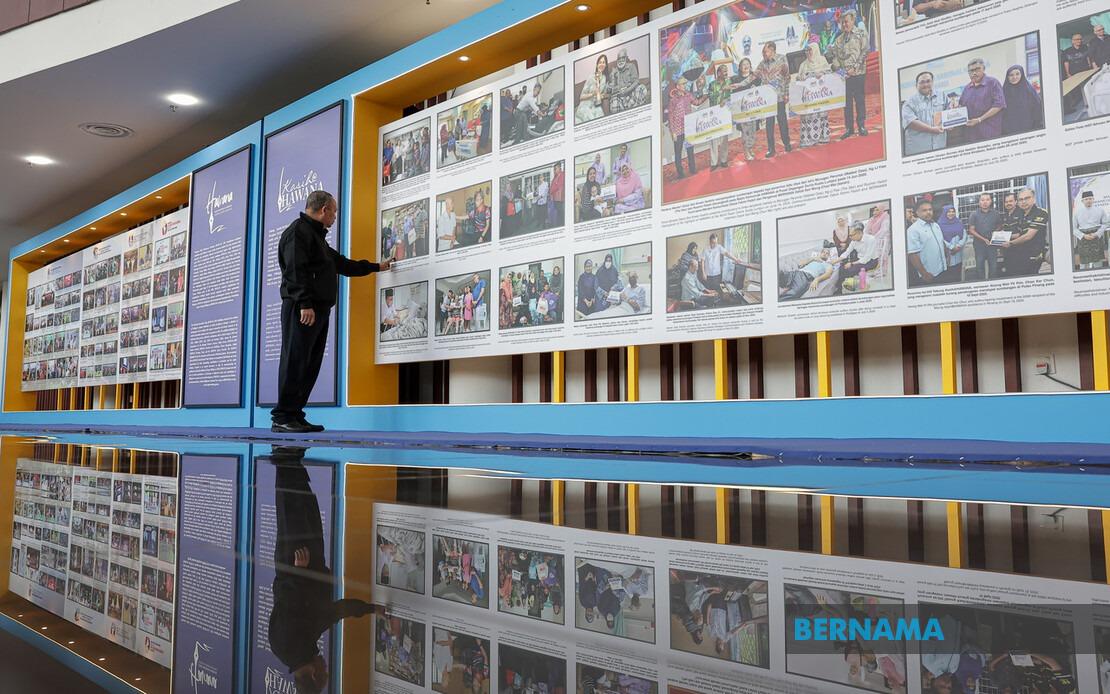
The National Journalists' Day celebration, known as HAWANA 2026, has emerged as a catalyst for Malaysia's media industry to collectively examine its professional foundations and future trajectory. Held in Butterworth, Penang, this year's observance has drawn together media practitioners and industry stakeholders to engage in substantive dialogue about sustaining journalistic excellence while navigating rapid technological and market shifts. The event underscores growing recognition among the nation's news organisations that deliberate, structured reflection on industry standards remains essential to maintaining public trust and editorial credibility.
In the lead-up to the main ceremony, the Malaysian Federation of Media Clubs (GKMM) orchestrated Malaysia Media Retreat 2.0, assembling representatives from 15 media clubs nationwide. This gathering functioned as both a professional networking opportunity and a strategic checkpoint for GKMM itself. Mohamad Fauzi Ishak, the federation's president, characterised the retreat as instrumental in fortifying institutional bonds across the membership while simultaneously allowing the organisation to evaluate its own development trajectory. Since its formal establishment on October 24, 2022, GKMM has been positioning itself as a coordinating body for journalists and media professionals across the country, and this retreat served as an interim assessment before the federation's third annual general meeting, scheduled to proceed without competitive elections.
Communications Minister Datuk Fahmi Fadzil formally opened the retreat, signalling the government's investment in sustaining professional standards within the media sector. The presence of senior Bernama executives, including Chief Executive Officer Datin Paduka Nur-ul Afida Kamaludin and Editor-in-Chief Arul Rajoo Durar Raj, reflected the national news agency's central role in coordinating the broader HAWANA 2026 initiative. Their participation highlighted the government's expectation that Bernama and other state-aligned institutions would champion conversations around journalistic integrity and industry cohesion.
Parallel to the GKMM gathering, the Malaysian Press Institute (MPI) hosted a town hall discussion at Han Chiang University College of Communication that focused specifically on the future viability of journalism as a profession. Titled "2035: Will Journalists Still Exist?", the forum directly addressed concerns about artificial intelligence, digital transformation, and shifting audience consumption habits—issues that cut across editorial businesses globally but carry particular weight in Malaysia's competitive media landscape. The dialogue brought together MPI president Datuk Yong Soo Heong with senior editorial figures from major publishers including New Straits Times Press and Media Prima, ensuring that the discussion incorporated perspectives from both print and broadcast sectors.
The town hall participants—including New Straits Times Press deputy group managing editor Farrah Naz Abd Karim and Media Prima's Azhari Muhidin—represented the editorial spine of Malaysia's mainstream media. Their collective engagement with questions about journalism's future suggests an industry attempting to move beyond defensive posturing to embrace substantive scenario planning. The choice to frame the discussion around whether the profession will persist in recognisable form reflects anxiety about technological displacement but also an implicit commitment to adapting journalism's fundamental practices and value propositions. For Malaysian newsrooms already contending with fragmented audiences and the rise of social media as a primary news source, such forward-looking conversations carry practical urgency.
The Malaysian Media Council (MMC) contributed to the HAWANA 2026 programme schedule by planning an introductory session and engagement activity for media practitioners from the northern region. This multi-organisation approach to the celebration reflected a deliberate effort to involve various institutional actors—regulatory bodies, professional associations, industry clubs, and educational institutions—in shaping the narrative around media professionalism. Rather than treating HAWANA 2026 as a ceremonial occasion, organisers constructed it as a working conference where substantive professional challenges could be aired and collectively examined.
Prime Minister Datuk Seri Anwar Ibrahim will formally launch the main HAWANA 2026 celebration tomorrow at the PICCA @ Butterworth Arena, bringing approximately 1,000 media practitioners from Malaysia and abroad. The event's official theme, "Media Integrity, Foundation of Credibility", encapsulates the industry's current preoccupation: sustaining editorial credibility in an environment of information abundance, misinformation, and declining audience trust in institutional media. By positioning integrity as foundational rather than aspirational, organisers signalled that credibility cannot be presumed but must be actively defended and rebuilt through consistent professional practice.
The Communications Ministry's decision to make Bernama the implementing agency for HAWANA 2026 reflects the state news agency's institutional mandate to serve as custodian of professional standards across the sector. HAWANA itself—which stands as the nation's principal platform for honouring journalists' contributions and achievements—carries significant symbolic weight in Malaysia's media ecosystem. The event functions simultaneously as professional recognition, industry stocktaking, and implicit government affirmation of journalism's societal role, though this tripartite character also generates ongoing debate about the relationship between state institutions and editorial independence.
Complementing the professional and policy discussions, organisers scheduled a three-day RIUH @ HAWANA Carnival at the PICCA Convention Centre, commencing on the opening evening. This carnival component suggests an effort to make HAWANA 2026 accessible and engaging beyond the core practitioner audience, potentially reaching journalism students, media enthusiasts, and general public members. The carnival format may serve partly as audience development and partly as industry outreach, helping to contextualise journalism's challenges and value propositions for non-specialist audiences during a period when media consumption patterns are undergoing substantial realignment.
The convergence of these simultaneous programmes—professional retreats, substantive town halls on emerging technologies, coordination meetings, and public engagement activities—reveals an industry attempting to address both immediate challenges and longer-term structural questions. For Malaysian media practitioners, the HAWANA 2026 gathering arrives at a particularly consequential moment. Digital transformation, AI integration, audience fragmentation, and competition from alternative information sources have fundamentally altered the economics and labour dynamics of journalism. By assembling stakeholders across multiple institutional contexts and creating space for candid dialogue about the profession's future, HAWANA 2026 offers a rare occasion for the sector to deliberate collectively about which professional values and practices merit preserving, which require transformation, and which emerging capabilities journalists must urgently develop to remain relevant and trusted sources of information and analysis in the years ahead.

