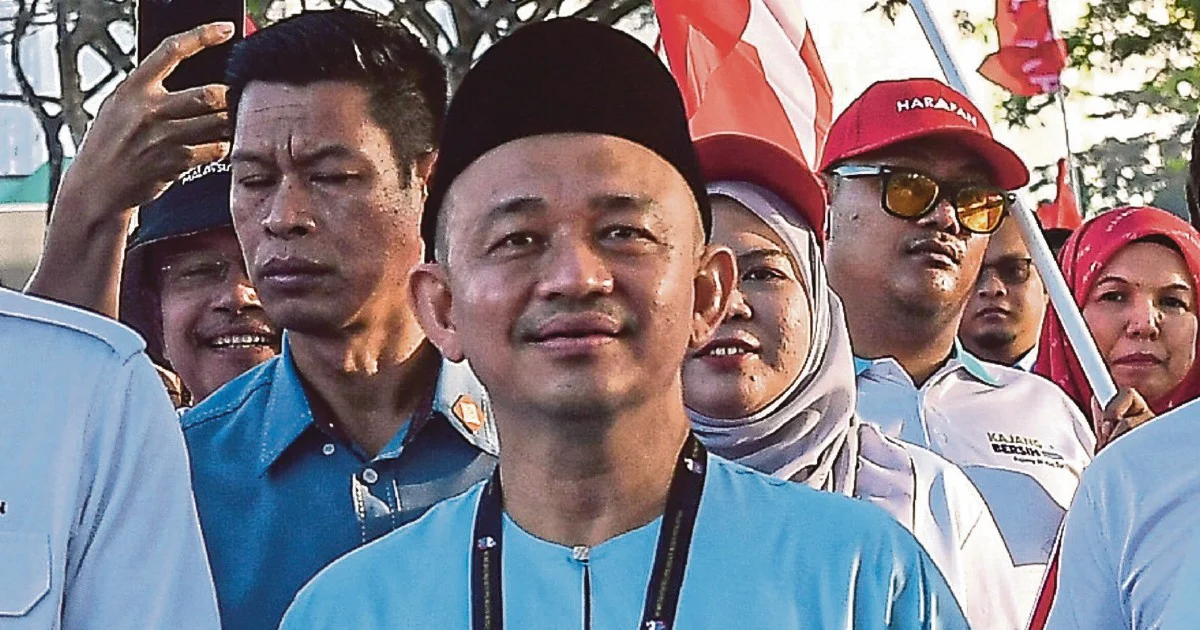
The opposition coalition Pakatan Harapan is seeking to consolidate support across key constituencies in the Johor election, with senior party figures making their case for transformational change in Malaysia's southern state. Speaking in Johor Baru, former education minister Dr Maszlee Malik articulated the coalition's vision of redirecting the state's trajectory toward a new phase of growth and development that would deviate from the current administration's approach to governance and resource allocation.
Maszlee's intervention reflects Pakatan Harapan's determination to mobilise support across multiple battlegrounds in the forthcoming contest. The coalition's emphasis on development represents a deliberate pivot away from contemporary political messaging toward substantive promises about infrastructure, service delivery, and economic opportunity—dimensions that resonate particularly strongly in a state of Johor's economic significance and demographic diversity.
Johor occupies a crucial position within Malaysia's political landscape. As the nation's second-largest state by population and a major economic hub anchoring the southern corridor, electoral outcomes there carry implications beyond state-level governance. The state's voting patterns frequently signal broader national sentiment and have historically influenced federal political alignments. A substantial Pakatan performance in Johor would reinforce the coalition's credentials ahead of potential higher-level electoral contests and demonstrate resilience in a traditionally competitive region.
For Pakatan Harapan, contests such as the Puteri Wangsa seat that Maszlee highlighted assume particular strategic importance. These constituencies often serve as bellwethers for electoral momentum and voter sentiment on coalition messaging. Success in such contests validates the coalition's campaign narrative and builds psychological momentum that can translate into support across surrounding areas. Conversely, underperformance in anticipated strongholds can dampen morale and complicate future political positioning.
The coalition's development-focused messaging addresses practical concerns that animate voter decision-making in contemporary Malaysian politics. While ideological divisions and historical grievances remain relevant, increasing proportions of voters evaluate parties on tangible delivery—whether in healthcare infrastructure, educational facilities, transportation networks, or economic initiatives that generate employment. By framing a Pakatan victory as enabling superior developmental outcomes, Maszlee appeals to this materialist orientation among the electorate.
Johor's political economy creates particular imperatives for development-oriented governance. The state's diversified economy spans manufacturing, agriculture, petrochemicals, and increasingly services sectors. Port operations in Johor Bahru and surrounding regions connect Johor firmly to regional and global trade networks. This economic complexity demands sophisticated policy frameworks, coordinated investment strategies, and regulatory approaches that can sustain competitiveness while generating broad-based employment and prosperity. Coalition messaging implicitly positions its alternative framework as better calibrated to navigate these dynamics.
Regional implications of Johor electoral outcomes extend beyond Malaysia's borders. Singapore's integration with Johor through the Iskandar Malaysia development initiative, cross-border workforce movements, and trade relationships means that Johor governance affects bilateral ties and regional economic dynamism. A administration oriented toward regional cooperation and infrastructure advancement could enhance these relationships, while one prioritising nationalist or restrictive postures might create friction. Pakatan's development rhetoric implicitly promises the former orientation.
Maszlee's political biography adds weight to his intervention. As former education minister under the initial Pakatan Harapan government between 2018 and 2020, he carries direct experience with coalition governance at the federal level. His transition from ministerial office to electoral campaigning on behalf of the coalition demonstrates continued commitment to Pakatan's political project and suggests confidence in the coalition's direction. Such testimonies from former officeholders carry particular resonance among voters evaluating competing governance models based on demonstrated competence.
The broader Johor election campaign unfolds within a complex political environment. Malaysia's party system has undergone substantial realignment in recent years, with traditional alignments disrupted, new coalition formations tested, and regional strongholds shifting. Johor, long associated with particular political traditions, has become genuinely competitive, with multiple serious contenders for electoral support. This openness creates opportunity for parties able to articulate compelling visions and mobilise effective campaign machinery across diverse constituencies.
Maszlee's emphasis on development specifically rather than narrower partisan appeals reflects strategic sophistication. Rather than relying solely on traditional Pakatan constituencies, coalition messaging attempts to expand appeal toward pragmatic, non-aligned voters who prioritise governmental effectiveness and tangible improvements in living standards. This approach acknowledges that contemporary electoral success depends on coalition expansion beyond traditional supporters toward swing voters motivated by performance rather than loyalty.
The coming weeks will test whether Pakatan's development messaging and campaign intensity translates into electoral gains sufficient to reshape Johor's political direction. The outcome will signal voter receptiveness to opposition alternatives and the viability of coalition reconstruction following the 2020-2023 federal governance period that generated mixed assessments of Pakatan's administrative capabilities.

