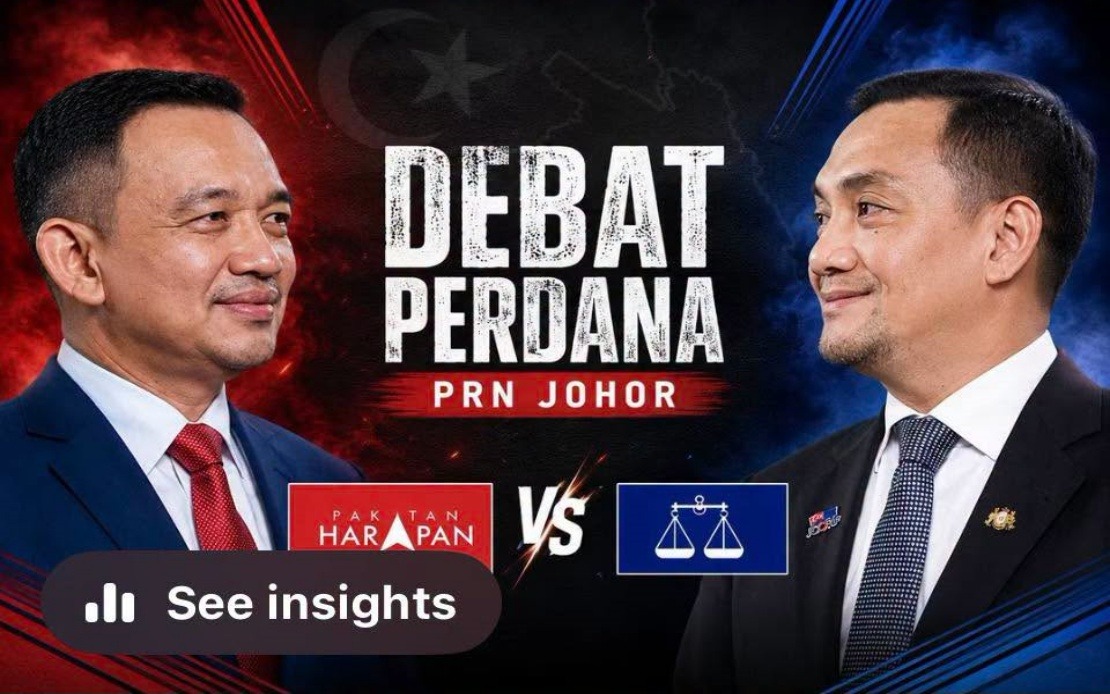
Johor's upcoming state election campaign has taken on a more structured dimension with the emergence of a high-profile debate proposal, drawing backing from an unexpected quarter. Maszlee Malik, the former Education Minister now standing as Pakatan Harapan's candidate for the Puteri Wangsa seat, has formally committed to participating in a public dialogue with Johor Menteri Besar Onn Hafiz Ghazi, responding positively to what has been framed as both an invitation and a challenge from political circles.
The prospect of this confrontation between two prominent political figures has generated considerable momentum on social media and among Malaysian political observers. The debate concept, initially proposed by social media influencer Muhamad Harris Nasril and subsequently amplified through the Redaksi.com Facebook platform, emerged following Pakatan Harapan chairman Anwar Ibrahim's announcement of all 56 party candidates contesting the state election in Muar. The initiative has captured public imagination precisely because it offers voters a rare opportunity to witness direct intellectual engagement between major political players rather than the customary campaign routines of speeches and rally appearances.
Maszlee's acceptance of the challenge carries particular significance given his stature within the PH coalition. In his public statement, he framed his participation not as a simple electoral tactic but as an expression of commitment to democratic processes and the elevation of Malaysia's political culture. His invocation of democratic values and his explicit hope that such forums could serve as educational platforms reveals a strategic messaging approach aimed at positioning PH as the party genuinely invested in substantive political engagement and civic maturity among voters.
The Johor state election represents a significant political test for both the ruling state government and the opposition alliance. Scheduled for July 11, with nomination day already set for Saturday and early voting on July 7, the campaign period remains compressed, making high-visibility events such as this debate particularly impactful for shaping public perception. The electoral landscape in Johor has historically demonstrated competitive dynamics, and any forum offering direct comparison of policy positions and leadership capacity becomes strategically valuable for both sides.
Pakatan Harapan's candidate distribution across the 56 contested seats demonstrates careful coalition management, with PKR fielding 20 candidates, Amanah contributing 19, and DAP providing 17. This allocation reflects ongoing power-sharing arrangements within the coalition and suggests a determined effort to project unity heading into the election. By contrast, the willingness to engage in direct debate adds another dimension to PH's campaign strategy, suggesting confidence in their messaging and the persuasive capacity of their leading figures.
The Maszlee-Onn Hafiz debate proposal simultaneously poses questions about the nature of political discourse in Malaysia. Structured public debates remain relatively uncommon at state election level, partly owing to logistical challenges, media cooperation requirements, and the risk that unscripted confrontation might produce unexpected political liabilities. The fact that both sides appear willing to participate suggests a calculation that the benefits of appearing democratic and substantive outweigh the dangers of uncontrolled debate dynamics. For voters accustomed to more choreographed political messaging, such an event would offer genuine novelty value.
Maszlee's career trajectory adds context to his acceptance. As a former Education Minister who served during a tumultuous period of Malaysian politics, he brings substantial executive experience to his candidacy. His subsequent roles within the PH coalition have positioned him as an intellectual voice within the party, someone whose statements tend to emphasize policy substance over personal attack. This reputation likely influenced his framing of the debate as an opportunity for public education rather than partisan combat, a rhetorical stance that could enhance his credibility with swing voters in the Puteri Wangsa constituency.
The debate itself, should it proceed as planned, would occur within a broader election campaign environment shaped by several interconnected factors. Public interest in state elections has historically remained lower than in federal contests, yet Johor's political importance and the presence of high-profile candidates could buck this trend. Media coverage of the debate would significantly amplify its reach beyond those able to attend in person, making the event valuable for both candidates as a platform to communicate with the broader electorate through multiple channels.
For Onn Hafiz's government, accepting or proposing such a debate carries different calculus. As the incumbent Menteri Besar, he enjoys certain structural advantages, including control of state resources and the authority of office. Yet agreeing to direct public debate with an opposition figure implicitly acknowledges that PH represents a competitive challenger worth engaging with on intellectual grounds. This recognition itself represents a significant political statement within Malaysia's contemporary political context, where incumbency often correlates with reluctance to legitimize opposition through high-profile engagement.
The timing of this debate announcement within the broader election cycle suggests strategic thinking about campaign momentum. With nomination day having just passed or about to occur, the prospect of a marquee debate event can sustain media attention and public engagement during the crucial early campaign period. For Maszlee specifically, such visibility before a relatively compact campaign season could significantly elevate his profile among Puteri Wangsa voters who may otherwise have limited exposure to his candidacy.
The broader implications for Malaysian electoral politics extend beyond the immediate Johor contest. If this debate occurs and generates positive public reception, it could establish a precedent for similar structured engagement in future state and federal elections. Such normalization of direct candidate debate would represent genuine advancement for Malaysian political culture, shifting emphasis from spectacle and personality-driven campaigns toward substantive policy discussion and intellectual engagement. For voters increasingly seeking differentiation between political parties based on competence and vision rather than merely factional loyalty, such debates offer valuable information.

