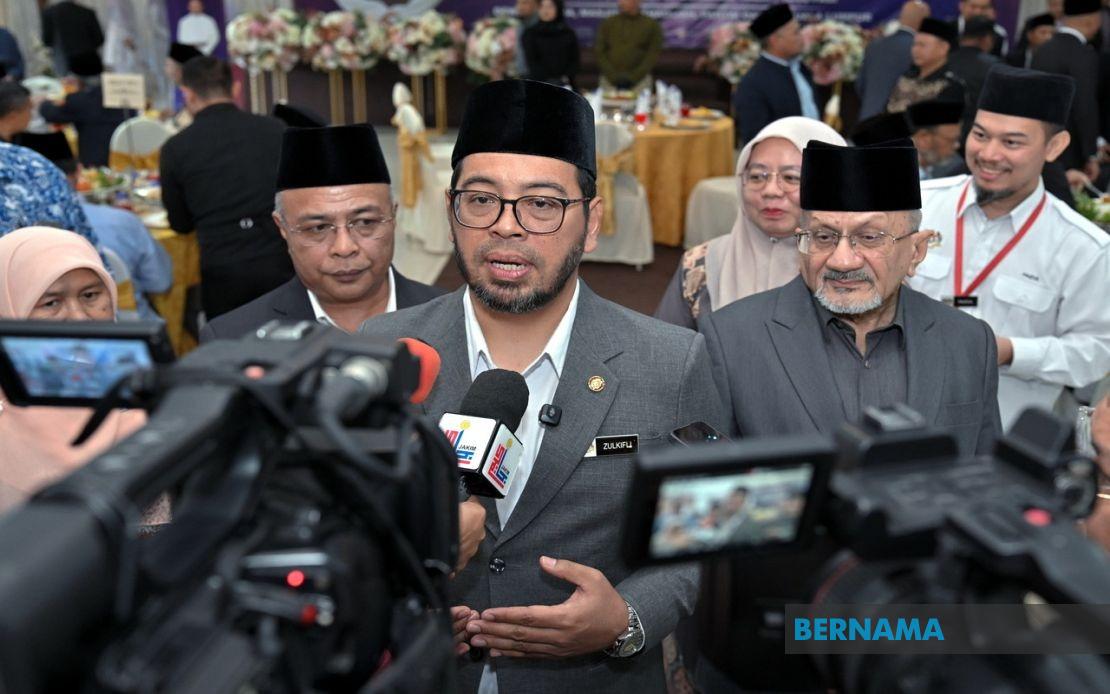
The construction of Masjid Warisan, positioned prominently in front of the Tun Razak Exchange (TRX) tower in Kuala Lumpur, will move forward as originally scheduled, according to Minister in the Prime Minister's Department (Religious Affairs) Dr Zulkifli Hasan. Speaking to journalists on June 23, the minister underscored that the development represents a long-established initiative aimed at strengthening mosques as platforms for fostering social unity within communities. His statement comes amid sustained media speculation and public debate surrounding the project's viability and broader implications for the capital's religious and urban landscape.
The decision to proceed reflects the government's commitment to a vision of religious institutions that extend their influence beyond purely devotional functions. Dr Zulkifli articulated that mosques globally serve as anchors of tranquillity and cultural significance within major metropolitan centres, positioning the Masjid Warisan initiative within this broader international context. By anchoring a mosque adjacent to one of Kuala Lumpur's most visible financial and commercial landmarks, officials appear to be signalling an intentional integration of religious and secular urban development. This architectural and planning choice carries symbolic weight, suggesting that spiritual and commercial dimensions of city life need not exist in separate spheres.
The project has attracted scrutiny from certain quarters, with critics reportedly contending that the mosque's construction could potentially generate social friction or provoke public discord. However, the religious affairs ministry has firmly rebuffed such concerns, directing interested parties to engage directly with the Federal Territories Islamic Religious Council (MAIWP) for comprehensive clarification and dialogue. This approach reflects a wider administrative strategy of encouraging stakeholder engagement and transparency rather than dismissing objections outright. The availability of institutional channels for addressing concerns suggests that authorities are aware of sensitivities surrounding prominent religious infrastructure projects in ethnically diverse urban environments.
For Malaysian readers navigating the country's complex religious and urban development landscape, the Masjid Warisan project represents a telling case study in how government prioritizes mosque construction and community religious facilities. Southeast Asia's multicultural context makes such decisions particularly consequential, as they often influence how different communities perceive their respective places within shared urban spaces. The TRX location—adjacent to a major economic and commercial hub—positions this mosque as neither peripheral nor hidden, but rather as an integrated component of the city's functional and symbolic identity.
The government's decision also carries implications for religious infrastructure planning more broadly across Malaysia. As urbanization accelerates and city centres become increasingly dense and multifunctional, questions about how religious facilities fit within these evolving landscapes become more pressing. The Masjid Warisan project appears to reflect a deliberate choice to integrate rather than segregate, positioning houses of worship as compatible with—rather than opposed to—economic activity and commercial development. This integration strategy could shape future discussions around mosque construction in urban zones throughout the region.
Dr Zulkifli's confirmation came during an official ceremony at Masjid Al-Khadijah in Kampung Pantai Dalam, where he distributed appointment letters to committee members serving the Federal Territories' mosque and Friday prayer surau network for the 2026-2029 term. This administrative action, while routine, demonstrates the scale and complexity of mosque governance structures within the capital's territory. The appointment process itself underwent rigorous scrutiny, with integrity vetting conducted by the Royal Malaysia Police, the Malaysian Anti-Corruption Commission, and the Insolvency Department. Such comprehensive background checks reflect heightened governance standards being applied to institutional leadership across Malaysia's religious administration.
The selection process proved notably competitive, with 3,010 nominations submitted across 91 mosques and 124 Friday prayer surau throughout the Federal Territories. Following thorough vetting procedures, 2,914 candidates ultimately received appointments, suggesting a rejection rate of approximately three per cent. This stringent evaluation underscores the federal government's commitment to ensuring that mosque leadership maintains high standards of integrity and financial responsibility. For institutional observers, such rigorous appointment protocols signal an evolution in how religious institutions are administered, increasingly aligned with accountability frameworks previously associated with secular government agencies.
The breadth of the nomination process—spanning nearly 3,000 candidates across over 200 religious facilities—illustrates the expansive infrastructure of congregational religious life within Kuala Lumpur's Federal Territories. These mosques and surau function not merely as prayer venues but as administrative entities managing finances, community programmes, and social welfare initiatives. The integrity vetting therefore extends beyond character assessment to encompass financial prudence and administrative competence. This institutional sophistication reflects how modern Malaysia's religious establishment has evolved to mirror contemporary governance standards.
For international observers and regional commentators, the Masjid Warisan project embodies Malaysia's particular approach to balancing religious expression with secular urban development objectives. Unlike contexts where religious and commercial interests remain institutionally separated, the TRX location suggests an openness to symbolic and functional integration. This approach carries both practical advantages—efficient land use, religious accessibility within business districts—and potential sensitivities requiring careful navigation. The government's emphasis on stakeholder dialogue and transparency suggests awareness of these complexities.
Looking ahead, the momentum behind Masjid Warisan signals that similar projects integrating religious infrastructure into major commercial precincts may become more commonplace throughout Malaysia's major cities. As Southeast Asian urbanization continues accelerating and land scarcity increases pressure for multifunctional development, creative approaches to accommodating religious, commercial, and residential uses within constrained urban geography will likely proliferate. The Masjid Warisan precedent may thus establish frameworks influencing how future mosque construction projects navigate urban planning requirements and community expectations.

