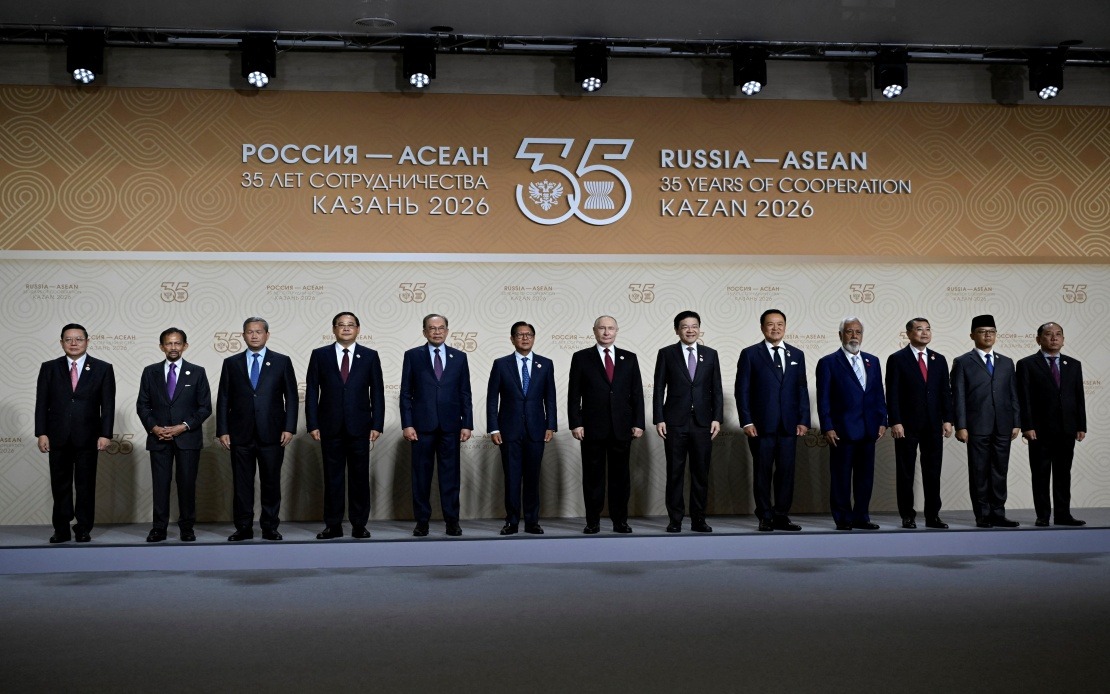
Philippine President Ferdinand R. Marcos Jr has signalled fresh momentum in relations between Southeast Asia's regional grouping and Russia, arguing that a partnership spanning more than three decades remains substantially underdeveloped. Speaking after attending the ASEAN-Russia Commemorative Summit in Kazan, Marcos identified significant gaps between current cooperation levels and what the two sides could realistically achieve, particularly in sectors that barely existed when formal dialogue began.
During an interview with Russia Today, Marcos characterised ASEAN-Russia ties as having progressed "steadily, but not at a particularly high rate," though he acknowledged that performance varies considerably across the bloc's ten members. This nuanced assessment reflects the reality that bilateral relationships between individual Southeast Asian nations and Moscow operate at vastly different intensities, shaped by geography, history, and strategic alignment. The Philippine leader's observation underscores a persistent challenge for ASEAN in coordinating unified positions when member states pursue divergent external partnerships.
The focus of Marcos's remarks centred on emerging technological frontiers largely absent from traditional economic frameworks between the regional bloc and Russia. Advanced technology implementation, artificial intelligence applications, data centre development, and power generation infrastructure represent domains where Moscow possesses capabilities and experience that could complement Southeast Asian development priorities. For regional readers, the implications are substantial: these sectors directly impact competitiveness in digital transformation, a cornerstone of economic growth strategies across the ASEAN region. The Philippines, Vietnam, Indonesia, and Thailand have each identified digital infrastructure as critical to their medium-term development objectives, making partnerships with established technology powers increasingly relevant.
Marcos acknowledged Russia's expanding technological footprint in these precise areas, characterising such developments as creating opportunities for deeper engagement between ASEAN and external partners beyond traditional Cold War alignments. This framing carries particular significance for Southeast Asia, where strategic autonomy has long meant refusing to choose between major power blocs. The Philippine president's emphasis on new sectors rather than geopolitical confrontation suggests a pragmatic approach to great power competition: Southeast Asian nations can benefit from multiple partnerships without abandoning non-aligned principles, provided cooperation focuses on mutually beneficial economic and technological advancement rather than military or political exclusivity.
Reflecting on the broader strategic context, Marcos described ASEAN as "growing up fast" in diversifying its external partnerships. This maturation process, he suggested, reflects shifting global realities and ASEAN's increased agency in managing relationships with major powers. Rather than operating within fixed hierarchies or predetermined blocs, the regional grouping is consciously expanding its diplomatic and economic options. For Malaysia and other ASEAN members, this flexibility offers tactical advantages: the ability to access technological expertise, investment capital, and market opportunities from multiple sources simultaneously enhances bargaining power and reduces strategic vulnerability to any single partner.
The current phase represents what Marcos termed a "new day" characterised by expanding dialogue mechanisms and shifting priorities centred on science and technology-driven sectors. This rhetoric signals a deliberate reorientation from traditional engagement patterns, which often emphasised cultural exchange or diplomatic protocol. Instead, contemporary ASEAN-Russia relations increasingly focus on concrete deliverables with measurable economic impact. For Malaysian businesses and policymakers, this pivot creates identifiable opportunities in joint ventures, technology transfer arrangements, and infrastructure projects that bridge Southeast Asian demand with Russian supply capabilities.
Marcos attributed this momentum partly to the legacy of a bipolar international system, arguing that ASEAN's traditional alignment constraints have loosened considerably. In earlier decades, Cold War tensions constrained Southeast Asian nations' ability to engage freely with the Soviet Union or Russia. Contemporary geopolitics, while hardly free from great power competition, permits far greater flexibility in bilateral relationship management. This observation carries particular relevance for regional nations navigating tensions between the United States, China, and now renewed Russian engagement in Southeast Asian affairs. The ability to maintain partnerships across traditional dividing lines becomes a form of strategic insurance against excessive dependence on any single major power.
The summit itself formalised this evolving relationship through multiple outcome documents designed to structure cooperation for the medium term. The Kazan Declaration 2026 and the ASEAN-Russia Comprehensive Plan of Action for 2026–2030 establish frameworks for implementing the collaborative vision articulated by Marcos. Joint documents advancing cooperation in cultural and energy sectors provide specific actionable commitments rather than vague aspirational statements. For Southeast Asian governments and businesses, these institutional structures create clarity regarding partnership mechanisms and reduce transaction costs associated with identifying cooperation opportunities.
The energy cooperation dimension merits particular attention for Malaysian stakeholders. Southeast Asia's energy security remains a persistent strategic concern, with the region dependent on fossil fuel imports and increasingly focused on renewable energy transitions. Russian expertise in hydrocarbon production, nuclear technology, and large-scale infrastructure development could complement ASEAN members' diversification strategies. Simultaneously, Southeast Asian renewable energy potential and downstream processing capabilities could create complementary advantages for Russian partners seeking market access and technology collaboration in clean energy sectors.
Marcos's emphasis on untapped potential fundamentally challenges ASEAN to undertake more ambitious engagement with Moscow across multiple dimensions simultaneously. Rather than treating ASEAN-Russia relations as peripheral to more established partnerships with Western nations or China, the framework suggested by the Philippine president positions Russia as a significant partner in Southeast Asia's technological and economic future. This recalibration requires sustained political commitment from ASEAN leaders and mechanisms for translating summit declarations into operational reality at commercial and institutional levels.
For Malaysia specifically, the implications extend to broader foreign policy positioning. As ASEAN chair periodically and a nation maintaining careful diplomatic balance across competing interests, Malaysia stands to benefit substantially from diversified external partnerships that strengthen regional autonomy. The emphasis on technological cooperation rather than geopolitical alignment offers pathways for engagement that reinforce ASEAN's non-aligned orientation while delivering tangible economic benefits. Energy cooperation opportunities, data centre development, and artificial intelligence partnerships represent domains where Malaysian expertise and geographic position could generate competitive advantages in regional competitions for investment and talent.
The longer-term significance of this engagement pattern rests on whether ASEAN can translate Marcos's vision into sustained institutional cooperation and measurable outcomes. Summit declarations and action plans represent necessary but insufficient conditions for meaningful partnership deepening. Success requires identifying specific projects, establishing funding mechanisms, and creating regulatory frameworks that facilitate practical collaboration across the bloc's diversity. As ASEAN member states pursue individualised strategies while attempting to maintain collective positioning, managing these tensions while advancing genuine ASEAN-Russia cooperation will test the grouping's organisational coherence and strategic vision.

