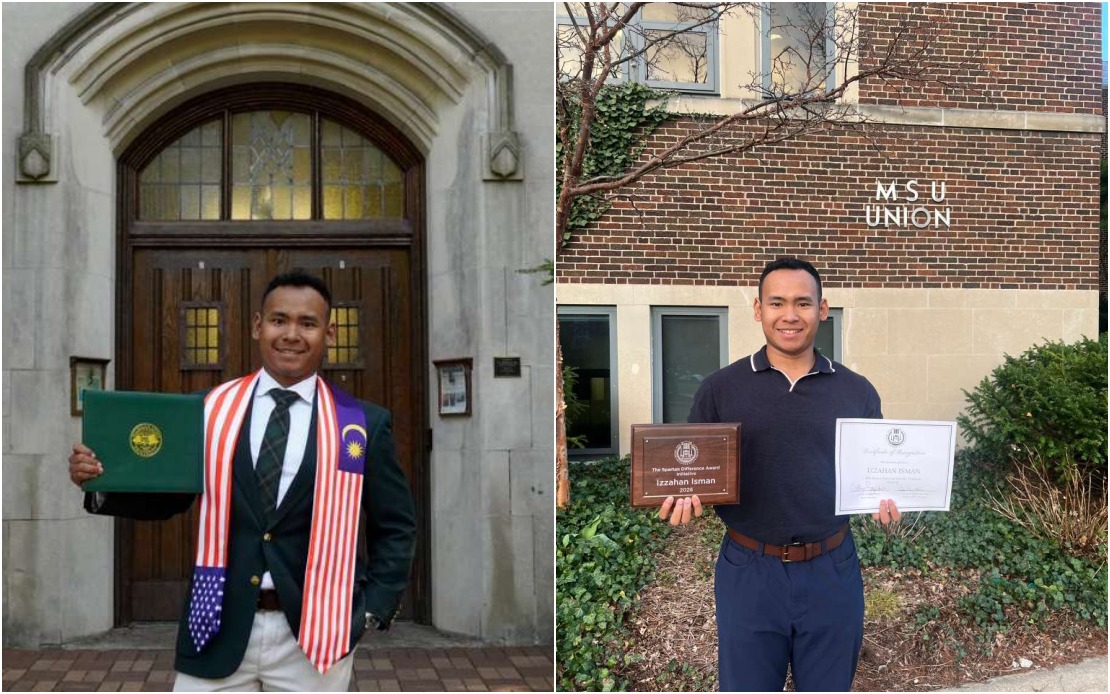
Muhammad Izzahan Isman's journey from a Malaysian tahfiz programme to graduation from Michigan State University (MSU) underscores an increasingly recognised phenomenon: the transferable cognitive benefits of Quranic memorisation extend well beyond religious studies into mainstream academic and professional achievement. The 22-year-old MARA scholar, who completed his Bachelor of Arts in Economics through MARA's Young Talent Development Programme (YTP), has become a compelling case study in how Islamic educational practices can scaffold success in competitive Western universities.
The discipline ingrained through tahfiz study—the memorisation and deep comprehension of the Quran—functions as a rigorous mental conditioning programme that strengthens multiple cognitive domains simultaneously. According to Izzahan, the process demands not merely rote retention but genuine understanding, forcing the brain to develop adaptive learning mechanisms and robust memory systems. He articulates this insight with clarity: the principles underlying successful Quranic memorisation translate directly to other fields of academic inquiry. This observation carries particular weight given that he maintained a cumulative grade point average of 3.72 throughout his undergraduate studies, while earning multiple academic distinctions in a demanding economics programme.
Izzahan's educational trajectory began at Sekolah Berasrama Penuh Integrasi (SBPI) Rawang, one of Malaysia's integrated boarding schools designed to combine Islamic and conventional curricula. This foundational environment exposed him to both tahfiz instruction and rigorous academic training, creating what might be termed a dual-track intellectual development. The synthesis proved potent: when confronted with university-level coursework in America, he possessed not only solid foundational knowledge but also meta-cognitive strategies honed through years of Quranic study.
Beyond the classroom, Izzahan translated his analytical capabilities into tangible workplace improvements during part-time employment as a management assistant at MSU. He identified a recurring operational inefficiency: the university's student employee programmes struggled with high turnover, forcing supervisors to repeatedly invest training resources in replacement staff. Rather than accepting this institutional friction as inevitable, he engineered a comprehensive training manual that systematised the onboarding process, compressed training duration, and enhanced overall operational effectiveness. This initiative earned institutional recognition through two prestigious university awards—the Spartan Difference Award and the Green Cranium Award—demonstrating that his cognitive advantages extended into practical problem-solving and systems thinking.
His military training also garnered formal recognition. Izzahan received the Reserve Officers' Training Corps (ROTC) Academic Ribbon for maintaining a GPA exceeding 3.5 throughout his service commitment. This achievement reflects not merely academic competence but the ability to excel simultaneously across multiple demanding domains—a hallmark of individuals who have developed sophisticated time management and prioritisation capacities.
The psychological resilience required to succeed as an international student in the United States cannot be underestimated. Izzahan attributes his adaptability and emotional steadiness to the self-discipline cultivated through tahfiz practice. He emphasises that remaining grounded despite cultural displacement and the inevitable social pressures of university life required conscious commitment to long-term objectives and personal values. This framing suggests that tahfiz education imparts not only intellectual tools but also psychological anchors—internationalised systems of meaning that help individuals maintain behavioural integrity and relational health even when far from their support systems.
For Malaysia's policy ecosystem, Izzahan's profile carries implications worth examining. As the nation seeks to position itself as a regional financial hub and strengthen its economic competitiveness, the emergence of highly capable professionals from integrated Islamic-secular educational pathways represents an underutilised asset. Too often, conversations about excellence in Malaysian education present false dichotomies between religious and secular training, or between traditional and contemporary knowledge. Izzahan's trajectory suggests these are not contradictory but complementary domains.
His explicit aspiration to contribute to Malaysia's financial sector reflects not nostalgia for Malaysia after sojourning abroad, but a strategic intention to leverage his enhanced capabilities for national economic development. Having completed his bachelor's degree at a world-class institution, he articulates a desire to deepen his expertise further—likely through postgraduate study or professional certification—before applying his skills domestically. This pattern of overseas training followed by intentional return represents a valuable form of human capital investment for a developing nation.
The broader narrative surrounding Izzahan's achievements gained social media traction precisely because it challenges simplistic stereotypes. The image of a tahfiz-educated Malaysian excelling in Western academics, earning military recognition, innovating organisational processes, and maintaining personal discipline across cultural boundaries transgresses comfortable categories. He is neither the secular modernist dismissive of religious education nor the traditionalist sceptical of Western institutions, but rather an individual who has synthesised multiple knowledge systems into coherent personal excellence.
For Malaysian families considering educational pathways for their children, Izzahan's example demonstrates that enrolment in programmes emphasising Quranic memorisation need not represent a choice away from academic advancement or international competitiveness. The cognitive technologies developed through tahfiz study—sustained attention, elaborate encoding, conceptual integration—are precisely those capacities that contemporary knowledge economies reward. The question facing Malaysian educational leadership is whether the existing system facilitates such integrative development for other talented youth or whether Izzahan's success remains exceptional rather than exemplary.
His commitment to contributing to Malaysia's financial ambitions upon completing advanced studies signals a valuable return on the nation's investment in his development. Whether through MARA's YTP or other talent development schemes, Malaysia has funded his international education with the expectation of eventual service to national priorities. Izzahan's explicit acknowledgement of this implicit bargain, combined with his demonstrated capability and willingness, suggests the investment will yield measurable returns. The tahfiz-educated economist returning to strengthen his nation's financial architecture represents a convergence of religious formation, secular expertise, and patriotic purpose—a synthesis increasingly rare and increasingly necessary.