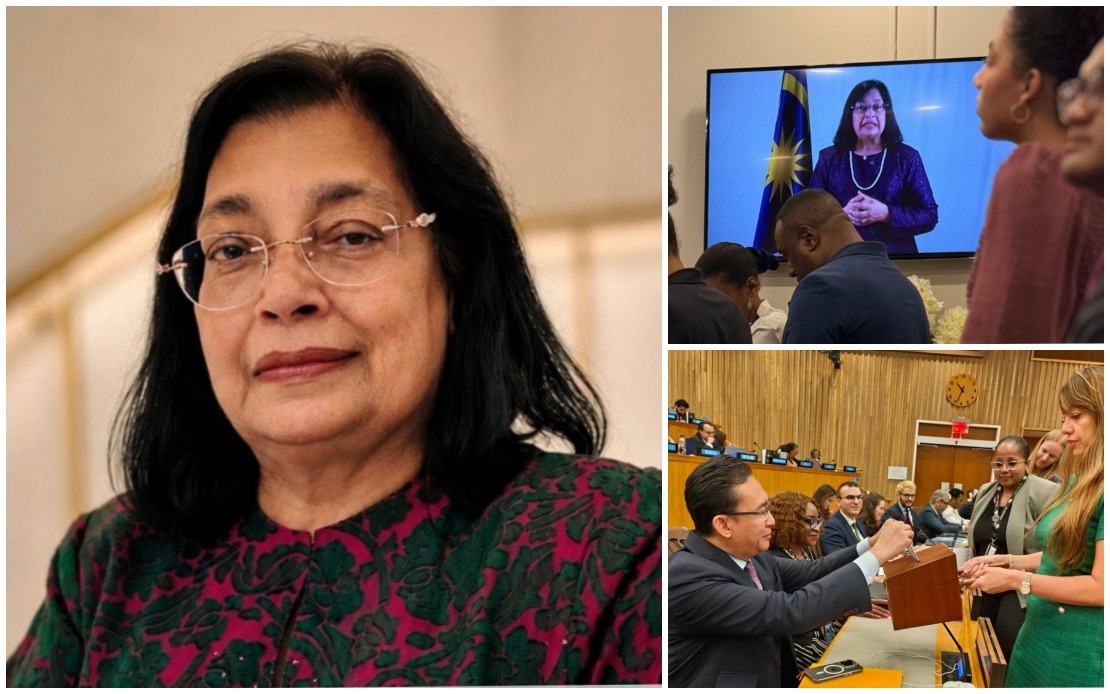
Datuk Yasmeen Muhamad Shariff has won election to the United Nations Committee on the Rights of the Child for the 2027–2031 term, securing strong international backing in a vote conducted this week at UN headquarters in New York. The Malaysian expert received 136 votes from the 189 States Parties present during the 21st Meeting of States Parties to the Convention on the Rights of the Child, an outcome that positions her among the committee's most widely supported members.
The Foreign Ministry highlighted that Yasmeen's election outcome represents the highest number of votes cast for any candidate in the election, underscoring the depth of international confidence in her qualifications and professional standing. Her successful candidacy reflects Malaysia's ongoing diplomatic efforts to secure representation on key global governance bodies and demonstrates the country's engagement with multilateral institutions focused on child welfare and protection.
This appointment marks Yasmeen's return to the committee after a decade-long absence. She previously served as a member during the 2013–2017 term, bringing continuity and accumulated expertise to her new mandate. Her reappointment signals recognition within the international community of her sustained commitment to children's rights advocacy and her ability to contribute meaningfully to the committee's oversight functions.
As an independent expert operating in her personal capacity, Yasmeen will participate in the committee's core responsibilities, which include monitoring how signatory nations implement the Convention on the Rights of the Child. The committee conducts constructive dialogues with member states to assess compliance and effectiveness of national policies, and it champions a rights-centred framework for tackling challenges that impact children across different regions and socioeconomic contexts.
Malaysia's Foreign Ministry characterised the election outcome as validation of the country's commitment to child protection through comprehensive legislative frameworks, institutional reforms, and targeted programmes designed to give every child opportunities to develop fully. The ministry, also known as Wisma Putra, emphasised that the appointment reinforces international acknowledgement of Malaysia's role in advancing child welfare standards and integrating child-centred principles throughout government decision-making.
The broader significance of Yasmeen's election extends beyond individual recognition. As the global environment affecting children becomes increasingly complicated—shaped by conflicts, economic disruption, migration pressures, and digital challenges—the committee's role in providing independent oversight and advocacy has grown substantially more important. Committee members serve as custodians of implementation standards and contribute to shaping how the international community interprets and applies children's rights principles in diverse national contexts.
Wisma Putra acknowledged the collaborative support provided by the Ministry of Women, Family and Community Development, crediting this interagency coordination as instrumental in building the coalition necessary for Yasmeen's successful nomination. Such cross-ministry cooperation reflects Malaysia's institutional commitment to child-focused policy areas and demonstrates how government agencies can work in concert to advance national interests within multilateral forums.
Malaysia's position on child rights has evolved considerably, with the country developing targeted initiatives addressing education access, protection from exploitation, healthcare provision, and participation in decision-making processes. By securing representation on the UN committee, Malaysia gains a platform to share lessons learned from these domestic efforts while contributing to global norm-setting on child protection standards.
The election itself took place during an era when child welfare concerns have gained elevated prominence in international discourse. From education disruptions during pandemic periods to rising child labour incidence in certain regions, migration-related vulnerabilities, and mental health challenges among youth populations, the committees' members tackle substantive policy questions affecting millions of young people worldwide.
Yasmeen's track record and professional expertise position her to engage effectively with the committee's analytical and deliberative work. Members typically contribute to detailed country reviews, issue-focused inquiries, and general comment documents that serve as interpretive guidance for how states should operationalise their treaty obligations. Her familiarity with both the committee's internal processes and contemporary child rights challenges gained during her initial service term will enable rapid productivity.
Moving forward, Malaysia has signalled its intention to remain actively engaged with international mechanisms for child protection. The country has committed to sustaining constructive dialogue with global partners and relevant stakeholders as it works toward the aspirational goal of ensuring no child experiences neglect, exploitation, or denial of fundamental protections. This commitment aligns with Malaysia's broader foreign policy emphasis on humanitarian issues and global cooperation.
The appointment cycle that produced Yasmeen's election reflects the UN system's periodic renewal of committee membership, ensuring that expertise remains current and that geographic representation continues to evolve. Her return to the committee after a ten-year interval demonstrates how experienced professionals can re-engage with international bodies to maintain continuity of commitment to the causes they champion.
For Southeast Asian observers, Yasmeen's reappointment underscores the region's growing influence in shaping global child protection frameworks. As a member state with diverse developmental challenges and opportunities, Malaysia's participation in UN oversight mechanisms contributes regional perspectives to discussions that ultimately influence child policy development internationally. Her election validates the notion that expertise and advocacy regarding child rights can emerge from and be valued beyond traditional Western-dominated international institutions.

