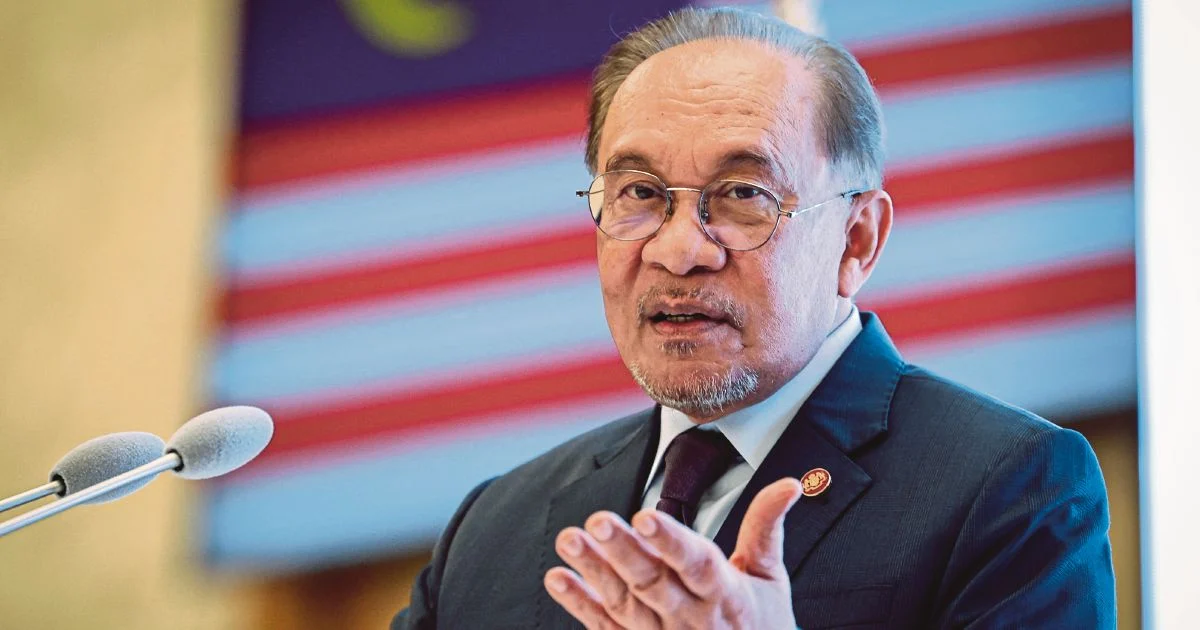
Prime Minister Datuk Seri Anwar Ibrahim has framed Turkmenistan's decision to award Petronas a stake in one of the world's premier gas reserves as a powerful endorsement of Malaysia's standing on the international stage. Speaking in Batu Kawan, Anwar characterised the deal as evidence that the global investment community continues to place substantial trust in the nation's governance, social cohesion, and economic fundamentals.
The award of this exploration and production interest to Petronas represents a significant milestone for the national oil and gas champion, which has long positioned itself as a leading regional player in hydrocarbon development. For Petronas, gaining entry into Turkmenistan's gas sector opens access to reserves that rank among the planet's most substantial, offering substantial long-term revenue potential and operational opportunities. The transaction underscores Petronas's technical expertise and financial capacity to compete for premium assets in contested international markets.
Anwar's interpretation of the deal carries broader significance for Malaysia's international positioning. The Prime Minister's emphasis on how this agreement signals confidence in national stability addresses a crucial concern for any developing economy seeking major foreign investment: political predictability and institutional reliability. In an era of global economic volatility and shifting geopolitical alignments, sovereign wealth funds and multinational corporations remain cautious about where they deploy capital. That Turkmenistan selected Petronas suggests decision-makers there viewed Malaysia as a dependable partner with the institutional strength to honour long-term commitments.
The focus on national unity in Anwar's remarks reflects deliberate messaging about Malaysia's social fabric. Unity has emerged as a defining theme of the current administration, particularly as the government navigates a diverse, multi-ethnic society. When international players evaluate investment opportunities, they assess not only economic indicators but also the stability of the operating environment. A society demonstrating coherent national purpose and inclusive governance frameworks presents lower sovereign risk than alternatives riven by internal tension. This deal thus becomes a validation that Malaysia's pursuit of unity as a policy objective is yielding tangible returns in investor confidence.
Economic capability formed the third pillar of Anwar's interpretation. Malaysia's capacity to serve as a credible partner in major oil and gas ventures rests on decades of experience managing complex hydrocarbon projects, maintaining world-class regulatory standards, and deploying sophisticated engineering and financial expertise. Petronas itself stands as testament to this capability: the company has successfully operated across multiple continents and complex geological environments. By highlighting this dimension, Anwar signals that the nation's economic foundations remain robust despite regional headwinds and global uncertainties.
The timing of this announcement carries weight for Southeast Asia's energy security architecture. As regional economies accelerate growth and urbanisation accelerates demand for power generation and transportation fuels, establishing reliable sourcing relationships becomes strategically essential. Malaysia's position as both a hydrocarbon producer and consumer gives it particular interest in securing diverse supply chains that insulate the region from concentration risk. A strengthened Petronas presence in Central Asian reserves contributes to this diversification imperative.
For Malaysian investors and policymakers, the Turkmenistan deal illustrates how national brand reputation translates into tangible commercial advantage. A country perceived as stable, unified, and competent commands premium valuations for its enterprises and reduced borrowing costs for sovereign instruments. These intangible assets, built through consistent policy execution and institutional development, prove as valuable as physical endowments of natural resources. Anwar's public framing of this agreement therefore serves a dual purpose: celebrating a concrete commercial win while reinforcing narratives that support Malaysia's ongoing attraction of investment capital.
The Petronas achievement also reflects Malaysia's strategic positioning within international energy markets at a time of energy transition. While fossil fuels face long-term structural headwinds as the world shifts toward renewables, the transition will remain gradual across Asia, where energy demand growth, population expansion, and industrial development will sustain hydrocarbon requirements for decades. Securing reserves and production capacity during this transition period provides resources to fund corporate pivots toward cleaner energy and hydrogen development. In this context, Petronas's Central Asian expansion represents not a backward-looking commitment to hydrocarbon dominance but rather a pragmatic approach to funding the company's own energy transition journey.
The arrangement between Malaysia and Turkmenistan also hints at broader geopolitical considerations. Malaysia maintains a careful balance in international relations, pursuing partnerships across multiple great powers while protecting its strategic autonomy. Energy diplomacy provides one avenue for deepening ties with resource-rich nations in Central Asia while expanding economic relationships beyond traditional Southeast Asian groupings. These connections strengthen Malaysia's diplomatic flexibility and open alternative markets for Malaysian services and expertise.
Looking ahead, this deal may catalyse additional international partnerships. Other resource-rich nations observing Turkmenistan's decision to partner with Petronas may reconsider their own engagement strategies with Malaysian companies. Success begets opportunity in international business, and a marquee contract in Central Asia provides reference material that enhances Petronas's competitive positioning for future bidding opportunities across multiple jurisdictions. For Malaysia's broader economy, elevated standing for its national champions creates spillover benefits through technology transfer, training, and reputational gains that extend well beyond the energy sector itself.

