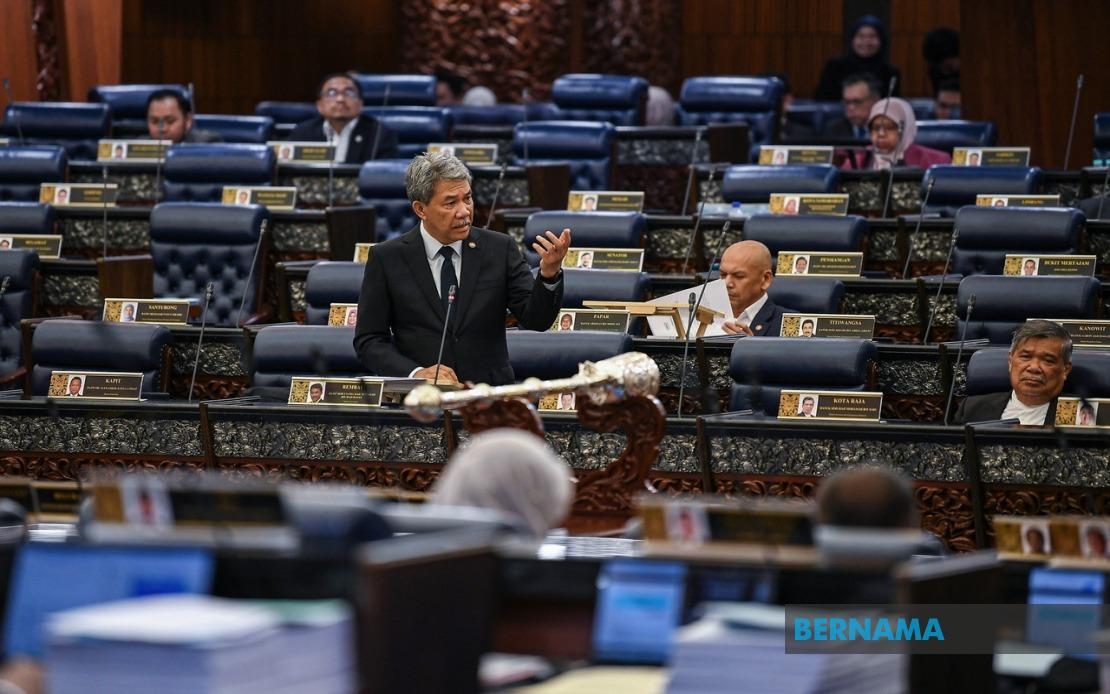
Foreign Minister Datuk Seri Mohamad Hasan has moved to reassure Malaysians that the Humanitarian Trust Fund for the People of Palestine (AAKRP) operates with complete transparency and is subject to rigorous oversight mechanisms designed to ensure proper stewardship of public resources. Speaking in Parliament during Question Time, Mohamad addressed mounting public concern about how Malaysia channels aid to Palestinians, emphasising that the fund represents a government-managed trust account rather than an independently operated facility that might escape official scrutiny.
The Foreign Ministry's assertion comes at a time when questions have surfaced regarding the administration and delivery of humanitarian assistance to Gaza. Mohamad clarified that allegations questioning the fund's management practices are fundamentally unfounded, pointing to the institutional safeguards built into the AAKRP's framework. He explained that the fund operates under multiple layers of accountability, including regular audits conducted by the Auditor-General of Malaysia, a position equivalent to the country's supreme audit institution, as well as periodic reporting obligations to the Cabinet, Malaysia's highest executive body.
The transparency protocols surrounding the AAKRP reflect a broader Malaysian government commitment to ensuring that humanitarian assistance reaches intended beneficiaries rather than being diverted or misappropriated. Rather than handling aid distribution through government channels alone, which might raise logistical challenges in conflict-affected regions, Malaysia routes assistance through established international and regional humanitarian organisations with proven track records in Palestinian territories. The Foreign Ministry partners with organisations including the United Nations Relief and Works Agency for Palestine Refugees in the Near East (UNRWA), a UN body with decades of operational experience in refugee populations, the Jordan Hashemite Charity Organisation (JHCO), the Palestine Red Crescent Society, and King Hussein Hospital, ensuring that supplies reach vulnerable populations through recognised pathways.
This multilateral approach to aid distribution addresses a fundamental challenge facing donors supporting Palestinians: how to maintain oversight while operating in environments where conventional government-to-government assistance mechanisms may be impractical or ineffective. By leveraging partnerships with humanitarian organisations already present on the ground and subject to their own accountability structures, Malaysia seeks to maximise the likelihood that assistance reaches those most in need whilst maintaining clear documentation of fund flows that can satisfy audit requirements.
Beyond financial mechanisms, Malaysia has committed significant material assistance to Gaza's population facing escalating humanitarian crises. The Foreign Ministry has facilitated the delivery of food supplies, medical aid, and health equipment to the territory, with several shipments that faced earlier delays now successfully reaching their destinations following the reopening of overland humanitarian corridors. These logistics operations have been coordinated with the Egyptian government, which controls critical land border crossings into Gaza, underscoring the diplomatic complexity involved in ensuring continuous aid flows to a population experiencing severe shortages.
The humanitarian situation in Gaza remains acutely critical, according to Mohamad's parliamentary statement. Essential infrastructure, including hospitals providing emergency medical care, educational facilities, and religious structures serving as community anchors, has sustained extensive damage from the ongoing conflict. The degradation of such infrastructure compounds existing challenges in delivering aid, as damaged health facilities struggle to treat disease outbreaks and injuries whilst schools face barriers to resuming educational services. This infrastructure crisis contextualises Malaysia's aid efforts within a broader environment where even basic humanitarian needs—medical attention, food security, and safe shelter—remain severely constrained.
The Foreign Minister also addressed concerns about potential misinformation circulating on social media platforms regarding the AAKRP's governance and operations. Mohamad appealed to Malaysians to disregard inaccurate claims spreading through digital channels, cautioning against the dangers of unverified allegations that might undermine public confidence in legitimate humanitarian efforts. This warning reflects a growing recognition amongst Malaysian government officials that social media narratives, however factually dubious, can shape public perception of policy decisions and institutional credibility.
Mohamad's parliamentary intervention represents the government's attempt to balance competing pressures: demonstrating concrete commitment to Palestinian humanitarian needs whilst maintaining public confidence in the proper administration of funds contributed through government programmes. For Malaysian stakeholders, this reassurance matters particularly given that the AAKRP derives its resources from public finances, making questions about oversight and effectiveness legitimate matters of civic concern. The Foreign Ministry's response suggests that accountability mechanisms exist and function as intended, though the government's willingness to address these concerns in Parliament indicates that public questions remain live issues requiring official engagement.
The AAKRP's operational model also carries implications for how Malaysia approaches humanitarian assistance more broadly across the region. By establishing transparent fund management protocols and partnering with international humanitarian organisations, Malaysia constructs a framework potentially applicable to other crisis situations where domestic resources need channelling to affected populations. This template emphasises institutional accountability, international partnerships, and clear audit trails as hallmarks of responsible state-directed humanitarian action.

