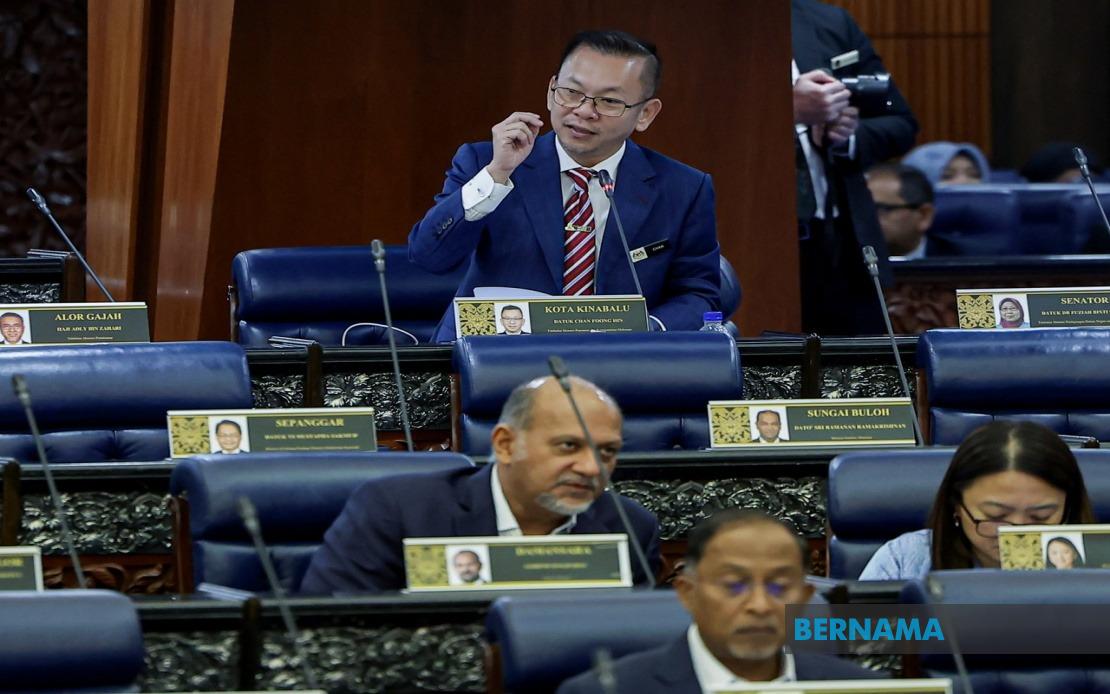
The Ministry of Agriculture and Food Security is moving closer to presenting Parliament with comprehensive legislation designed to govern Malaysia's fertiliser sector, with the bill currently in its advanced drafting phase. During parliamentary proceedings on June 22, Deputy Agriculture and Food Security Minister Datuk Chan Foong Hin disclosed that work on the Fertiliser Bill has progressed substantially, reaching between 70 and 80 per cent completion. This development signals the government's recognition that the nation's food production system requires formal regulatory architecture to prevent supply chain vulnerabilities that have emerged repeatedly during periods of international instability.
The proposed legislation represents a multifaceted regulatory framework intended to establish and enforce consistent quality benchmarks for fertiliser products entering the Malaysian market, while simultaneously creating mechanisms to monitor and streamline the distribution networks through which these critical agricultural inputs reach farmers. Beyond these operational considerations, the bill seeks to introduce safeguards designed to stabilise domestic fertiliser availability during periods when global disruptions create supply pressures or price volatility. The comprehensive approach reflects recognition within government circles that Malaysia's agricultural sector remains exposed to international shocks that can rapidly cascade into domestic food security challenges affecting millions of consumers.
The parliamentary discussion emerged from ongoing complaints by farming communities regarding the quality and suitability of fertiliser supplies available during periods of global turbulence. Cha Kee Chin, the Member of Parliament for Rasah representing Pakatan Harapan, raised concerns that farmers consistently encounter problems sourcing appropriate fertiliser products whenever international crises disrupt normal trading patterns. These recurring difficulties underscore a pattern wherein Malaysia's agricultural input supply chain lacks sufficient resilience to absorb external shocks without compromising the quality of materials reaching farm level. For many farmers, particularly those engaged in rice cultivation and smallholder operations, the inability to access standardised, reliable fertiliser products directly threatens yields and profitability during already challenging periods.
Chan emphasised that introducing specific legislative mechanisms for fertiliser regulation serves purposes extending beyond simple market oversight. He articulated the government's conviction that formal legislation provides essential protections for legitimate participants throughout the agricultural value chain against exploitation, substitution, and margin-squeezing that can occur when regulatory clarity disappears. Distribution networks represent particular vulnerability points, where information asymmetries and limited oversight create opportunities for unscrupulous intermediaries to introduce substandard products, adulterate genuine supplies, or manipulate pricing mechanisms in ways that ultimately harm both farmers and consumers. By establishing clear legislative foundations for quality control and distribution standards, the proposed bill aims to restore transparency and enforce accountability across these networks.
The timing of this legislative initiative reflects broader concerns about food security threats arising from geopolitical tensions affecting global agricultural markets. Chan noted that the ongoing conflict in West Asia has catalysed worldwide economic disruptions with direct consequences for Malaysia's agricultural sector. The conflict has triggered pronounced increases in global fuel costs and pricing for essential agricultural inputs including fertilisers and pesticides, creating cascading inflationary pressures throughout domestic food production systems. These price movements and supply uncertainties create substantial risks for Malaysia's agricultural productivity and ultimately threaten domestic food supplies by raising production costs and potentially constraining farmers' access to essential inputs.
In response to these challenges, the government has already implemented several interim protective measures designed to cushion farmers from the most severe impacts of global price movements and supply disruptions. The ministry has introduced temporary exemptions from sales tax on fertiliser purchases, effectively reducing the effective prices farmers must pay for essential inputs during this period of elevated global costs. Simultaneously, authorities have expanded financial assistance allocations specifically targeted at rice farmers, recognising the critical importance of paddy cultivation to national food security and the sector's particular vulnerability to input cost inflation. These short-term interventions, however, represent temporary relief measures rather than permanent solutions to underlying structural vulnerabilities.
Looking beyond immediate crisis management, the Ministry of Agriculture and Food Security has outlined comprehensive strategic initiatives intended to build longer-term resilience across Malaysia's agricultural and food production ecosystem. These forward-looking measures encompass multiple dimensions, including completion and parliamentary presentation of the proposed fertiliser legislation alongside related regulatory frameworks. Beyond legislative work, the ministry is actively developing physical infrastructure improvements, particularly the establishment and maintenance of emergency stockpile facilities capable of holding substantial fertiliser reserves that can be deployed during periods of acute supply shortage or extreme price volatility. Such reserves would function as stabilising buffers, preventing sudden supply disruptions from triggering cascading production losses across Malaysia's farming sector.
The comprehensive nature of these planned measures reflects sophisticated understanding within the agriculture ministry that food security cannot rest on single-instrument policy responses. Rather, effective protection of Malaysia's food production capacity requires coordinated action across regulatory, financial, and infrastructure dimensions. The fertiliser bill represents the regulatory pillar of this broader strategy, establishing the formal legal architecture necessary for government agencies to monitor, enforce quality standards, and intervene in distribution networks when market dysfunction threatens agricultural productivity. Simultaneously, emergency storage infrastructure provides physical capacity to dampen supply shocks, whilst the combination of tax exemptions and direct assistance offers immediate relief to farming communities facing input cost pressures.
For Malaysian farming communities, the progression of the Fertiliser Bill through its final drafting stages carries significant practical implications. Farmers have experienced recurring difficulties sourcing reliable, appropriately formulated fertiliser products during international crises, with consequences ranging from compromised yields to increased production costs when inferior substitutes command premium prices during shortage periods. The establishment of formal quality standards and distribution monitoring mechanisms promises to reduce these vulnerabilities by creating enforceable expectations about product specifications and reducing opportunities for quality degradation or substitution in supply chains. Additionally, the legislative framework creates legal tools enabling rapid government intervention during emergencies, potentially preventing the kinds of supply disruptions that have constrained production during previous international crises.
Regional perspectives on Malaysia's fertiliser regulation initiative warrant consideration, particularly for other Southeast Asian nations facing similar vulnerabilities regarding agricultural input supply chains. Malaysia's experience with supply disruptions during global crises represents a pattern common across the region, where agricultural sectors remain heavily dependent on imported inputs yet operate without comprehensive regulatory frameworks governing quality or distribution integrity. The Fertiliser Bill potentially establishes a model that other nations might examine and adapt to their own circumstances, particularly regarding the integration of quality control legislation with strategic reserve infrastructure and temporary fiscal support mechanisms. Should Malaysia's comprehensive approach successfully enhance agricultural supply chain resilience, it could demonstrate feasibility of regulatory solutions to problems affecting food security across Southeast Asia.
Parliamentary support for the completed bill appears likely based on Chan's remarks and the absence of substantive opposition to the principles underlying the legislation. The deputy minister explicitly appealed for all Members of Parliament to support the bill upon its eventual tabling, emphasising that the legislation serves interests extending across agricultural industry participants and ultimately benefits consumers through enhanced food supply stability. The cross-party nature of agricultural concerns—affecting constituents across all parliamentary constituencies and transcending partisan divisions—suggests that the Fertiliser Bill will likely receive broad parliamentary endorsement once formally presented. Such support would enable rapid progression through parliamentary procedures, allowing government implementation of the regulatory framework during a period when global agricultural input markets remain volatile and unpredictable.

