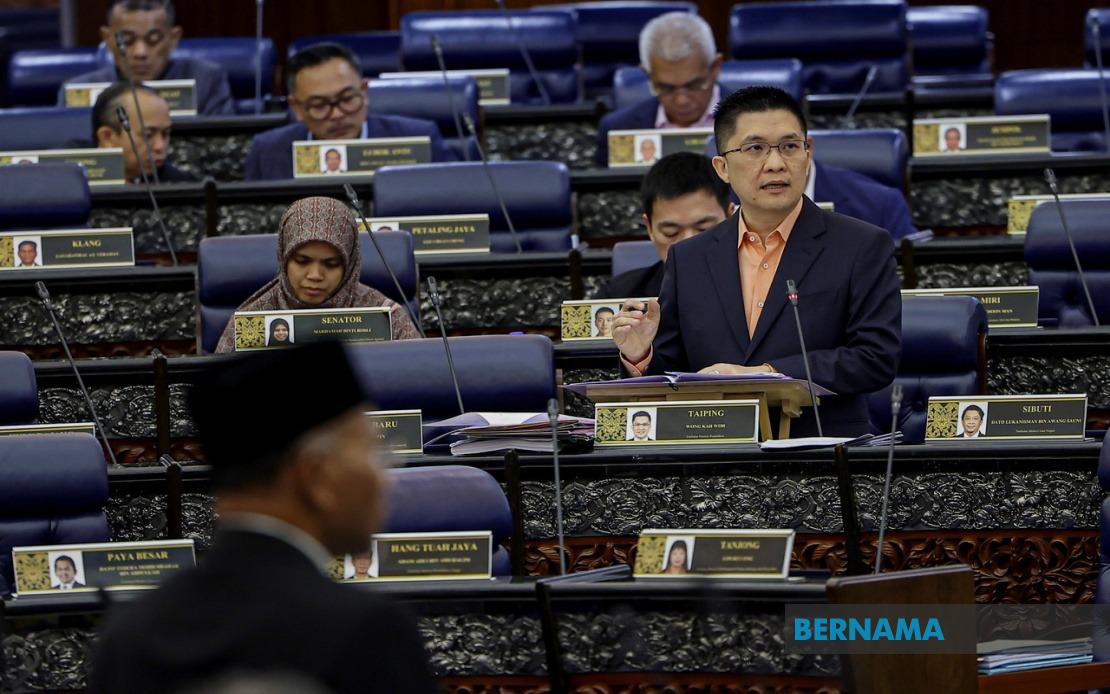
The Ministry of Education is undertaking its most ambitious intake preparation in recent years, gearing up to simultaneously enroll two age groups of first-year primary students in 2027. The dual cohort—comprising 73,386 applications from six-year-old children and 405,033 from seven-year-olds—brings the total registrations to 478,419, representing a substantial 12.07 per cent jump from 2026's single-age intake. Deputy Education Minister Wong Kah Woh announced in Parliament that the ministry is mobilising significant resources to manage this demographic inflection point, signalling that Malaysia's education system is entering a transition phase that will reshape primary schooling for years to come.
The infrastructure response has already begun in earnest. Across 838 schools nationwide, the MOE is constructing 2,596 new classrooms using the Industrialised Building System (IBS), a modular building approach designed to accelerate completion while maintaining quality standards. These construction projects are expected to wrap up by the end of the current year, providing sufficient classroom space before the 2027 academic session begins. The IBS methodology represents a shift towards efficiency in educational infrastructure development, allowing the ministry to scale up capacity rapidly without the extended timelines that traditional construction methods would impose. This reflects lessons learned from previous infrastructure shortfalls and demonstrates a more proactive planning approach to demographic challenges.
Teacher recruitment stands as an equally critical challenge. The ministry plans to hire 3,150 contract of service (COS) teachers to support the expanded student population. This figure, while substantial, must be contextualised within Malaysia's broader educator workforce challenges. Beyond COS appointments, the MOE intends to deploy reserve candidates from the Education Service Commission (SPP) to fill gaps and meet immediate staffing requirements. The dual strategy acknowledges that permanent teacher recruitment moves at a different pace than the pressing need to staff classrooms by 2027. Additionally, the ministry is strengthening professional training programmes specifically designed to prepare educators for teaching six-year-old pupils, recognising that instructional methods and classroom management differ significantly between younger and older cohorts.
Parental choice has been woven into the transition framework, reflecting contemporary education policy trends that emphasise family agency in schooling decisions. Parents can opt to enrol their six-year-old children in 2027 or delay entry until they reach seven years old and enter the system a year later. This flexibility aims to reduce pressure on families uncertain about their child's developmental readiness and acknowledges that chronological age does not always align with individual maturation levels. Such discretion could also help moderate the surge in Year One applications, distributing demand more evenly across multiple school cycles rather than concentrating pressure entirely on 2027.
The ministry's expansion of pre-school capacity signals a recognition that early childhood education serves as critical infrastructure for primary school transition. Wong announced that the MOE has increased pre-school class allocation to 350 new classes this year—more than double the typical annual addition of roughly 150 classes. This accelerated expansion aims to broaden access to foundational learning, particularly benefiting B40 (bottom 40 per cent) households that cannot afford private kindergarten fees. By embedding pre-school within the public education system, the government is essentially extending formal educational support downward, ensuring that socioeconomic status does not determine access to early learning opportunities. The implications extend beyond Year One readiness; this represents a longer-term investment in educational equity and early child development across lower-income communities.
Private kindergarten operators face uncertain prospects following the introduction of the six-year-old cohort, as one complete age group will transition into public primary schooling rather than remaining in the private early education sector. The MOE is actively reviewing how this policy shift impacts private sector sustainability, acknowledging that market-based kindergarten providers face potential revenue erosion when their traditional customer base enters the public system. Stakeholder engagement sessions continue as the ministry weighs its responsibility to support the sector's adaptation while prioritising public education expansion. This tension reflects a broader shift in Malaysia's education policy landscape, where the government is attempting to narrow socioeconomic disparities in educational access through expanded public provision.
Curriculum adaptation forms a crucial component of the 2027 preparations. The MOE will implement a revised Year One curriculum specifically tailored to the developmental needs of six-year-old learners, departing from pedagogical approaches designed for seven-year-olds. This differentiation acknowledges that younger children require adjusted pacing, different cognitive engagement strategies, and age-appropriate learning materials. The ministry's commitment to curriculum alignment—rather than simply pushing younger children into existing frameworks—suggests a more sophisticated approach to early primary education. Additionally, the MOE plans to deploy a structured Year One transition programme designed to ease the adjustment period for newly enrolled pupils, recognising that the move from pre-school to primary represents a significant developmental milestone requiring institutional support.
State-level planning remains a central consideration as projections indicate varying teacher shortage trajectories across different regions. The ministry has developed five-year forecasts at both national and state levels, enabling targeted recruitment and deployment strategies. Some states may face acute shortages that require intensive intervention, while others might manage demand more easily. This granular planning approach allows the MOE to allocate resources strategically rather than applying uniform solutions across geographically and demographically diverse contexts. Such differentiation reflects growing sophistication in education ministry operations, moving beyond one-size-fits-all policymaking towards contextualised implementation.
For Malaysian households and schools, the 2027 transition represents both opportunity and disruption. The simultaneous intake of two age cohorts will create temporary strain on institutional capacity, teacher training pipelines, and learning resources. However, the long-term benefit is the alignment of Malaysia's primary school entry age with international norms—many developed nations enrol children at six years old, reflecting research suggesting earlier formal education can support developmental outcomes. The policy also carries equity implications; expanding access to pre-school education and creating space in Year One for younger children should progressively reduce the socioeconomic stratification visible in Malaysia's current early education system.
The ministry's scale of preparation—involving nearly 2,600 classrooms, 3,150 contract teachers, and accelerated pre-school expansion—reflects the seriousness with which policymakers view this demographic transition. Successful execution will determine whether Malaysia can smoothly absorb the nearly 480,000 Year One applications while maintaining educational quality and equitable access. Conversely, inadequate preparation could leave schools overcrowded, teachers overwhelmed, and younger pupils struggling to adapt. The coming months will test the MOE's capacity to deliver infrastructure, hire and train personnel, and implement curriculum changes simultaneously—a logistical challenge that extends well beyond typical year-to-year education administration.

