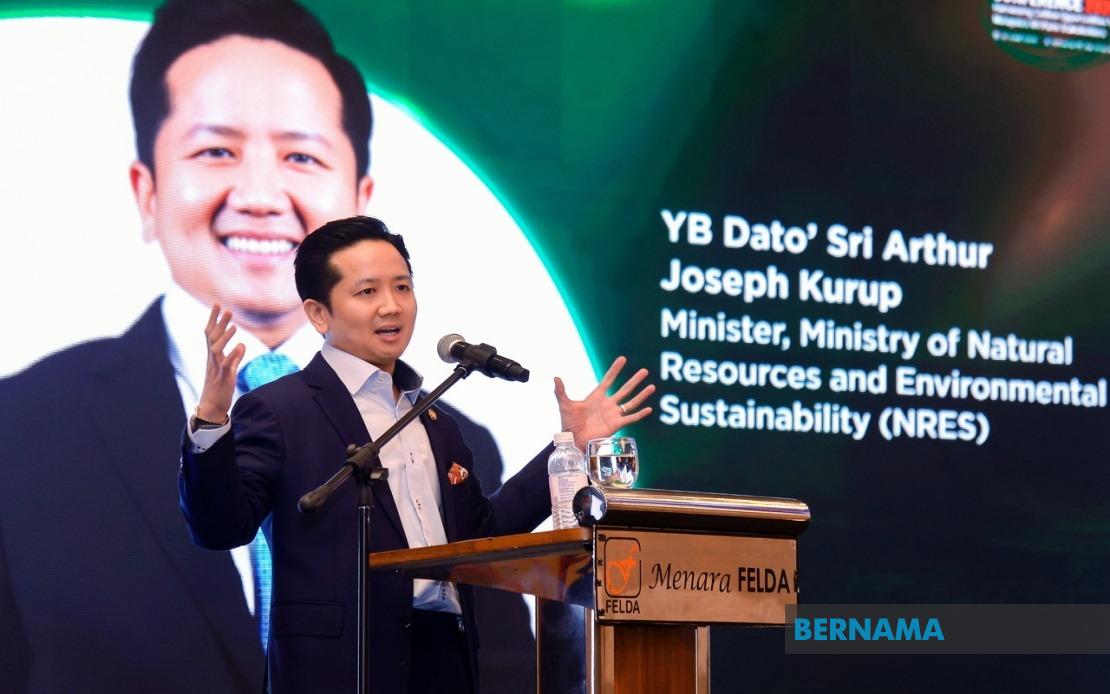
The Malaysian government continues to fine-tune its approach to introducing a carbon tax, with Natural Resources and Environmental Sustainability Minister Datuk Seri Arthur Joseph Kurup indicating that while the mechanism is still being developed, the levy will eventually proceed. Speaking at the Malaysia Palm Carbon Conference (MPC) 2026 in Kuala Lumpur on June 16, Kurup stressed that the government remains committed to the initiative despite ongoing technical preparations that have delayed its rollout from the originally targeted 2024 launch.
The decision to refine implementation reflects a careful balancing act between Malaysia's climate commitments and the practical concerns of domestic industries. Rather than rushing forward with a rigid timeline, the government is taking time to assess sector readiness across key areas such as steel, cement and construction—industries identified as primary targets for the carbon pricing mechanism. This deliberative approach acknowledges that abrupt imposition of new environmental levies could undermine competitiveness in sectors already navigating volatile global markets and supply chain disruptions.
Minister Kurup was explicit that the carbon tax should not be perceived as a punitive measure designed to penalise industry. Instead, he framed it as an incentive structure intended to drive adoption of cleaner technologies and sustainable practices across the economy. This reframing is significant for Malaysian businesses that have expressed concern about additional compliance costs. By emphasising the positive aspects—encouraging rather than constraining—the government aims to build stakeholder buy-in from manufacturers and producers who will bear the direct costs of compliance.
A critical dimension of the emerging policy involves revenue allocation. The government is currently examining how proceeds from carbon taxation should be deployed, with proposals focusing on three interconnected areas: climate adaptation initiatives, forest conservation programmes and sustainable land management practices. This multi-faceted approach reflects recognition that carbon revenue should directly support resilience-building measures relevant to Malaysia's specific vulnerabilities, particularly given the nation's exposure to climate impacts ranging from flooding to agricultural productivity challenges.
The timing of the carbon tax announcement is notable given Malaysia's recent statements on energy policy. In April, Minister Kurup indicated that the government was reviewing implementation timelines in light of global energy supply pressures and geopolitical uncertainties. This candid acknowledgment reflects the practical reality that carbon policy cannot be implemented in isolation from broader economic conditions. The current context of elevated energy costs, supply chain disruptions and shifting trade relationships has prompted policymakers to consider whether 2024 introduction would have imposed excessive burdens on both industry and consumers.
The decision to defer implementation represents a calculated judgment about policy sequencing. Rather than introducing carbon pricing during a period of widespread economic stress, the government is allowing time for industries to undertake capital investments in cleaner technologies and for market conditions to stabilise. This phased approach follows patterns seen in other regional economies that have prioritised building consensus and technical capacity before formal carbon pricing systems take effect. The refinement period provides opportunities for pilot programmes, stakeholder consultation and mechanism testing.
Alongside the carbon tax framework, the government is advancing complementary climate legislation. The National Climate Change Bill is expected to be presented to the Dewan Rakyat during the current legislative session, representing a broader institutional commitment to strengthening climate governance. This legislative agenda indicates that carbon pricing is intended as one component within a more comprehensive climate policy architecture rather than a standalone measure. The bill's focus on governance structures will establish frameworks within which specific instruments like carbon taxes can operate effectively.
For Malaysian businesses and investors, these developments carry significant implications. Companies operating in targeted sectors should begin assessing their carbon profiles and identifying cost-effective pathways to emissions reductions. Those investing in renewable energy, energy efficiency and sustainable practices now will position themselves favourably when the carbon tax does take effect. Conversely, continued reliance on carbon-intensive processes may become commercially disadvantageous as policy certainty increases and investor expectations shift toward climate-aligned business models.
The regional dimension deserves consideration as well. As Malaysia refines its carbon tax approach, neighbouring Southeast Asian economies are watching closely. Countries such as Singapore, Thailand and Indonesia are exploring or implementing similar mechanisms, creating potential for policy learning and eventual harmonisation. Malaysia's deliberate pace may yield lessons applicable across the region, particularly regarding balancing environmental objectives with economic competitiveness in developing economies where industrial sectors remain critical to growth.
The involvement of Federal Land Development Authority (Felda) chairman Datuk Seri Ahmad Shabery Cheek at the conference underscores the agricultural dimension of Malaysia's climate strategy. Land use and forestry sectors play outsized roles in national carbon accounting and climate resilience. The carbon tax framework will likely create both challenges and opportunities for agricultural enterprises and land-based industries, making their engagement in policy development essential.
Stakeholders across Malaysia's economy—from plantation operators to manufacturing exporters—now face a period of constructive uncertainty. Rather than an imminent regulatory shock, the carbon tax appears as an eventual inevitability for which preparation is possible and prudent. The government's refinement phase provides a window for businesses to enhance transparency in emissions measurement, explore clean technology investments and engage with policymakers on implementation details that will ultimately determine the policy's economic impact.