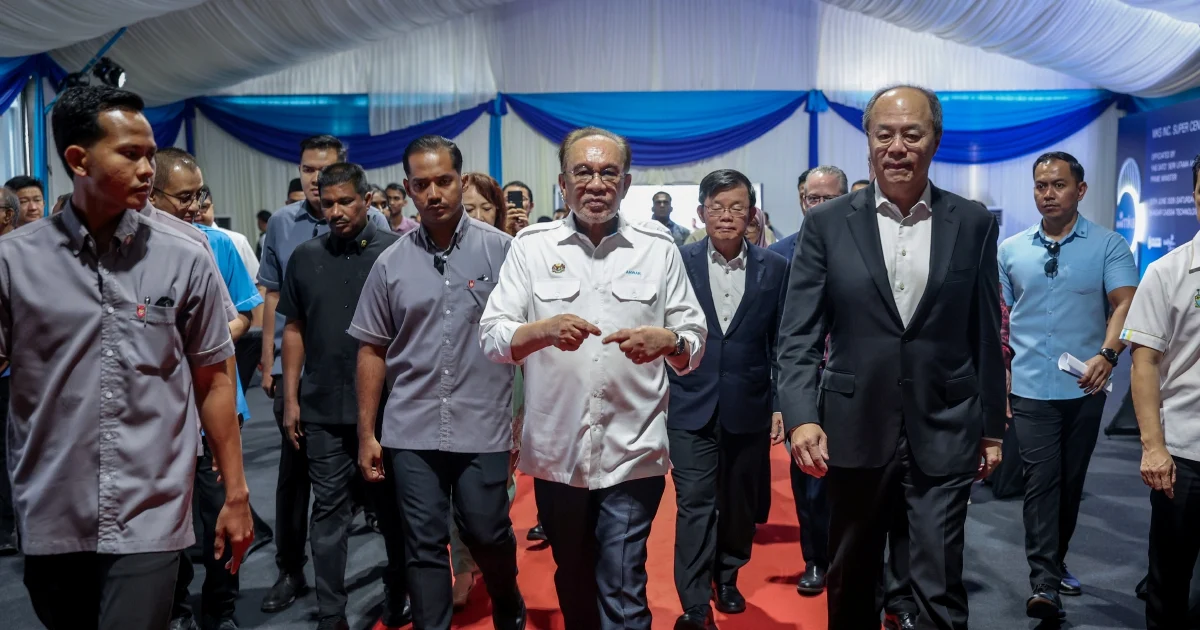
Prime Minister Datuk Seri Anwar Ibrahim has emphasised that Malaysia's approach to international relations—characterised by pragmatic engagement with all major powers combined with steadfast political independence—provides the stable foundation necessary to attract foreign capital and accelerate economic development. Speaking in Batu Kawan, the premier articulated how this carefully calibrated diplomatic positioning has become increasingly valuable to multinational investors seeking reliable Southeast Asian markets insulated from geopolitical polarisation.
The strategic logic underpinning Malaysia's multi-alignment posture reflects the country's geography and economic interests. As a pivotal trading nation positioned along critical maritime routes and blessed with established manufacturing infrastructure, Malaysia derives tangible commercial benefits from maintaining strong relations with Beijing, Washington, and other powers simultaneously. Investors have grown attuned to recognising such stability as a prerequisite for long-term commitments; companies contemplating regional headquarters, production facilities, or technology parks require assurance that their operations will not become hostage to bilateral tensions or forced alignment with competing blocs.
Anwar's framing positions Malaysia as a model for developing nations navigating contemporary great power competition without surrendering economic agency or democratic autonomy. Unlike countries forced to choose allegiances, Malaysia has cultivated relationships across ideological and economic divides. This flexibility extends to trade negotiations, technology partnerships, and infrastructure investments, enabling the country to benefit from competition among investors rather than being relegated to secondary status within any single sphere of influence. The message resonates particularly with technology firms and manufacturers considering diversification away from concentration in single markets.
The neutrality principle Malaysia champions extends beyond ceremonial foreign policy into concrete operational advantages. International investors recognise that non-aligned status reduces regulatory unpredictability and sanctions risk. Companies operating manufacturing or supply chain hubs in Malaysia face lower exposure to the escalating trade restrictions and technology barriers that characterise relationships between major powers. This comparative advantage has materialised in real investment flows, as firms relocate capabilities from conflict-adjacent regions to Southeast Asia.
Engagement with all powers simultaneously requires sophisticated institutional capacity and diplomatic skill. Malaysia has demonstrated consistent ability to maintain relationships with powers whose own relations have deteriorated markedly. The country hosts American defence interests while simultaneously deepening economic ties with China; it balances participation in Western-aligned institutions with membership in Chinese-led infrastructure initiatives; it preserves strategic autonomy despite pressure from multiple directions. This balance sheet appeals directly to investors evaluating political risk, as it demonstrates governmental competence in managing complex external pressures.
The economic implications extend beyond headline foreign direct investment figures. Investor confidence shaped by diplomatic stability translates into longer investment horizons, willingness to develop local supply chains, technology transfer arrangements, and workforce training programmes. Companies viewing Malaysia as a permanently vulnerable or polarised venue instead adopt extractive, short-term operational modes that generate fewer quality jobs and limited spillover benefits. Conversely, confidence in sustainable political equilibrium encourages manufacturing firms to establish regional excellence centres, research facilities, and capability development initiatives that anchor employment across multiple skill levels.
Southeast Asia's broader geopolitical context sharpens the significance of Malaysia's positioning. As the United States and China compete for regional influence and as smaller nations face mounting pressure to align with one bloc or another, Malaysia's demonstrated capacity to maintain autonomy while maximising economic partnerships becomes increasingly distinctive. Nations considering regional supply chain resilience, workforce nearshoring, and diversification explicitly seek partners like Malaysia where geopolitical friction remains manageable.
The semiconductor industry exemplifies how Malaysia's balanced approach generates practical advantage. As chip manufacturing capacity becomes geopolitically strategic and both American and Chinese interests seek supply chain participation, companies value partnerships in jurisdictions perceived as genuinely neutral and technically capable. Malaysia's existing strength in semiconductor assembly and testing, combined with its diplomatic independence, creates conditions for technology transfer and manufacturing escalation that would be complicated in explicitly aligned jurisdictions.
Investor surveys consistently identify geopolitical predictability as a top-five risk factor when evaluating emerging market expansion. Markets perceived as caught between competing powers experience capital flight, shortened investment horizons, and difficulty attracting institutional capital. Conversely, nations maintaining genuine non-alignment and demonstrating institutional capacity to navigate great power competition attract long-cycle investors willing to commit resources to sustainable development. Malaysia's performance reflects this dynamic directly: the country attracts quality manufacturing investment rather than serving merely as a cheaper alternative to higher-cost jurisdictions.
Anwar's emphasis on neutrality and engagement should be understood as recognition that Malaysia's economic future increasingly depends on remaining genuinely attractive to multiple competing centres of power simultaneously. As geopolitical competition intensifies, such positioning becomes more valuable to multinationals seeking resilience and more difficult for nations caught within aligned blocs to maintain. Malaysia's ability to articulate and defend this position—and to make institutional investments that preserve it—will substantially determine whether the country's economic growth trajectory accelerates or moderates over coming years.
The premier's remarks also signal commitment to policies that would sustain investor confidence within this framework: rule of law that protects property rights regardless of investment origin, transparent regulatory environments accessible to firms from all nations, and consistent application of commercial rules without geopolitical discrimination. Such commitments, when credibly implemented, transform diplomatic positioning into concrete economic outcomes that benefit Malaysian workers, firms, and communities through higher-quality employment and sustainable industrial development.

