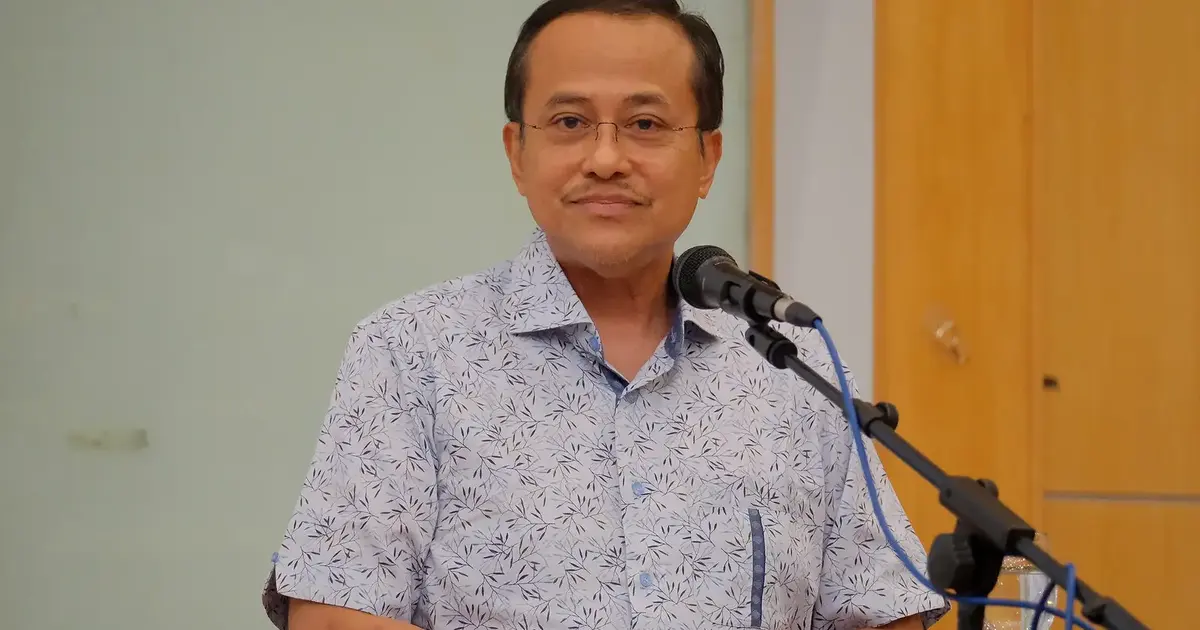
The tenor of Malaysian electoral politics may be undergoing a subtle but significant transformation, with voters appearing to gravitate toward measured, steady-handed leaders rather than those who rely on bombastic oratory or expansive promises. This assessment comes from Shahril Hamdan, a former information chief of the United Malays National Organisation (Umno), who observes that the current political atmosphere reflects a public appetite for calm and composed governance.
Shahril's commentary reflects a broader pattern visible across Malaysian politics in recent years. The period following the 2022 general election and the formation of the Anwar Ibrahim administration has seen successive shifts in voter sentiment as citizens grapple with persistent economic pressures, cost of living anxieties, and a desire for institutional stability. In this context, the appeal of leaders perceived as level-headed and pragmatic appears to be outweighing the traditional draw of charismatic figures who promise dramatic transformations.
The reference to leaders of a particular temperament—individuals who embody the qualities Shahril associates with Samsuri—suggests that Malaysian voters are increasingly conscious of the gap between electoral promises and governmental delivery. Years of political volatility, constitutional crises, and rapid changes of government have seemingly conditioned the electorate to view grand rhetoric with caution. A leader who projects steadiness and appears less inclined toward destabilising behaviour may therefore offer a more appealing proposition than one built on a foundation of fiery appeals to emotion or ideology.
This shift has implications for how political parties frame their messaging and select their representatives. Umno, which has undergone considerable internal turbulence and factional conflict, may see value in promoting figures who symbolise institutional continuity rather than revolutionary change. Similarly, other major political formations must reckon with evidence suggesting their electorates are fatigued by the constant partisan warfare that has characterised Malaysian politics since at least the 2018 general election.
The emphasis on "calmness" as a political virtue also reflects Malaysia's multicultural and multireligious composition. In a society where religious sensitivities and communal tensions occasionally threaten social cohesion, leaders who eschew inflammatory language and avoid provocative statements may appear better equipped to maintain interethnic stability. The contrast with more divisive political figures, whether from past or present, underscores how citizens may be consciously opting for leaders who prioritise consensus-building over polarisation.
Economically, the preference for stability-oriented leadership makes intuitive sense. Malaysia's economy faces headwinds from global uncertainty, regional supply chain disruptions, and domestic fiscal constraints. Businesses and ordinary citizens alike benefit from predictable policy environments and leaders who signal commitment to institutional norms rather than personal agenda-setting. A leader perceived as temperate and analytically minded may therefore inspire greater investor confidence and consumer optimism than one known for erratic behaviour or extravagant pledges.
Shahril's observation also invites scrutiny of how political parties have historically cultivated their images and selected leaders. The dominance in Malaysian politics of figures known for commanding oratorical style, strong ideological positioning, or outsized personalities has shaped party cultures and voter expectations. A genuine recalibration toward valuing measured temperament would represent a departure from this pattern and could reshape intraparty selection processes, from primary contests to leadership elections.
The notion that voters increasingly prize calmness does not necessarily imply disengagement from politics or a turn toward technocratic governance divorced from public sentiment. Rather, it suggests that citizens wish to see their political leaders demonstrate competence, respect for institutional rules, and commitment to addressing material concerns rather than stoking passions or reshuffling the constitutional furniture. In a country where political drama has sometimes overshadowed substantive policy debate, this reorientation toward substance over spectacle could yield tangible benefits for governance quality.
Looking forward, political parties and leaders who successfully interpret and respond to this evolving voter preference may find themselves advantaged in competitive elections. Those who persist in relying on polarising rhetoric, apocalyptic messaging, or personality-driven cults of leadership may discover that their traditional appeal has narrowed. For Malaysia's democracy, this potential recalibration toward rewarding steadiness and penalising chaos could prove stabilising, though it remains uncertain whether this trend will persist as economic conditions shift or as new leaders emerge offering different visions of political possibility.

