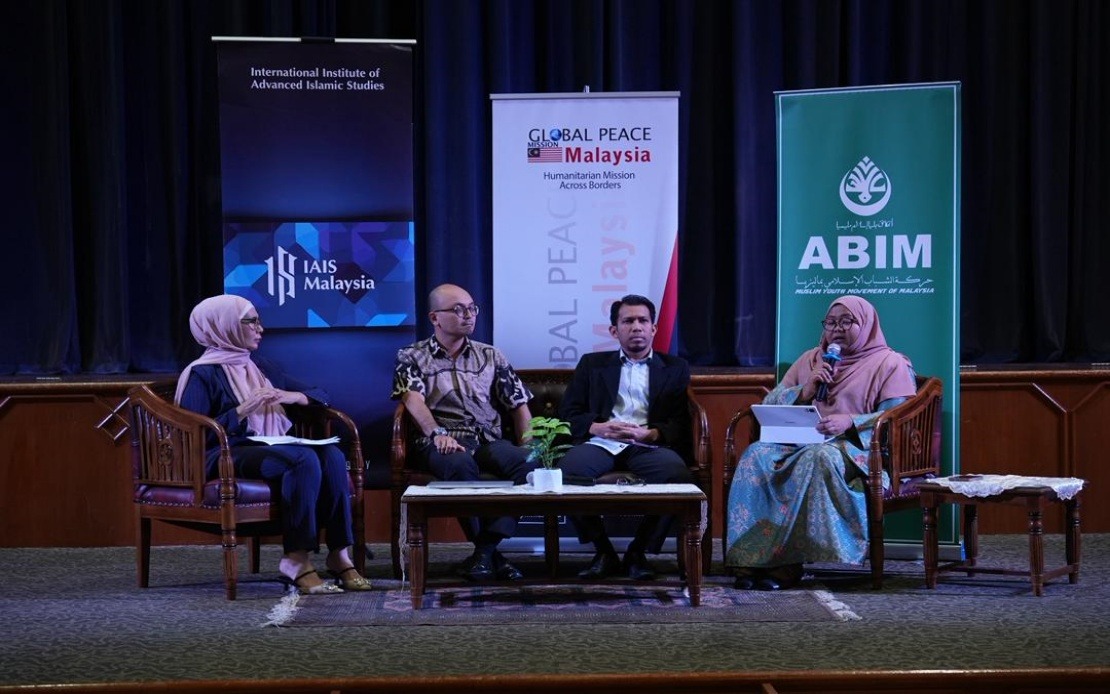
A significant conference held in Kuala Lumpur on World Refugee Day has produced ten resolutions aimed at reshaping how Malaysia approaches its refugee crisis, with particular emphasis on crafting policy frameworks that satisfy national security concerns whilst upholding humanitarian principles. The gathering, organised jointly by Global Peace Mission Malaysia, Angkatan Belia Islam Malaysia (ABIM) and the International Institute of Advanced Islamic Studies (IAIS) Malaysia, brought together representatives from civil society groups, universities, aid organisations, international bodies and community figures to deliberate on Malaysia's refugee situation. The resulting resolutions represent a carefully calibrated attempt to move discussion of refugee issues away from polarised rhetoric and toward evidence-based policymaking that acknowledges legitimate public concerns alongside genuine humanitarian need.
Ahmad Fahmi Mohd Samsudin, president of ABIM, indicated that the resolutions and accompanying declaration would circulate amongst Members of Parliament and key government bodies to encourage substantive policy discussions. The conference specifically aimed to correct widespread misconceptions surrounding refugee populations whilst simultaneously addressing growing anti-refugee sentiment within Malaysian society. Ahmad Fahmi emphasised that the resolutions distilled perspectives from non-governmental organisations working directly with refugee communities on the ground, potentially offering practical insights that could inform more robust government responses. He signalled that follow-up consultations with the Home Ministry and National Security Council were anticipated, suggesting that conference organisers view these discussions as preliminary to formal policy engagement.
Though Malaysia remains outside the 1951 Refugee Convention framework, the country possesses substantial experience managing humanitarian displacement situations spanning several decades and multiple regions. Vietnamese refugees, Syrian populations fleeing civil war, Bosnian communities escaping ethnic conflict, and Palestinians displaced from their territories have all found varying degrees of protection within Malaysian borders at different historical moments. This extensive practical experience with refugee populations provides a foundation of institutional knowledge that Ahmad Fahmi suggested should inform contemporary policy discussions. Yet despite this history, Malaysia currently lacks comprehensive legislative frameworks explicitly addressing refugee status determination and protection, creating ambiguity around the legal rights and responsibilities governing these populations.
A core concern articulated throughout the conference centred on the erosion of social cohesion resulting from xenophobic narratives increasingly prevalent across Malaysian media landscapes and social platforms. Ahmad Fahmi warned that permitting anti-refugee sentiment to flourish unchecked risked normalising hatred and discrimination that could subsequently extend toward other marginalised groups within society. The resolutions therefore emphasise the necessity of distinguishing between legitimate policy debates around security and resource allocation on one hand, and dehumanising rhetoric that strips refugees of dignity and fundamental humanity on the other. This distinction proves crucial in a Malaysian context where social harmony and inter-community relations constitute foundational national values enshrined in constitutional principles.
The resolutions explicitly rejected all manifestations of hatred, discrimination and dehumanisation targeting refugees and asylum seekers, whilst simultaneously acknowledging that public anxieties regarding security, law enforcement capacity and social services merit serious, fact-based examination rather than dismissal. This measured approach reflects recognition that refugee-scepticism in Malaysia often stems from legitimate questions about governance capacity, integration infrastructure, and resource competition rather than purely xenophobic impulses. By validating these underlying concerns as appropriate subjects for policy dialogue, conference participants aimed to create space for nuanced discussion transcending the inflammatory rhetoric that has characterised recent public discourse.
Improving data collection and registration mechanisms emerged as a priority theme throughout deliberations. Participants endorsed collaborative efforts between the Malaysian government, the United Nations High Commissioner for Refugees (UNHCR) and relevant international partners to establish more rigorous systems for documenting refugee populations and monitoring their integration outcomes. More precise demographic and socioeconomic data would enable policymakers to design interventions addressing actual rather than perceived challenges, potentially undermining alarmist narratives built upon speculation rather than documented evidence. Such systematic approaches also facilitate more transparent resource allocation and accountability within humanitarian programmes, addressing public concerns about mismanagement or preferential treatment.
The conference resolutions underscored the necessity of comprehensive public education and media literacy initiatives combating misinformation and xenophobic narratives circulating through traditional and digital channels. This emphasis reflects recognition that many Malaysians lack direct contact with refugee populations, rendering them susceptible to sensationalised media coverage or algorithmically-amplified social media content emphasising conflict and criminality over integration successes and humanitarian contributions. Strategic public communication campaigns highlighting refugee workforce participation, educational achievements and cultural contributions could help rebalance public perception by providing alternative narratives grounded in documented examples.
A particularly innovative resolution called for establishing dedicated advocacy and support mechanisms protecting humanitarian workers and civil society organisations from coordinated social media attacks, slander campaigns and disinformation targeting their work with vulnerable populations. This provision acknowledges a troubling trend whereby NGOs and activists advocating for refugee rights face systematic harassment, defamation and online abuse designed to silence their advocacy and deter public support. By recognising these attacks as threats to civic space and freedom of association, conference participants signalled that protecting humanitarian workers constitutes a prerequisite for effective refugee assistance and policy dialogue.
The conference proceedings reflect Malaysia's complicated position as a country hosting substantial refugee and asylum-seeking populations without formal status under international refugee law. This legal ambiguity creates challenges for both refugee populations lacking clear rights and for Malaysian authorities attempting to govern their presence without adequate international legal scaffolding. The resolutions tacitly acknowledge this structural problem by calling for comprehensive government action plans that would presumably address gaps in Malaysia's current regulatory framework. Such action plans could potentially incorporate mechanisms for basic status determination, access to essential services, and pathways toward either local integration or onward resettlement depending on individual circumstances.
Ahmad Fahmi's characterisation of the conference as attempting to move refugee discourse "back to the middle ground" reflects frustration with polarised debate that permits little room for recognising complexity or acknowledging legitimate concerns across the spectrum. Malaysian society, like many nations grappling with refugee populations, has witnessed the emergence of increasingly hardline anti-refugee political movements alongside dedicated humanitarian advocacy communities, with moderate voices frequently squeezed from public conversation. The conference resolutions represent an attempt to resurrect this moderate space by explicitly rejecting both dehumanisation of refugees and dismissal of legitimate national interests, proposing instead evidence-based policymaking rooted in humanitarian principles and practical governance capacity.
The timing of these resolutions during World Refugee Day amplifies their symbolic significance beyond the immediate policy implications. World Refugee Day, observed annually on June 20, commemorates the adoption of the 1951 Refugee Convention and serves as a global moment for reflection on refugee protection and solidarity. By anchoring Malaysia's conference to this international observance, organisers positioned Malaysian refugee discourse within broader global conversations about responsibility-sharing, protection standards and humanitarian obligation. This international framing may strengthen domestic arguments for more comprehensive refugee protections by demonstrating alignment with established international norms and values.

