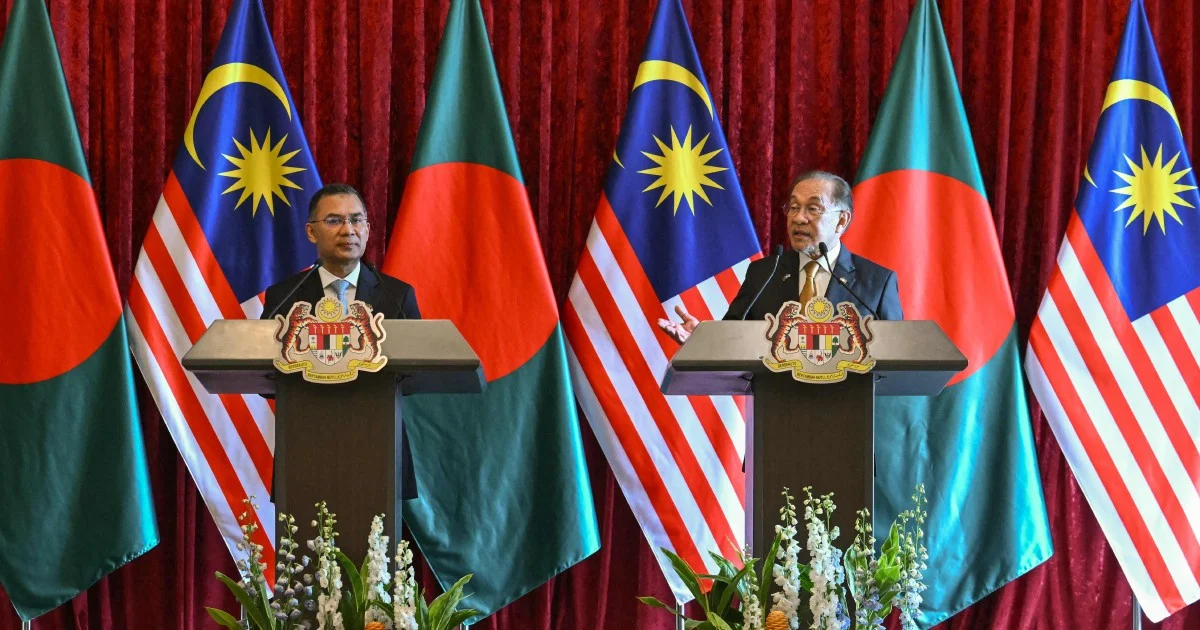
Prime Minister Datuk Seri Anwar Ibrahim has committed to stamping out the exploitation of Bangladeshi migrant workers, recognising their irreplaceable role in sustaining Malaysia's economy. Speaking to concerns about labour abuse, the premier declared that mistreatment of foreign workers cannot be tolerated and pledged comprehensive action to protect this vulnerable workforce.
The Malaysian economy has long depended on migrant labour, with Bangladeshi workers forming a substantial portion of the workforce across construction, manufacturing, plantations, and domestic sectors. These workers frequently remit significant sums back to families at home, contributing to household economies across Bangladesh whilst addressing critical labour shortages in Malaysia. Yet this dependency has often coincided with documented cases of wage theft, unsafe working conditions, contract violations, and inadequate housing—problems that have drawn scrutiny from international labour organisations and human rights groups.
Anwar's intervention signals heightened political attention to worker protections at a time when Malaysia faces international scrutiny over labour standards. The commitment reflects broader regional concerns about migrant worker rights, particularly following high-profile investigations into labour trafficking and exploitation in Southeast Asia. Bangladesh has become increasingly vocal about safeguarding its citizens abroad, and diplomatic relations between the two nations partly hinge on how seriously Malaysia addresses these grievances.
The exploitation of migrant workers operates through multiple mechanisms. Labour contractors frequently charge excessive recruitment fees that workers spend years repaying, effectively binding them to employers. Passport confiscation—a practice designed to prevent workers from leaving—remains widespread despite being legally prohibited. Wage deductions for housing, meals, and alleged breaches of contract rules can leave workers earning far below minimum wage levels. Additionally, enforcement of existing labour laws remains inconsistent, with many violations going unreported due to workers' fear of deportation or retaliation.
For Malaysian employers, the reliance on affordable migrant labour has become deeply entrenched across labour-intensive industries. Construction companies particularly depend on Bangladeshi workers to maintain project timelines and cost structures. Manufacturing operations similarly operate on margins that assume access to lower-wage foreign workers. This structural dependency complicates enforcement efforts, as stricter worker protections threaten to increase operational costs and potentially slow economic activity. Yet Anwar's framing positions protection as compatible with economic efficiency rather than antithetical to it.
The pledge to eliminate exploitation requires concrete mechanisms beyond rhetorical commitment. Effective enforcement demands adequate resources for labour inspectors, surprise workplace audits, and meaningful penalties for violations. Establishing clear complaint channels where workers feel safe reporting abuses without fear of retaliation proves essential but challenging. Requiring registered recruitment agencies to maintain transparency about fees and contract terms could address upfront exploitation. Strengthening ties between Malaysian authorities and Bangladesh's oversight bodies could facilitate cross-border verification and accountability.
Bangladeshi workers themselves have limited bargaining power within Malaysia's employment framework. Many lack fluency in Malay or English, making it difficult to understand their full rights under Malaysian law. Union representation for migrant workers remains restricted in some sectors, limiting their capacity to collectively advocate for better conditions. Language barriers also impede workers from accessing legal recourse when disputes arise. These structural disadvantages perpetuate vulnerability despite whatever protective policies exist on paper.
Regional implications of Malaysian labour practices extend beyond bilateral relations with Bangladesh. Other source countries—including Indonesia, Myanmar, and Nepal—monitor how Malaysia treats their nationals. A reputation for failing to protect migrant workers could encourage those nations to restrict worker outflows or impose their own protective measures that complicate Malaysian recruitment. Conversely, demonstrating genuine commitment to standards could position Malaysia as a destination of choice for quality workers, enhancing labour supply stability.
International organisations have long flagged Malaysia's labour standards as areas requiring improvement. The International Labour Organisation and various human rights groups have documented systematic violations within particular industries. Some global corporations have faced pressure from consumers and investors to ensure their Malaysian supply chains do not depend on exploited labour. Anwar's public commitment provides an opportunity to move beyond such external criticism by demonstrating domestic initiative.
Implementing protection measures inevitably raises compliance costs for employers, which could translate into price increases for consumers or reduced profit margins for businesses. However, framing worker protection as a non-negotiable standard—rather than a competitive disadvantage—can drive sector-wide adoption. When all employers face the same requirements, none enjoys a competitive advantage from cutting corners on worker welfare. This levelness of expectation ultimately fosters more sustainable business practices.
The credibility of Anwar's pledge will be tested through follow-up actions rather than declarations. Increased budget allocations for labour enforcement, public prosecutions of violators, and measurable improvements in worker compensation and conditions would substantiate the commitment. Bangladesh's government and civil society organisations will likely monitor progress closely, as will international observers assessing Malaysia's governance trajectory.
Beyond Bangladeshi nationals, this framework has implications for Malaysia's broader migrant worker population. Domestic workers from neighbouring countries, often working in private households with minimal oversight, similarly face exploitation risks. Establishing consistent protective standards across all migrant worker categories would signal comprehensive commitment rather than selective concern. Such an approach would strengthen Malaysia's position as a responsible regional employer whilst addressing genuine human rights concerns.

