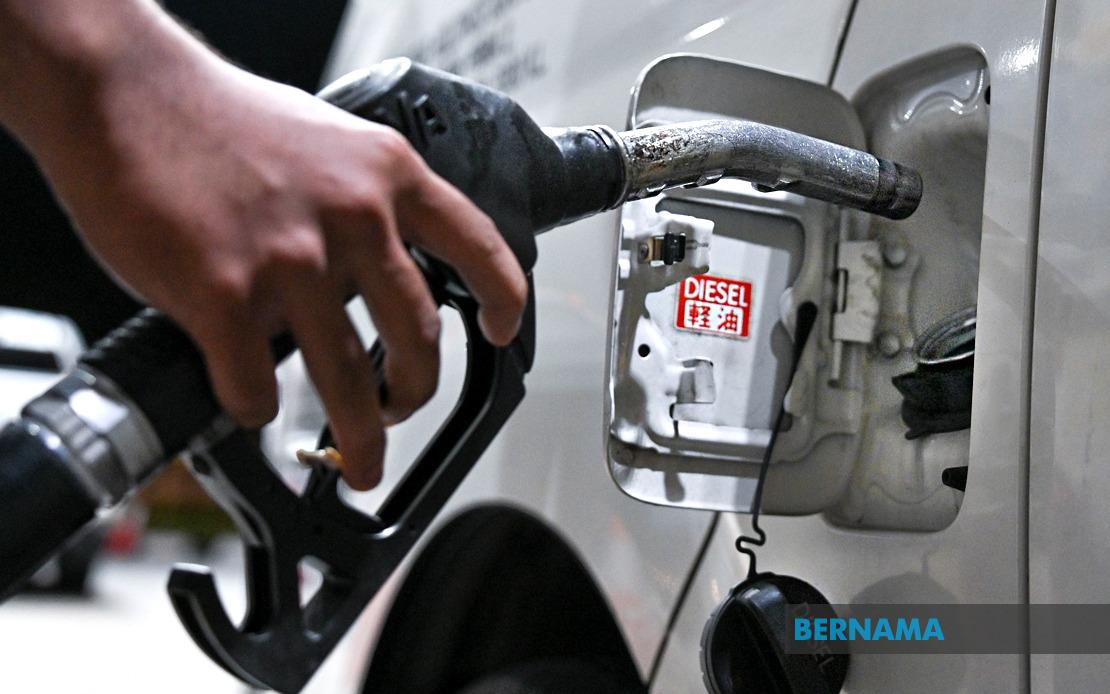
The Malaysian government is poised to recoup RM2 billion annually in subsidy costs through the rollout of BUDI MADANI Diesel, a targeted fuel programme designed to clamp down on cross-border smuggling and fraudulent subsidy claims that have drained billions from the federal budget. Launching from July 1, the initiative fixes diesel prices at RM2.10 per litre for qualifying private vehicle owners verified through MyKad, according to Second Finance Minister Datuk Seri Amir Hamzah Azizan.
The urgency behind the reform underscores a crisis brewing in Malaysia's fuel subsidy system. Monthly outlays for petrol and diesel ballooned from roughly RM800 million to nearly RM4.7 billion in March and RM4.9 billion in April as global crude prices surged, straining government finances during a period of competing fiscal demands. More alarming still, diesel consumption jumped abnormally from 624 million litres monthly to 1.2 billion litres—a near-doubling that defies rational economic behaviour and points unmistakably toward systematic leakage.
The leakage problem extends far beyond the peninsula. Consumption patterns in Sabah and Sarawak reveal particularly troubling anomalies, with current usage approaching two billion litres annually against an estimated genuine requirement of one billion litres. This discrepancy suggests that roughly half of all diesel flowing into East Malaysia may be siphoned away through smuggling networks, black-market resale, or abuse of subsidy mechanisms by ineligible purchasers. Such losses not only hemorrhage public funds but threaten the stability of domestic fuel supplies, creating bottlenecks that could ripple through the broader economy.
The scheme mirrors the structure of BUDI RON95, the government's earlier targeted subsidy for petrol, but zero in on diesel-dependent sectors. Approximately 700,000 private diesel vehicle owners nationwide will gain access to subsidised fuel, requiring identification verification at the pump. Existing BUDI Diesel beneficiaries, who currently receive RM400 monthly cash assistance, will be automatically transitioned to point-of-sale subsidies without additional paperwork—a deliberate design choice to reduce bureaucratic friction and encourage uptake among legitimate users.
For policymakers monitoring Malaysia's fiscal trajectory, the RM2 billion annual saving represents a material recapture of revenue that can be redirected toward infrastructure, healthcare, education, or debt servicing. In the context of Southeast Asian economies grappling with subsidy reform, Malaysia's move signals a pragmatic rebalancing between social support and fiscal discipline. The approach also aligns with broader regional trends toward means-testing and digital verification in welfare delivery, demonstrating how technology can enhance targeting precision while reducing fraud.
The early-access phase commencing June 27 in Peninsular Malaysia will serve as a practical stress test for MyKad infrastructure at petrol station networks. Authorities will monitor transaction volumes, system reliability, and user experience to identify bottlenecks before the nationwide rollout. Given the scale of the transition—affecting hundreds of thousands of users and thousands of retail outlets—technical glitches during this ramp-up period could undermine public confidence in the broader initiative.
For businesses dependent on diesel, particularly transport operators, logistics firms, and heavy machinery users, the tiered approach creates new planning considerations. Ineligible commercial purchasers will revert to unsubsidised market prices, which currently hover well above RM2.10 per litre. This pricing differential may trigger cost pressures across supply chains, potentially feeding through to consumer prices for goods that rely on road freight. Operators in competitive sectors may lobby for exemptions or special hardship provisions, adding political complexity to implementation.
The regional dimension warrants attention as well. Cross-border smuggling into Thailand and Brunei thrives partly because of Malaysia's below-market subsidised pricing. Tightening the subsidy through MyKad verification and consumption caps should reduce the arbitrage opportunity that fuels illicit exports, though determined smugglers will likely shift tactics—perhaps exploiting rural border areas or developing counterfeit documentation schemes. Coordination with Thai and Bruneian authorities on supply chain tracking and intelligence sharing will become increasingly important.
Transparency mechanisms embedded in the BUDI MADANI framework—a stated government priority—should include regular public disclosure of leakage rates, subsidy costs, and beneficiary demographics. Without such accountability, public trust in the programme could erode, particularly among non-qualifying groups who bear the burden of higher fuel costs through increased transport and goods expenses. Clear communication about the rationale, eligibility criteria, and expected timelines will be essential for managing political backlash.
The programme also reflects evolving thinking about subsidy design in the developing world. Rather than blanket price controls that distort markets and create perverse incentives, targeted schemes linked to verified identity concentrate support on intended recipients while allowing market pricing to guide resource allocation. If BUDI MADANI succeeds in capturing the purported RM2 billion in savings while maintaining political acceptability, it could provide a template for subsidy reform in other sectors and other countries wrestling with similar challenges.
Longer-term, the success of this initiative will depend on sustained political commitment, robust enforcement against fraud, and willingness to adapt eligibility criteria as economic conditions shift. Early performance data—due within months of the July launch—will signal whether Malaysia has found a sustainable balance between protecting vulnerable motorists and restoring fiscal health. For a nation navigating mounting debt and slowing growth, such demonstrations of credible reform can help restore confidence among investors and rating agencies that policymakers are serious about medium-term consolidation.

