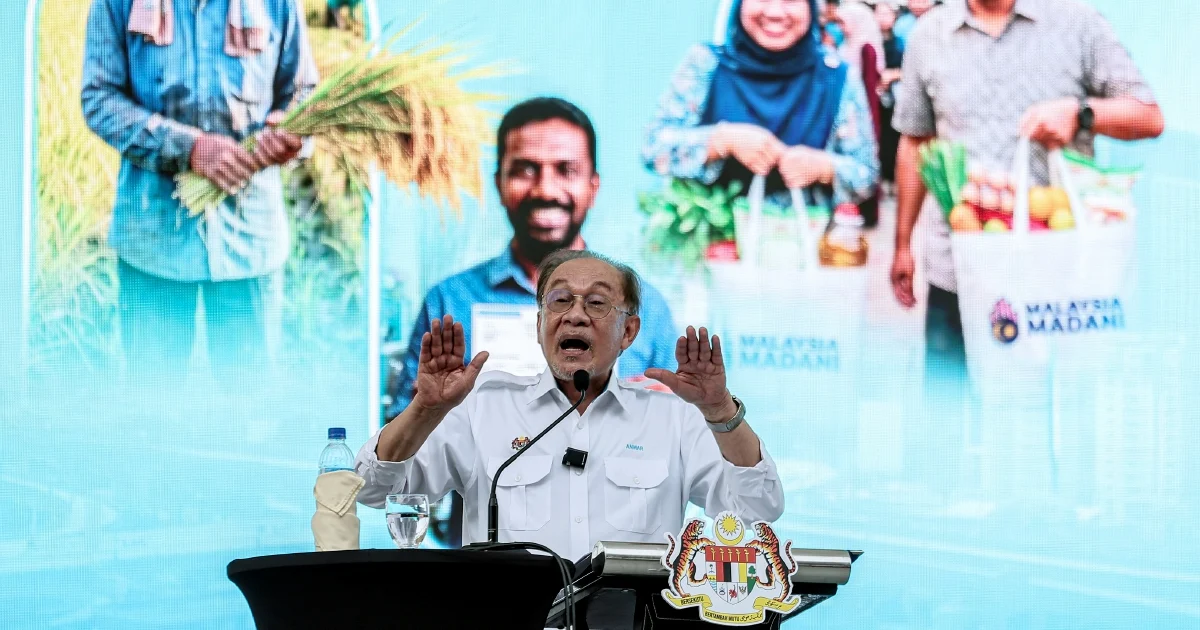
The Malaysian government has approved a substantial increase in annual funding for Neighbourhood Watch Areas (KRT) across the nation, raising the grant allocation from RM6,000 to RM10,000 per area. Prime Minister Anwar Ibrahim announced the decision in Segamat, with the enhanced funding set to commence on January 1, 2027, representing a 67 percent uplift in financial support for these community-based safety networks.
The expansion of KRT funding reflects the government's renewed commitment to strengthening grassroots crime prevention and community policing initiatives at the neighbourhood level. Neighbourhood Watch Areas have long served as the frontline of local safety efforts across Malaysia, with volunteers and residents working together to create safer environments in their respective communities. The increased allocation signals recognition that these volunteer-driven organisations require greater financial resources to sustain operations, conduct training programmes, and implement preventive measures effectively.
For many KRT groups operating in smaller towns and suburban areas, the additional RM4,000 annually represents a meaningful injection that can be directed towards community engagement activities, safety equipment, and neighbourhood patrols. Rural and semi-urban neighbourhood watches, in particular, often operate with minimal resources and have advocated for higher government support to match the growing costs of organising community members and running awareness campaigns. The funding boost addresses long-standing requests from KRT leaders seeking parity with other community safety programmes.
The timing of the announcement in Segamat underscores the government's focus on bringing development benefits to towns across the peninsula, reflecting broader efforts to ensure equitable distribution of resources beyond major urban centres. Segamat, situated in southern Johor, has been a focal point for various government initiatives aimed at strengthening community infrastructure and local governance. The government's decision to promote neighbourhood safety through enhanced grants aligns with ongoing strategies to reduce crime through community participation rather than enforcement alone.
Neighbourhood Watch Areas function as crucial intermediaries between residents and law enforcement agencies, identifying emerging safety concerns and mobilising community responses before incidents escalate. With increased funding, KRT groups can invest in better communication networks, improved lighting in public spaces, and educational programmes about personal and property security. Many watch areas have also begun deploying community volunteers on regular patrols, and additional funding enables these groups to provide modest allowances or incentives to sustain participation levels.
The RM10,000 annual grant will be disbursed on January 1, 2027, giving KRT organisers over a year to plan their spending priorities and communicate with members about how additional resources will enhance local safety efforts. This advance notice period also allows the government to prepare administrative procedures for the revised disbursement process and ensure all KRT groups nationwide receive allocations equitably. The standardised national increase removes the previous disparity where some areas received differential funding based on operational scale or local government discretion.
Malaysia's KRT system encompasses thousands of neighbourhood groups across urban, suburban, and rural regions, involving hundreds of thousands of volunteer members. These organisations operate independently but coordinate with police through established liaison channels, making them essential to the community policing model that successive governments have promoted. By increasing central government funding, authorities acknowledge that sustainable community safety requires consistent financial backing and recognition of volunteer contributions.
The increase coincides with broader government messaging about citizen-led crime prevention and shared responsibility for community wellbeing. As urbanisation accelerates and migration patterns shift populations across states, neighbourhood-level organisations like KRT become increasingly important for maintaining social cohesion and collective security. Higher funding enables these groups to welcome and train new members, refresh ageing equipment, and adapt to evolving safety challenges including cybercrime awareness and emergency preparedness.
Regional analysts suggest the funding increase reflects lessons learned from community policing successes across Southeast Asia, where neighbourhood engagement has proven more cost-effective than enforcement-heavy strategies alone. Other nations in the region have similarly invested in grassroots crime prevention networks, recognising that communities themselves represent the most effective first line of defence against crime. Malaysia's enhanced KRT support positions the country as committed to this evidence-based approach to public safety.
The government's decision carries implications for state-level community safety planning, as local authorities will coordinate disbursement and ensure KRT groups meet registration and governance standards. States with larger numbers of neighbourhood watch areas will see proportionally greater total increases in aggregate funding, potentially driving variations in how states approach community safety resource allocation. Implementation will also depend on clarifying whether the RM10,000 represents a fixed grant to all KRT groups or whether allocations account for area size, population density, or operational complexity.
For residents in Malaysia's towns and neighbourhoods, the increased funding potentially translates to more visible community presence, enhanced emergency communication systems, and expanded safety awareness programmes. Neighbourhood Watch Areas may establish neighbourhood patrols with greater consistency, organise training workshops on security practices, and improve coordination during emergencies. The financial boost acknowledges citizen participation as essential infrastructure for national safety rather than an optional community service.

