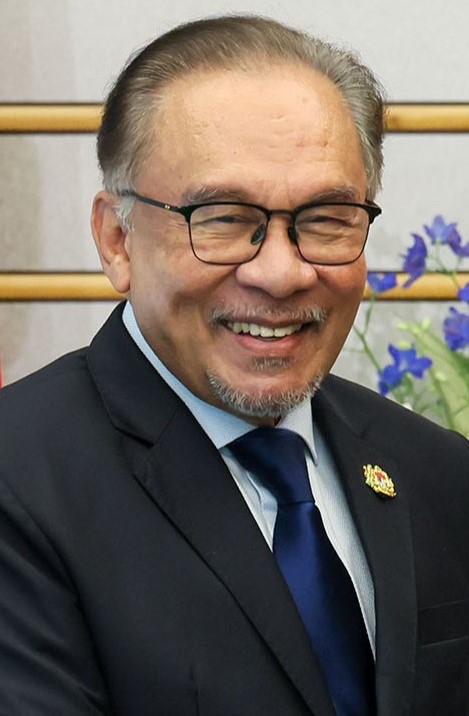
Prime Minister Anwar Ibrahim will advance Malaysia's energy security agenda during his working visit to Russia, where he is scheduled to meet President Vladimir Putin as part of a broader engagement between ASEAN leadership and the Russian government. The trip represents a strategic initiative to safeguard the country's access to crucial petroleum resources and ensure the continuity of diesel supplies at a time when regional energy markets face unprecedented pressures from geopolitical developments.
In remarks made at an event in Muar, the Prime Minister underscored that maintaining robust international relationships serves as a foundation for Malaysia's economic resilience. The forthcoming discussions with Putin will centre on guaranteeing uninterrupted flows of crude oil to Malaysian refineries, a matter that extends beyond immediate commercial interests and touches on the nation's broader strategic autonomy. By engaging directly with major energy producers, Malaysia seeks to insulate itself from supply shocks that could destabilise domestic economic performance and undermine consumer purchasing power.
The timing of this diplomatic initiative is particularly significant given Malaysia's remarkable achievement in maintaining one of the globally competitive retail fuel prices. The domestic cost of RON95 petrol currently stands at RM1.99 per litre, a reflection of prudent fiscal management and the government's commitment to containing inflationary pressures on lower-income households. This price stability, however, remains vulnerable to external supply disruptions and volatile international market conditions, making long-term bilateral arrangements with suppliers increasingly essential.
Malaysia's energy security calculations must now account for escalating tensions in West Asia, where recent military incidents between Israel, the United States, and Iran have raised the spectre of sustained regional instability. The potential closure of the Strait of Hormuz, one of the world's most critical maritime chokepoints through which a substantial portion of global petroleum transits, poses an existential threat to energy-dependent economies throughout Southeast Asia. Any prolonged disruption to shipping lanes in this region would translate swiftly into higher crude prices on international markets, ultimately forcing Malaysian policymakers to absorb costs that would ripple through the entire domestic economy.
The Prime Minister's observations regarding the Strait of Hormuz reveal the interconnectedness of Middle Eastern conflicts with Malaysian prosperity. A sustained closure would not merely affect energy costs but could trigger secondary economic effects across manufacturing, transportation, and agriculture sectors that depend on affordable and reliable fuel supplies. For a nation whose fiscal framework already incorporates fuel subsidies to protect consumer welfare, any significant jump in global oil prices would create budgetary strain and necessitate difficult policy choices between maintaining price controls and managing government expenditure.
Recent discussions with Pakistan's leadership have provided some tentative grounds for optimism regarding the potential de-escalation of West Asian hostilities. According to information shared with the Prime Minister, there are indications that diplomatic efforts may yield an agreement capable of ending the armed conflict within a near-term timeframe. Should such negotiations succeed, the easing of regional tensions could forestall further disruption to maritime traffic and stabilise crude prices, allowing Malaysian authorities to maintain existing subsidy structures without imposing additional fiscal burdens.
However, the current trajectory of global oil pricing shows signs of modest decline, suggesting that markets have already begun pricing in some probability of conflict resolution. This presents a window of opportunity for Malaysia to lock in supply arrangements before any potential resurgence in geopolitical volatility or renewed competition among energy importers drives prices upward. The strategic nature of the Putin meeting lies precisely in this temporal context—establishing long-term supply agreements when international oil markets remain relatively manageable could provide Malaysia with greater price predictability and reduced vulnerability to future shocks.
Beyond the immediate fuel supply dimension, Malaysia's energy diplomacy reflects a broader recognition that Southeast Asian nations must diversify their strategic partnerships to secure access to essential resources. By maintaining constructive relations with Russia despite complex global political dynamics, Malaysia positions itself as a pragmatic actor pursuing national economic interests alongside diplomatic pluralism. This approach differentiates Malaysia from some neighbouring countries that have experienced supply disruptions, demonstrating the tangible benefits of maintaining open channels of communication with diverse international actors.
The working visit also serves as a platform for ASEAN collective engagement with Russian leadership, potentially strengthening the regional bloc's negotiating position on energy matters. When the ten ASEAN nations speak with unified voice on energy security concerns, their collective leverage with suppliers such as Russia increases substantially. Malaysia's role in facilitating this broader ASEAN-Russia dialogue underscores its importance as a bridge-building nation within the regional architecture and its commitment to advancing common Southeast Asian interests in global forums.
Looking ahead, the success of these diplomatic efforts will be measured not merely in the signing of formal agreements but in the tangible security of Malaysia's energy supply over the medium and long term. The Prime Minister's emphasis on linking fuel price stability to broader economic management reflects an understanding that energy security fundamentally underpins macroeconomic stability. As regional geopolitical turbulence persists and global supply chains remain vulnerable to disruption, Malaysia's proactive engagement with major producers and suppliers becomes an essential component of national development strategy and household financial security.