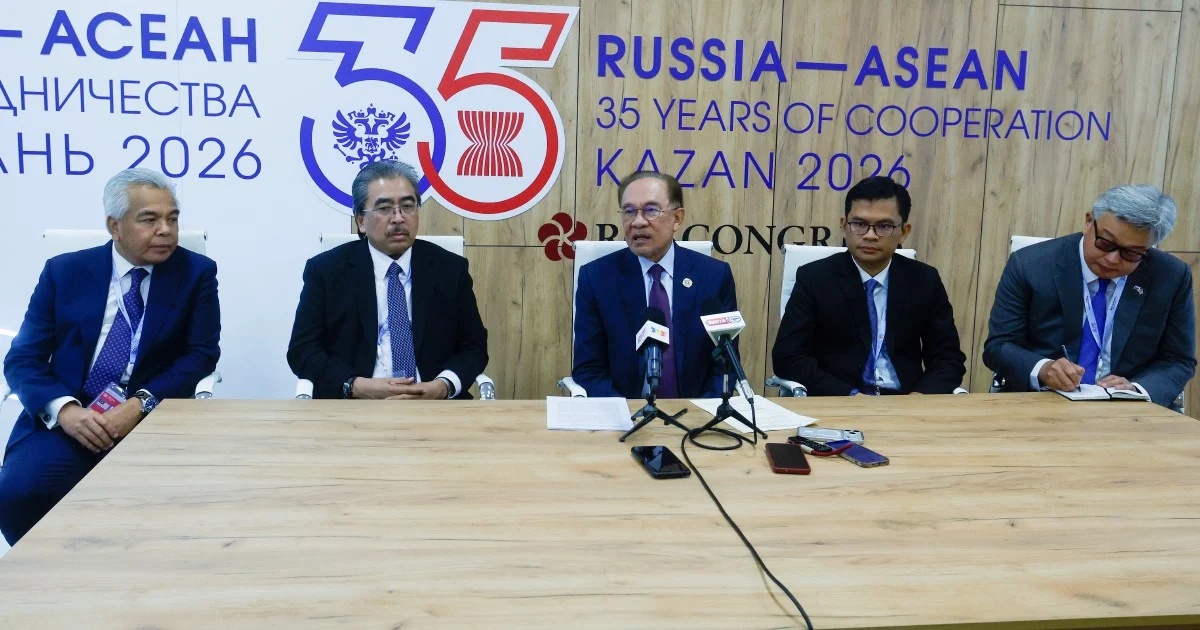
Prime Minister Datuk Seri Anwar Ibrahim has instructed the government to accelerate the implementation of visa-free travel privileges for Russian tourists, marking a strategic pivot in Malaysia's tourism recovery efforts. The directive, unveiled during the Prime Minister's visit to Kazan, underscores the administration's commitment to reopening Malaysia's doors to key international markets and reversing the sustained decline in visitor arrivals that followed years of travel restrictions and geopolitical disruptions.
The removal of visa barriers for Russian nationals represents a calculated effort to tap into a substantial tourism demographic whose spending patterns have traditionally bolstered Malaysia's hospitality and retail sectors. By streamlining entry procedures, the government aims to eliminate friction points that may deter potential visitors who, in previous years, represented a notable portion of arrivals to Malaysian resort destinations and urban centres. The move addresses a competitive disadvantage relative to regional competitors who have already simplified or eliminated visa requirements for Russian travellers.
Malaysia's tourism industry, a significant contributor to the nation's foreign exchange reserves and employment landscape, has faced mounting pressure to restore pre-pandemic visitor numbers. The sector contracted sharply during travel shutdowns and remains characterised by uneven recovery patterns across different origin markets. Russian tourists, who historically demonstrated high-value spending capacity and lengthy stay durations, represent a strategic opportunity for rapid revenue generation and economic momentum in destinations such as Kuala Lumpur, Penang, and Sabah.
The timing of this announcement carries particular significance given Malaysia's broader diplomatic and economic engagement with Russia. The decision reflects the government's balanced approach to international relations, positioning the nation as a welcoming destination across diverse geopolitical contexts. By facilitating Russian visitor access, Malaysia signals openness to maintaining cultural and commercial ties independent of global political polarisation, though such moves require careful calibration of international sensitivities.
Implementing expedited visa-free arrangements demands coordination across multiple government agencies, including immigration authorities, tourism boards, and international affairs departments. The acceleration directive suggests the Prime Minister has prioritised this initiative across bureaucratic channels, potentially overriding standard procedural timelines that typically characterise policy implementation in Malaysia. Such executive emphasis can unlock resource allocation and inter-agency cooperation necessary to establish new systems, train personnel, and communicate revised procedures to embassies and international stakeholders.
The strategic value extends beyond immediate visitor numbers. Russian tourism markets often influence secondary economic activities including guided tours, cultural programming, dining experiences, and retail purchases that generate distributed income across service sectors. Hotels, restaurants, transportation providers, and attractions throughout Malaysia stand to benefit from increased Russian visitor flows, creating employment multiplier effects particularly in states dependent on tourism revenue.
Regional competitiveness forms an important backdrop to this decision. Neighbouring countries have aggressively pursued Russian tourists through simplified visa regimes and targeted marketing campaigns, capturing market share that Malaysia previously held. Thailand, Vietnam, and Indonesia have successfully positioned themselves as accessible alternatives, a dynamic that threatens Malaysia's historical standing as a preferred Southeast Asian destination for this demographic. By expediting visa-free access, Malaysia aims to recapture lost momentum and reassert competitive positioning.
The initiative also reflects broader recognition within the Malaysian government that tourism diversification requires sustained effort to maintain relevance across shifting source markets. European visitor numbers, particularly from traditional markets, remain below historical benchmarks, necessitating strategic cultivation of alternative constituencies. Russian tourists bring geographic and cultural diversity to Malaysia's visitor base, reducing over-reliance on Asian markets and distributing economic benefits across seasons and locations.
Implementation challenges, however, remain substantial. Establishing visa-free systems requires security screening frameworks compatible with Malaysia's border control obligations and international standards. The government must balance visitor facilitation with security imperatives, a tension that demands sophisticated processing capabilities at airports and land borders. Training immigration personnel to manage increased Russian arrivals efficiently, establishing communication protocols, and preparing tourism infrastructure all require coordinated investment.
The announcement also positions Malaysia strategically within post-pandemic tourism recovery narratives across Asia. Nations increasingly recognise that welcoming policies and simplified entry procedures differentiate them in competitive markets. By moving decisively on Russian visa arrangements, Anwar Ibrahim demonstrates the government's commitment to removing barriers that impede tourism growth, a message that resonates with stakeholders including hoteliers, transport operators, and tour companies who depend on visitor arrivals.
Longer-term implications suggest this decision may presage broader visa policy liberalisation across other markets, signalling Malaysia's intention to become systematically more accessible to international tourists. If successfully implemented, visa-free arrangements for Russians could serve as a model for expanded programmes targeting other regions where simplified entry accelerates visitor growth. Such evolution would represent significant modernisation of Malaysia's historically more restrictive immigration posture.
The expedited implementation directive carries implications for Malaysia's tourism competitiveness extending well beyond the immediate Russian market. Successfully executing this initiative demonstrates governmental capacity for rapid policy activation and inter-agency coordination on priority economic objectives. For Malaysian stakeholders dependent on tourism recovery, the announcement signals political commitment to removing structural barriers that constrain sector performance and economic resilience.