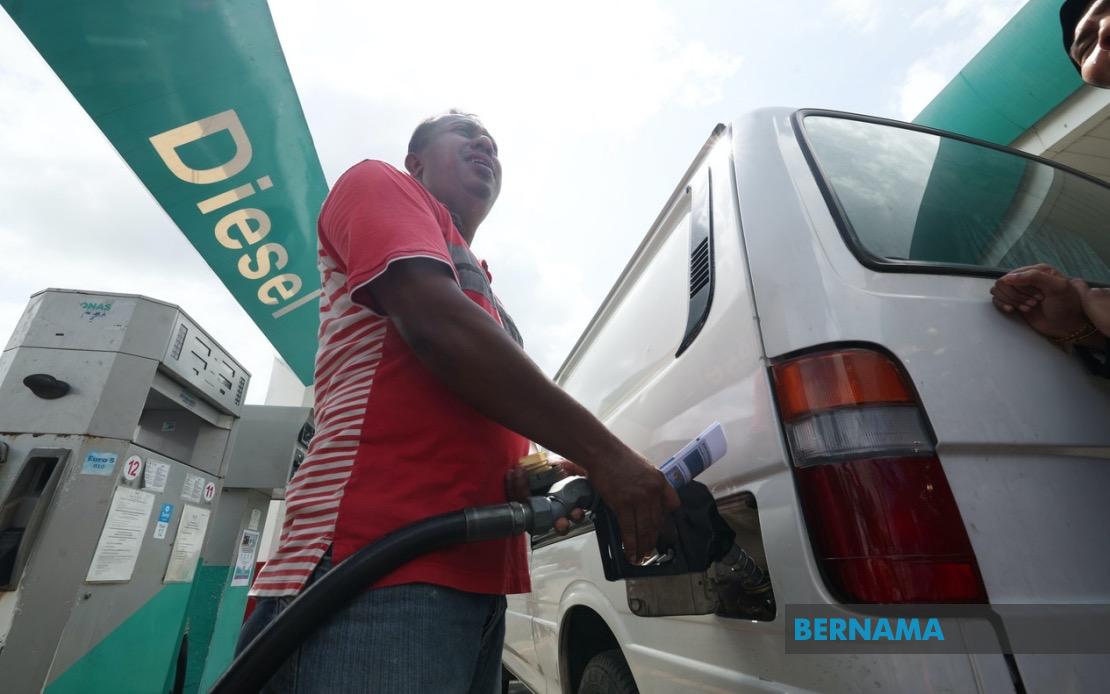
The MADANI Government is set to reduce the price of subsidised diesel to RM2.10 per litre beginning in July 2026, announced Prime Minister Datuk Seri Anwar Ibrahim during an official ceremony in Bintulu on June 21. The decision marks a significant adjustment to fuel pricing policy and reflects the administration's commitment to balancing fiscal responsibility with consumer relief during economically challenging times.
The price reduction will be administered through a reformed targeted diesel subsidy system, mirroring the operational framework already established under the BUDI MADANI RON95 programme. This alignment ensures consistency across the government's fuel subsidy ecosystem and leverages existing infrastructure and verification mechanisms that have proven effective since the introduction of BUDI95. By applying a uniform approach to both petrol and diesel subsidies, policymakers aim to streamline implementation and reduce administrative complexity across multiple fuel types.
A critical component of the new scheme involves personal verification through MyKad, the national identification card. This requirement ensures that subsidies reach genuine Malaysian citizens and prevents leakage to unintended recipients or cross-border smuggling operations—persistent challenges that have historically undermined fuel subsidy programmes throughout Southeast Asia. The MyKad verification layer adds administrative rigour to the distribution process while maintaining accessibility for eligible citizens at petrol stations nationwide.
Finance Minister II Datuk Seri Amir Hamzah Azizan is scheduled to provide comprehensive technical details regarding the implementation framework during a media briefing in Kuala Lumpur. This forthcoming announcement will likely address critical operational questions including the rollout timeline, affected vehicle categories, eligible recipient verification procedures, and administrative mechanisms for retailers and distributors. The detailed briefing will also clarify how the new pricing structure interacts with existing fuel subsidy arrangements and what adjustments consumers and businesses should anticipate.
The announcement carries particular significance for Malaysian motorists and commercial operators reliant on diesel fuel. Trucks, buses, and heavy machinery operators constitute a substantial proportion of diesel consumers, meaning this price adjustment has economy-wide implications beyond personal vehicle usage. For logistics companies and transport operators already contending with elevated operational costs, the RM2.10 price point may provide meaningful relief, potentially moderating inflationary pressures in goods transportation and supporting supply chain stability across the nation.
The timing of this announcement during the Cheque Handover Ceremony marking Bintulu Port's conversion from federal to state port status suggests coordination between fiscal policy and infrastructure development initiatives. The port upgrade, facilitated through Sarawak's administrative jurisdiction, reflects the federal government's broader strategy of empowering state-level economic development while maintaining central oversight of national fuel pricing mechanisms. This dual focus demonstrates an attempt to balance devolved governance with macroeconomic stability.
From a fiscal perspective, implementing targeted diesel subsidies requires careful calibration of budget allocations. Unlike universal fuel price caps, the targeted approach concentrates government expenditure on verified Malaysian citizens, theoretically improving subsidy efficiency and reducing overall fiscal burden. However, the success of such programmes depends entirely on verification system robustness and retailer compliance, areas where previous Malaysian fuel subsidy schemes have occasionally encountered implementation challenges.
Regionally, Malaysia's approach to fuel subsidies continues to diverge from neighbouring countries. While some ASEAN nations have progressively liberalised fuel pricing, Malaysia maintains strategic government involvement in keeping domestic diesel prices below international market rates. This policy reflects domestic political considerations and the government's commitment to protecting household budgets and industrial competitiveness, particularly in price-sensitive sectors like agriculture and transportation.
The diesel price announcement also addresses energy security considerations within Malaysia's broader economic policy framework. Ensuring affordable fuel access supports domestic consumption, facilitates business operations, and reduces competitive disadvantages for Malaysian enterprises relative to regional counterparts benefiting from similar subsidies. For a nation dependent on efficient logistics networks and competitive manufacturing sectors, fuel costs represent a material factor in operational economics and export competitiveness.
Consumers should note that the RM2.10 price applies specifically to subsidised diesel accessed through the targeted verification system. Market dynamics, crude oil price fluctuations, and exchange rate movements may influence unsubsidised fuel pricing independently. Understanding this distinction proves important for informed purchasing decisions and accurate budgeting, particularly for businesses managing fuel as a direct operational expense.
The BUDI MADANI framework's expansion to encompass diesel alongside existing RON95 petrol coverage represents incremental extension of the government's targeted subsidy model. As the programme matures and accumulates operational experience, policymakers will accumulate data on scheme effectiveness, identifying refinements necessary for optimising both fiscal outcomes and consumer satisfaction. Future adjustments may reflect lessons learned from BUDI95 implementation and evolving macroeconomic conditions.
Stakeholders across the energy, transport, and logistics sectors will await Finance Minister Amir Hamzah's detailed briefing to understand implementation specifics affecting their operations. Clear communication of administrative requirements, transition arrangements, and compliance procedures will prove essential for ensuring smooth adoption when the scheme launches in July 2026.

