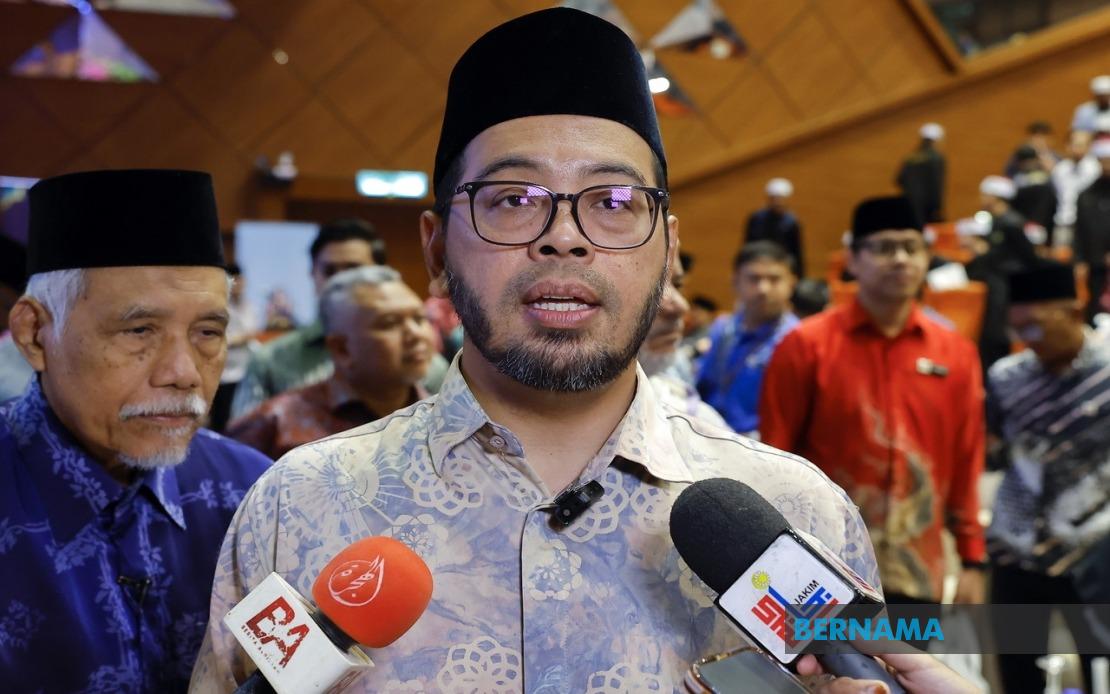
The Prime Minister's Department (Religious Affairs) has pledged to escalate its outreach to young Malaysians, signalling a comprehensive governmental push to combat digital extremism and the spread of false information. This commitment comes directly in response to Sultan Nazrin Shah of Perak, who recently underscored the critical need for religious leaders to assume a more visible and proactive stance in engaging with youth populations across the country. The announcement was made by Minister in the Prime Minister's Department (Religious Affairs) Dr Zulkifli Hasan at the National and International Tokoh Ma'al Hijrah Premier Lecture 1448/2026 held in Putrajaya.
Dr Zulkifli Hasan indicated that his department intends to adopt the Sultan's address as a foundational framework for designing and rolling out new youth-focused initiatives and programmes. He emphasised that the department's leadership considers itself bound by the royal directive and has committed to translating the Sultan's message into concrete policy action. By positioning the Sultan's remarks as a guiding principle, the ministry has effectively elevated youth engagement from a routine administrative function to a matter of national strategic importance, particularly regarding religious and social cohesion.
Sultan Nazrin Shah's intervention on this issue reflects growing anxiety within Malaysia's leadership about the vulnerability of younger generations to divisive ideologies and misinformation campaigns operating through digital platforms. The Sultan articulated that contemporary youth confront a complex array of challenges that extend well beyond traditional concerns. These obstacles encompass anxieties surrounding climate change, the destabilising effects of ongoing global conflicts, mounting economic uncertainty that threatens future livelihoods, the polarising effects of digital communication networks, and a broader erosion of confidence in established institutions and authorities.
The digital dimension of this challenge cannot be overstated for Malaysian policymakers. Social media platforms and online communication channels have fundamentally altered how information circulates and how ideological persuasion operates, particularly among those aged under 35. The speed at which misleading narratives can propagate, the algorithmic amplification of divisive content, and the difficulty in countering falsehoods once they achieve viral status create vulnerabilities that traditional religious education and community engagement structures were not designed to address. Sultan Nazrin's framing of this challenge recognises that religious institutions must evolve their methods and presence if they are to remain relevant voices in youth communities.
Extremism, in the context of Southeast Asia and Malaysia specifically, encompasses multiple manifestations. While international terrorist organisations and their ideological variants certainly pose security threats, the Sultan's address appears to encompass a broader understanding of extremism that includes the radicalisation of thought, the dehumanisation of those perceived as different, and the adoption of rigid, uncompromising positions on religious and social questions. The rise of online echo chambers where individuals encounter only views that reinforce their existing beliefs has accelerated this fragmentation, creating isolated pockets of increasingly extreme conviction within the broader youth population.
The implications for Malaysia's approach to religious governance are substantial. Rather than relying solely on security-focused counter-extremism measures, the government is being encouraged to invest in constructive engagement that builds critical thinking skills, promotes media literacy, and fosters dialogue across religious and ideological lines. This represents a shift toward prevention and community building rather than exclusively reactive security responses. For Dr Zulkifli Hasan's department, this translates into designing youth programmes that are not merely defensive against external threats but actively constructive in building resilience, understanding, and social cohesion.
The timing of Sultan Nazrin's address and the government's swift response reflects an acknowledgement that Malaysia's younger generation will shape the nation's religious and social character for decades to come. Disaffection among youth, whether rooted in economic frustration or ideological radicalisation, poses cascading risks to national stability and cohesion. By tasking religious institutions and the government's religious affairs machinery with primary responsibility for youth engagement, the leadership is placing considerable faith in the capacity of religious leaders to articulate values of moderation, tolerance, and critical thinking in ways that resonate with digitally native audiences.
Regional context further illuminates the urgency of this initiative. Across Southeast Asia, governments have grappled with youth radicalisation, the spread of extremist propaganda, and the weaponisation of religious identity for political and violent purposes. Countries including Indonesia, the Philippines, and Thailand have all experienced security incidents linked to online recruitment and radicalisation. Malaysia's approach, which emphasises religious leadership engagement and systemic youth programming, positions the country as attempting a more integrated and community-centred response than purely security-centric strategies.
For implementation, Dr Zulkifli Hasan's department faces substantial practical challenges. Reaching young people in digital spaces requires technical expertise, cultural fluency, and an understanding of social media dynamics that traditional religious institutions may lack. Programmes must compete for attention in an extraordinarily crowded digital marketplace. Additionally, building trust between government religious institutions and youth populations who may harbour scepticism toward authority figures requires sustained effort and demonstrable responsiveness to genuine youth concerns rather than dismissive paternalism.
The sustainability of this commitment will depend on adequate resource allocation, institutional coordination across multiple government agencies, and genuine collaboration with non-governmental religious leaders, civil society organisations, and the private sector. Youth engagement on the scale the Sultan envisioned requires infrastructure investment, training for religious educators in contemporary communication methods, and mechanisms for feedback and continuous programme evaluation. Without these supporting elements, policy commitments risk remaining aspirational rather than transformative.
Moving forward, Malaysia's religious affairs ministry will need to demonstrate how its programmes concretely address the specific anxieties Sultan Nazrin identified. This means developing curricula that build digital literacy and critical evaluation of online information, creating safe spaces for young people to explore religious questions without fear of judgment, and fostering interfaith and cross-ideological dialogue among youth. The challenge is considerable, but the royal endorsement and ministerial commitment signal that addressing youth extremism and misinformation through religious engagement has become a central priority for Malaysian governance.