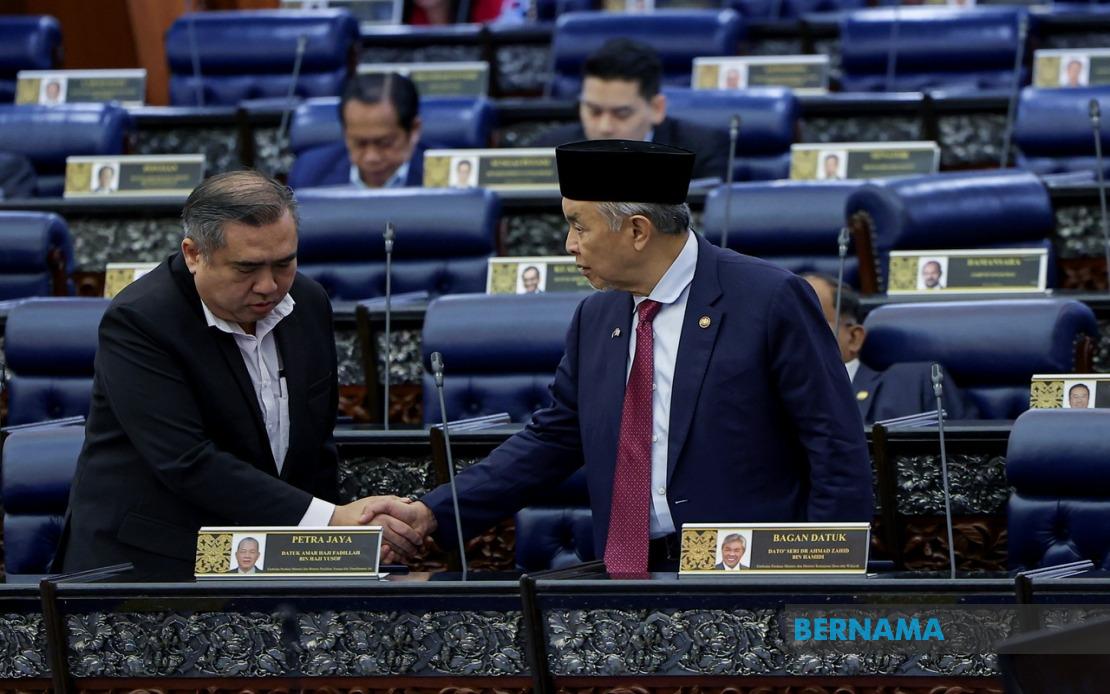
Transport Minister Anthony Loke has introduced the Road Transport (Amendment) Bill 2026 for first reading in Parliament, marking the government's latest effort to fortify enforcement mechanisms across the nation's road network. The Bill, which will proceed to second reading during the current parliamentary session, represents a substantial recalibration of Malaysia's approach to traffic safety and regulatory compliance. The legislative package reflects mounting concerns about road discipline and the sustained toll of traffic-related incidents on Malaysian communities.
At the heart of the amendments lies a fundamental restructuring of penalty structures. The baseline fine for numerous common traffic infractions is being raised from RM300 to RM500, establishing a sharper deterrent against everyday violations. This category encompasses offences that rank among the most frequently recorded by enforcement authorities: failing to display vehicle registration numbers, operating without a valid driving licence, exceeding speed limits, breaching vehicle construction and equipment standards, ignoring traffic signals, and participation in informal street racing. The across-the-board increase aims to reinforce compliance through financial consequence, particularly targeting repeat offenders who may have previously considered base fines a manageable cost of non-compliance.
Morely concerning infractions face substantially steeper consequences. The Bill introduces a dramatic escalation for those convicted of driving with a suspended licence, transforming what was previously a minor infraction into a serious criminal matter. Offenders now face up to three years imprisonment, a fine ranging from RM3,000 to RM10,000, or both—compared to the prior maximum of one year's incarceration or RM5,000. This represents a tripling of potential jail exposure and a doubling of maximum fines, signalling Parliament's determination to neutralise drivers who continue operating despite formal suspensions.
Illegal street racing and speed-testing on public roads emerge as a particular focus of the legislative overhaul. A new offence section establishes a two-tier penalty structure that differentiates between first and subsequent convictions. First-time offenders face fines between RM2,000 and RM10,000, imprisonment up to two years, or both. Those convicted a second time confront minimum imprisonment of five years alongside fines reaching RM20,000, creating a dramatic escalation designed to prevent habitual participation in dangerous racing culture. This graduated approach reflects recognised patterns of repeat offending among certain cohorts of young drivers and the documented connection between street racing and fatal collisions.
False statement offences represent another area of intensified regulation. The Bill proposes penalties reaching RM200,000 or a decade-long jail sentence for those convicted of providing false information in road transport matters. This extreme measure targets administrative dishonesty within the licensing and registration framework, where false declarations can undermine the integrity of driver qualification databases and vehicle ownership records. The severity acknowledges how systemic misrepresentation complicates enforcement efforts nationwide.
Beyond financial and custodial penalties, the amendments extend enforcement authority significantly. Police and road transport officers gain expanded discretion to manage, control, and redirect traffic flow, potentially accelerating response to congestion and accident scenes. The legislation also introduces formal procedures for impounding and disposing of micromobility devices—electric scooters, e-bikes, and similar vehicles—which have proliferated across Malaysian urban centres without clear regulatory oversight. This addresses a growing enforcement vacuum where these vehicles frequently violate pedestrian zones and designated pathways.
Protection of enforcement personnel receives explicit legislative attention. The Bill establishes obstructing or assaulting road transport and traffic officers as an arrestable offence, removing the requirement for police to seek approval before apprehending suspects. This reflects escalating incidents of confrontation between enforcement agents and non-compliant road users, particularly during checkpoint operations. The measure empowers officers to maintain operational safety without negotiation or delay.
Administrative fee-setting authority represents a technical but consequential amendment. Transferring Section 66 of the parent Act grants the Transport Minister explicit power to prescribe fees for entry permits issued to foreign motor vehicles. This centralises and clarifies the fee structure for international vehicles, eliminating ambiguity and preventing inconsistent application across states and enforcement jurisdictions.
The compound offence framework also undergoes refinement. The maximum compoundable amount—penalties that can be settled out of court—rises from RM300 to RM500, enabling authorities to resolve minor infractions more flexibly while maintaining revenue generation. This mechanism has proven effective in reducing court congestion for routine violations whilst maintaining deterrent effect through immediate financial consequence.
For Malaysian road users, this Bill signals a definitive shift toward zero-tolerance enforcement. Motorists accustomed to negotiating penalties or absorting minor fines as routine expenses will face substantially higher transaction costs for violations. Conversely, drivers complying with regulations experience no direct impact, suggesting the legislation's architects believe enforcement certainty and penalty severity remain insufficient without also raising costs of non-compliance. The amendments also foreshadow potential fee increases for legitimate vehicle operations, as the expanded ministerial authority over foreign vehicle permits could eventually extend to domestic registration and licensing costs.
Regional implications merit consideration. As other Southeast Asian nations develop their own road safety frameworks, Malaysia's legislative approach offers both a cautionary template and potential model. The balance between deterrence through financial penalty versus criminal sanction reflects ongoing international debate about optimal traffic enforcement philosophy. Whether these measures substantially reduce Malaysia's road fatality rates—currently among the region's highest—will provide important evidence for neighbouring countries evaluating similar penalties.
The Bill's passage appears assured given government control of Parliament, though individual provisions may undergo refinement during committee stages. Implementation timelines and transition arrangements for current licence holders facing suspension remain subjects for administrative guidance. Road transport stakeholders, insurance companies, and vehicle financing institutions are already calculating how the amended framework affects their operations and customer obligations.

