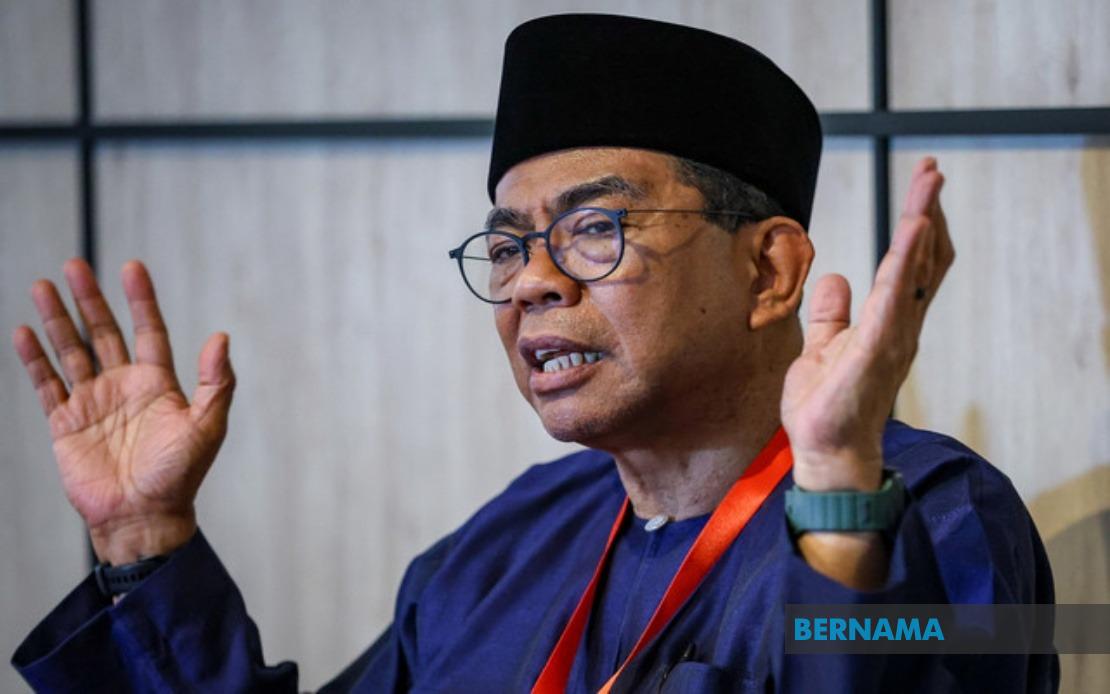
Malaysia's government has reaffirmed its longstanding refusal to recognise Israel as a state, with Defence Minister Datuk Seri Mohamed Khaled Nordin asserting that recent actions to expel Israeli nationals from the country represent a consistent implementation of established policy. Speaking at the Pasir Gudang UMNO division delegates meeting in Johor Bahru on July 25, Mohamed Khaled made clear that such enforcement measures reflect Malaysia's principled position rather than any sudden shift in approach, emphasising that the nation maintains a blanket prohibition against Israeli citizens entering Malaysian territory.
The expulsions have triggered significant diplomatic tension, with eight members of the United States Congress issuing a formal letter dated July 21 to Secretary of State Marco Rubio demanding a review of America's security and economic relationship with Malaysia. These lawmakers have gone further by threatening to suspend funding for the International Military Education and Training (IMET) programme—a crucial channel through which Malaysian military personnel receive advanced professional instruction in the United States—unless Malaysia reverses its position within a 15-day window. This ultimatum represents one of the most direct confrontations between Washington and Kuala Lumpur over Malaysia's Middle East policy in recent years.
The immediate trigger for the current crisis centres on allegations that an Israeli national entered Malaysia using a passport issued by another country, an incident connected to investigations into the Network School in Forest City. This particular case has prompted comprehensive reviews across Malaysian security agencies, as Prime Minister Datuk Seri Anwar Ibrahim has ordered thorough investigations into whether additional Israeli nationals may have exploited similar loopholes to enter the country. The Prime Minister has stated categorically that Malaysia will expel any Israeli citizens discovered within its borders, reinforcing the government's commitment to enforcing its non-recognition doctrine without exception or compromise.
Mohamed Khaled's response to the Congressional pressure demonstrates Malaysia's determination to maintain its principled stance regardless of potential consequences. He noted that Malaysia's firm adherence to its policy has not, to date, resulted in any actual suspension of IMET funding, suggesting either that the threat remains largely rhetorical or that Washington has not yet moved to implement such measures. The Defence Minister appeared deliberately dismissive of the Congressional demands, characterising them as an internal American matter rather than a legitimate basis for altering Malaysian foreign policy. His statement that "if members of Congress want to make such demands, that is a matter between them and their government" reflects an underlying conviction that Malaysia's sovereign right to determine its own international relations should not be subject to external pressure.
Malaysia's non-recognition of Israel represents one of the country's most consistent and foundational foreign policy positions, rooted in decades of support for Palestinian self-determination and regional stability. This stance commands broad support across Malaysia's political spectrum and maintains strong backing among the general population, particularly within the Muslim-majority nation's substantial Muslim community. For Malaysian policymakers, backing down under American pressure would carry significant domestic political costs and could be portrayed as capitulation to external coercion, something no government in Kuala Lumpur can afford to contemplate given the sensitivity of Middle East issues within local politics.
The intersection of military cooperation and political principle creates a genuine dilemma for Malaysia. The IMET programme provides valuable training opportunities for Malaysian armed forces personnel, enhancing military professionalism and interoperability with one of the world's most advanced defence establishments. Nevertheless, the Malaysian government appears prepared to risk disruption to this programme rather than yield on what it considers a matter of fundamental principle. This calculation suggests that officials in Kuala Lumpur view their non-recognition policy as non-negotiable, even when facing pressure from a superpower with which Malaysia maintains extensive security cooperation.
The timing of the Congressional intervention coincides with broader regional discussions about Israel's normalisation agreements with several Arab states, a development that has complicated Malaysia's diplomatic position across the Middle East. While some countries have moved toward greater engagement with Israel, Malaysia has remained conspicuously apart from any such trends, maintaining its principled distance. This differentiation has reinforced Malaysia's identity as a consistent voice for Palestinian rights within ASEAN and the broader Global South, a positioning that carries genuine value in terms of regional influence and soft power among non-aligned nations.
The Network School incident, though apparently originating from a specific security breach, has become emblematic of broader concerns about Israeli surveillance or intelligence activities in Southeast Asia. Malaysian authorities have treated the matter with considerable seriousness, deploying multiple security agencies to investigate whether a pattern of unauthorised Israeli presence exists. Such investigations reflect anxiety that Malaysian territory might be exploited as a staging ground for intelligence operations targeting other regional states or Palestinian-related activities in the region, concerns that resonate across Southeast Asian capitals where Israel maintains no official representation.
Looking forward, the situation may evolve in several directions depending on whether the United States follows through on the Congressional threat to suspend IMET funding. Should Washington actually implement such sanctions, it would represent a notable escalation in US-Malaysia military relations and could strain the broader bilateral relationship, particularly given Malaysia's value to American security interests in Southeast Asia. Conversely, if the threat remains unexecuted, it may suggest that the Trump administration's strategic considerations regarding regional partnerships have tempered enthusiasm for the Congressional demands. Malaysia's unwavering response indicates that the country has calculated the costs and benefits and determined that principles outweigh the advantages of accommodation, a position that carries implications for how other nations might approach similar pressure regarding their own international relationships.

