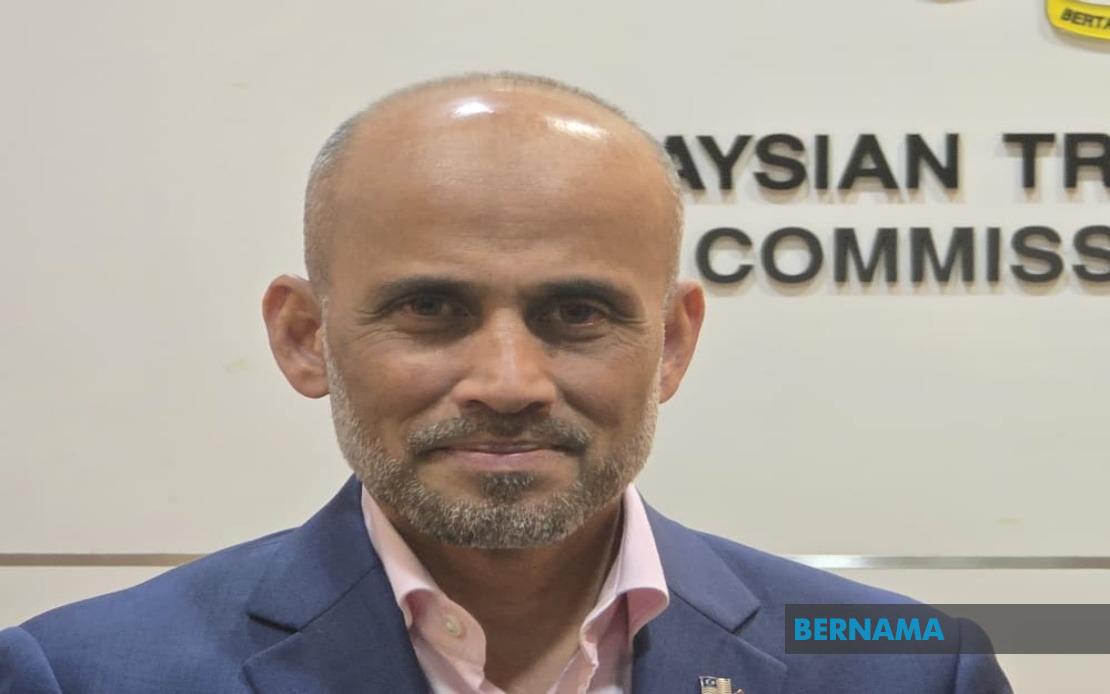
Malaysia and Singapore have consolidated their bilateral relationship through collaborative problem-solving as both nations confronted unprecedented challenges, according to Malaysia's outgoing High Commissioner to Singapore Datuk Dr Azfar Mohamad Mustafar. Speaking ahead of his departure after five years in the posting, Azfar emphasised that consistent engagement between the two neighbours has yielded tangible improvements in their multifaceted partnership, even as global instability tests diplomatic frameworks across the region.
Azfar's tenure, which commenced in June 2021, coincided with the most acute phase of the COVID-19 pandemic. During this period, he navigated the complexities arising from border restrictions that disrupted the substantial flow of cross-border commuters who rely on daily movement between Malaysia and Singapore for employment and business activities. The closure of land borders, while necessary for disease control, created operational difficulties that required swift diplomatic coordination to resolve. According to Azfar, managing consular matters became particularly pressing given the sheer volume of Malaysians regularly transiting into Singapore, underscoring the intricate interdependencies that define the bilateral relationship.
Beyond pandemic management, Azfar's time as high commissioner encompassed broader strategic challenges tied to regional geopolitical volatility. He has positioned Malaysia-Singapore engagement as a stabilising force within Southeast Asia's evolving security environment, with both nations working to maintain partnership momentum despite external pressures. This collaborative approach has laid groundwork for addressing shared concerns that extend across multiple policy domains, from trade and security to environmental sustainability.
The economic dimension of Malaysia-Singapore ties has rebounded decisively from the pandemic's disruptions. Trade and investment flows between the two neighbours have recovered to pre-pandemic levels, reflecting the underlying resilience and mutual dependence of their economies. Singapore maintains its position as one of Malaysia's principal trading partners, a status that reflects decades of economic integration and supply chain interdependencies. This recovery is particularly significant for Malaysian businesses and workers whose livelihoods depend on seamless cross-border economic engagement.
Singapore's investment profile in Malaysia remains strategically important, with the city-state consistently ranking among the largest sources of foreign direct investment into Malaysia. Looking forward, Azfar identified emerging opportunities that could further catalyse investment flows, particularly the Johor-Singapore Special Economic Zone, which represents a flagship initiative to deepen economic collaboration and attract multinational capital. The high commissioner expressed optimism that this framework could encourage Singapore investors to expand their presence in Malaysian territory, with Johor positioned as a primary beneficiary of this intensified economic partnership.
At the regional level, Azfar reaffirmed Malaysia's commitment to supporting Singapore as it prepares to assume the ASEAN chairmanship in the following year. He identified economic integration among ASEAN member states as a cornerstone of Singapore's chairmanship agenda, with Malaysia pledging substantive cooperation on this priority. The depth of Malaysia's support reflects both countries' shared interest in strengthening ASEAN's institutional capacity and collective economic competitiveness amid growing competition from larger economic blocs.
An additional area of bilateral focus involves the ASEAN Power Grid initiative, which aims to establish regional energy interconnectivity. Azfar emphasised that Malaysia and Singapore would intensify their collaboration on this infrastructure project, recognising its importance for regional energy security and the transition towards sustainable power systems. The initiative exemplifies how bilateral partnerships can serve broader regional development objectives while addressing urgent climate and energy challenges that transcend national borders.
Azfar's diplomatic career spans nearly three decades of service to Malaysia's foreign policy establishment. He joined Malaysia's Foreign Ministry in 2001 following his initial appointment as an Administrative and Diplomatic Officer in 1996. Prior to his Singapore posting, he served as Ambassador to France from 2018 to 2021, accumulating extensive experience in multilateral diplomacy and bilateral relationship management. His departure from Singapore marks a transition point rather than a conclusion to Malaysia-Singapore engagement, as institutional mechanisms and diplomatic traditions established during his tenure are designed to persist beyond individual postings.
From July 1, Azfar assumes the role of Malaysia's High Commissioner to the United Kingdom, an appointment formalised through instruments received from His Majesty Sultan Ibrahim, King of Malaysia, on May 18. This transfer reflects the Malaysian government's confidence in his diplomatic capabilities and his readiness to represent national interests in a major bilateral relationship with long historical roots. His relocation to London represents Malaysia's continued prioritisation of substantive engagement with major Western powers, even as Southeast Asian partnerships remain central to national foreign policy architecture.
The transition in high commissioner personnel arrives at a juncture when Malaysia-Singapore relations face both consolidation opportunities and novel challenges. Regional geopolitical realignments, supply chain reorganisations, and climate imperatives require sustained diplomatic attention from both governments. Azfar's characterisation of the bilateral relationship as having grown stronger despite external headwinds suggests that institutional resilience and political commitment from both leaderships will sustain partnership momentum. His successor will inherit a framework already strengthened through collaborative crisis management and strategic alignment on regional priorities, positioned to address emerging bilateral and regional challenges with established protocols and mutual goodwill.

