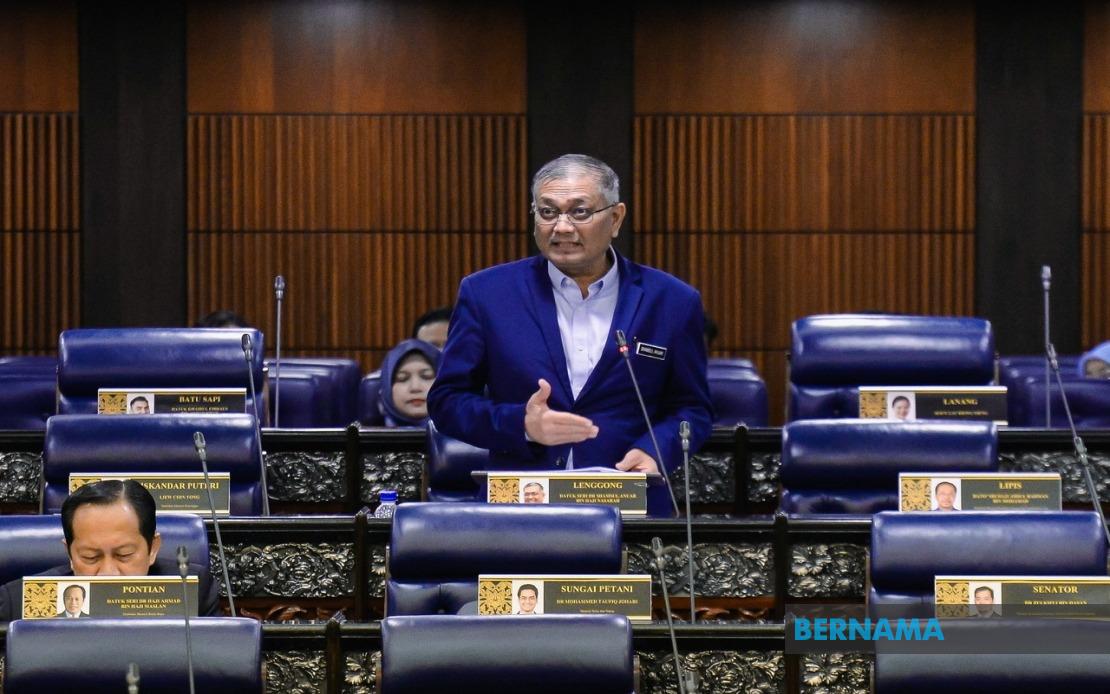
The Malaysian government has ramped up its enforcement campaign against illegal cryptocurrency mining, with authorities reporting the seizure of more than 75,000 mining machines through coordinated raids spanning the past two and a half years. Deputy Home Minister Datuk Seri Dr Shamsul Anuar disclosed the scale of the crackdown during parliamentary proceedings, emphasising that the operation represents a sustained commitment to curbing what has become an increasingly prevalent problem across the country. The raids, numbering over 3,000 since 2022 through May 2024, have resulted in the arrest of 629 individuals suspected of involvement in illegal mining activities.
The enforcement operations represent a collaborative effort involving multiple government and private sector agencies, reflecting the complexity of tackling cryptocurrency mining operations that span technical, electrical, and regulatory dimensions. The Royal Malaysia Police has coordinated with Tenaga Nasional Berhad, the national power utility, alongside various local authorities and other relevant bodies to systematically identify and dismantle illegal mining operations. This multi-agency approach signals recognition that combating such activities requires expertise from law enforcement, energy infrastructure specialists, and local governance structures working in synchronisation.
Authorities have shifted their operational strategy to emphasise intelligence-led policing and technological sophistication in identifying potential mining hubs before launching raids. Rather than relying solely on reactive enforcement following public complaints or power anomalies, the Home Ministry is investing in data analytics and surveillance capabilities designed to pinpoint vulnerable areas susceptible to illegal mining operations. This proactive methodology aims to compress response times and increase operational precision, allowing authorities to concentrate resources where they are most likely to succeed in dismantling active operations.
The persistence of illegal cryptocurrency mining despite substantial enforcement efforts reflects profound economic incentives driving the activity. The volatility of digital asset prices creates opportunities for substantial short-term profits, particularly when operational costs are minimised through theft of electrical supply. Malaysia's abundant, relatively inexpensive electricity has historically made the country attractive to cryptocurrency miners seeking to establish operations with low overheads. The combination of potential high returns and access to affordable power creates a powerful economic motivation that continues to draw individuals and organised groups into illegal mining despite the legal risks.
Electricity theft represents the core illegal dimension of cryptocurrency mining operations in Malaysia. By tampering with meters, establishing unauthorised connections to power infrastructure, or manipulating supply systems, operators dramatically reduce their costs and increase profitability. This practice simultaneously damages TNB's financial position through lost revenue and creates safety hazards through electrical system interference. The scale of electricity losses attributable to illegal mining operations has emerged as a significant concern for the national utility, which must absorb the cost of stolen power while maintaining infrastructure reliability.
Malaysia's regulatory framework distinguishes between the ownership and trading of cryptocurrencies, which are permitted activities, and the mining of digital assets, which operates under substantially different legal constraints. While individual Malaysians may legally purchase, hold, and trade cryptocurrencies, the mining process falls into a different regulatory category when conducted without proper licensing and authorisation. Mining operations require formal approvals to establish legitimate electrical connections and demonstrate compliance with infrastructure standards. This distinction reflects the government's approach of distinguishing between consumer participation in digital asset markets and the industrial-scale energy consumption inherent in mining operations.
The regulatory landscape governing cryptocurrency activities in Malaysia involves multiple institutional actors with distinct mandates. The Securities Commission Malaysia assumes responsibility for overseeing digital assets under relevant legislation, while Bank Negara Malaysia focuses on financial stability considerations, payment systems integrity, and anti-money laundering compliance. This division of regulatory labour reflects the multifaceted nature of cryptocurrency activities, which intersect with securities regulation, monetary policy, and financial crime prevention. The coordination between these institutions shapes Malaysia's overall approach to digital asset governance, balancing innovation and market participation against financial stability and law enforcement imperatives.
Cryptocurrency mining's energy intensity creates particular challenges for a nation pursuing sustainability goals and managing electrical grid reliability. The enormous computational power required for mining operations consumes substantial electricity quantities, and when this consumption occurs through illegal connections outside formal metering systems, it distorts energy accounting and complicates grid management. The environmental implications of unregulated mining activity represent a secondary concern layered atop the immediate criminality and electricity theft dimensions. As Malaysia continues pursuing renewable energy integration and efficiency improvements, illegal mining operations represent a counterproductive force consuming resources that could otherwise support legitimate economic activity.
The response from enforcement agencies indicates growing sophistication in confronting digital economy criminality. The transition from purely reactive enforcement toward intelligence-led operations reflects lessons learned from initial enforcement campaigns and recognition that traditional policing approaches prove insufficient against technically complex, geographically dispersed criminal activity. The investment in technology and analytical capability to identify mining concentrations before raids suggests that enforcement agencies have absorbed how cryptocurrency mining differs fundamentally from conventional property crimes, requiring different investigative and tactical approaches.
The financial implications for TNB extend beyond immediate electricity losses to encompass broader concerns about infrastructure integrity and cost recovery. Electricity theft through meter tampering and illegal connections compromises TNB's ability to accurately measure consumption patterns, charge appropriately, and maintain financial sustainability. These challenges are particularly acute given that cryptocurrency mining operations can consume enormous quantities of electricity comparable to industrial consumers, yet operate entirely outside legitimate billing frameworks. The cumulative impact across hundreds or thousands of undetected operations creates substantial financial drains on the utility.
Looking forward, the continuation of enforcement activities appears likely given the persistence of illegal mining operations despite substantial seizures. The three-year period covered by the statistics reveals no indication that enforcement alone has eliminated the activity, suggesting that additional policy measures addressing underlying economic incentives may warrant consideration. Whether through stricter penalties, enhanced technical barriers to electricity theft, or alternative regulatory frameworks that permit mining under controlled conditions, Malaysian authorities may need to explore complementary approaches to enforcement-only strategies if the goal is substantially reducing illegal operations.

