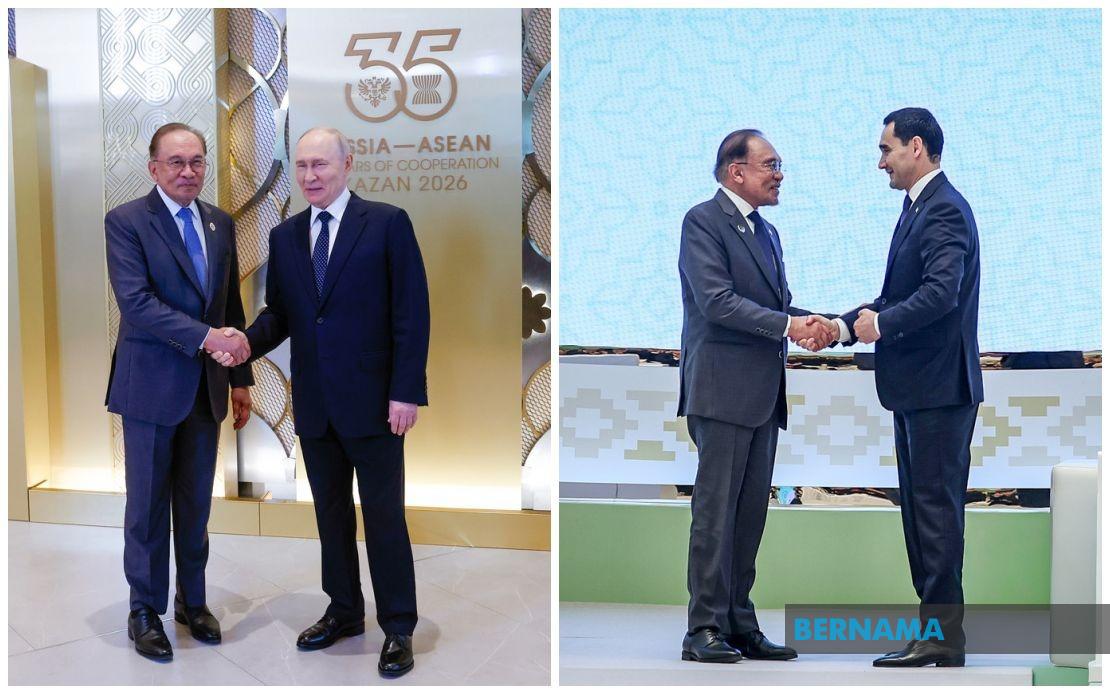
Prime Minister Datuk Seri Anwar Ibrahim's recent diplomatic missions to Russia and Turkmenistan have yielded substantial gains for Malaysia's energy security and international standing, with government ministers highlighting the far-reaching implications of agreements negotiated during the visits. The missions represent a calculated effort to diversify Malaysia's energy sources and strengthen bilateral relationships with two hydrocarbon-rich nations, addressing long-standing concerns about supply stability and economic resilience in the region.
Housing and Local Government Minister Nga Kor Ming underscored the significance of Russia's pledge to provide Malaysia with crude oil supplies extending across two decades, a commitment that officials contend will reinforce the nation's energy independence and buffer against future price volatility. This extended arrangement stands in marked contrast to the conventional annual or seasonal purchasing cycles that have historically characterised Malaysia's energy procurement strategy. The stability afforded by such long-term contracts allows the government greater predictability in managing subsidised fuel programmes and planning fiscal allocations, elements critical to maintaining price controls on essentials like RON95 petrol, currently held at RM1.99 per litre under the BUDI MADANI framework.
The diversification element of this energy strategy assumes particular importance given Malaysia's growing demand and exposure to global market fluctuations. By securing reliable Russian supplies locked in through multi-year agreements rather than spot market purchases, policymakers can better insulate domestic fuel prices from the commodity shocks that periodically roil financial markets. For ordinary Malaysians dependent on predictable transportation and household energy costs, such arrangements translate into tangible economic benefits and reduced household inflation pressures. Nga emphasised that the achievement directly serves the electorate, framing the diplomatic success as a concrete delivery on the government's broader economic mandate.
Equally significant is Petronas' appointment as operator of one of the world's largest natural gas fields in Turkmenistan, an assignment that Minister Nga characterises as a transformative opportunity for the national energy champion. The state-owned enterprise, currently ranked 139th on the Fortune Global 500 list, stands to elevate its global competitive position substantially should it successfully develop and commercialise the Turkmen asset. Such projects not only generate immediate revenue streams but also enhance corporate prestige and technical capabilities, positioning Petronas alongside tier-one international operators and potentially shifting its ranking closer to the coveted top 100 positions within the Fortune Global 500 hierarchy.
The appointment itself carries symbolic weight beyond financial metrics, signalling international confidence in Malaysian corporate governance and technical excellence. Turkmenistan's decision to entrust one of its crown jewel resources to a Malaysian-headquartered firm, rather than traditional Western majors or Chinese state enterprises, represents validation of Petronas' operational track record and integrity standards. This confidence extends to Malaysia's broader institutional environment, suggesting that foreign governments view the nation as a stable, reliable partner capable of managing complex energy infrastructure with professionalism and transparency. For a Southeast Asian economy seeking to position itself as an alternative investment destination to both Western and Chinese interests, such endorsements matter considerably in shaping capital flows and strategic partnerships.
Human Resources Minister Datuk Seri R. Ramanan situated these energy breakthroughs within a larger framework of bilateral cooperation, emphasising the potential for technology transfer, workforce development, and skills enhancement flowing from the Petronas engagement. The Turkmen gas field project will inevitably require recruitment and training of Malaysian personnel across engineering, geology, operations, and project management disciplines. This creates cascading benefits throughout Malaysia's knowledge economy, as professionals develop expertise in deepwater or frontier gas development that can be applied to other projects or commercialised through consulting services. For a nation committed to transitioning toward higher-value-added activities, such technological exposure and human capital accumulation represent strategic dividends beyond the immediate energy supply calculus.
The arrangements also reflect a deliberate recalibration of Malaysia's foreign policy toward greater strategic autonomy and relationship diversification. Russia, despite international sanctions related to geopolitical tensions, remains a major energy supplier with significant reserves and technological capabilities. Turkmenistan, often described as the neutral state in Central Asian geopolitics, possesses natural gas reserves among the planet's largest yet has traditionally sought operational partnerships that balance influence and technical competence. Malaysia's positioning as a trusted intermediary and operator—neither aligned with Washington nor beholden to Beijing—enhances the nation's diplomatic flexibility and appeal to resource-rich states navigating complex international relationships.
Anwar's two-day visit to Kazan in Russia's Republic of Tatarstan served as the platform for formalising these energy commitments alongside broader agreements spanning trade, investment, and tourism cooperation. The choice of Tatarstan, a region with significant hydrocarbon wealth and technological infrastructure, symbolised engagement with Russia beyond its politically sensitive Moscow centre and reflected pragmatic energy diplomacy unconstrained by geopolitical blocs. Such targeted regional engagement allows Malaysia to advance national interests without requiring wholesale alignment with broader ideological or strategic camps, a hallmark of the country's traditional non-aligned foreign policy orientation.
The subsequent transit to Turkmenistan cemented the energy diplomacy momentum, with government officials subsequently appointed Petronas to lead development of the major gas field. Turkmenistan's substantial natural gas reserves—among the world's largest—position the nation as a critical player in future global energy markets, particularly as international buyers diversify away from traditional Middle Eastern and North African suppliers. Petronas' appointment reflects confidence in the Malaysian company's ability to navigate the technical complexities of the project while respecting Turkmenistan's sovereignty and development priorities. The broader implication is that Malaysia, through its national champion, is securing access to growth opportunities in one of the world's most geopolitically significant energy-producing regions.
Anwar's framing of these achievements emphasises Malaysia's competitive positioning and institutional credibility on the global stage. By characterising Petronas' success as reflective of Malaysia's political stability, professional standards, and corporate excellence, the Prime Minister links economic outcomes to governance quality—a narrative that strengthens the administration's legitimacy and attracts additional foreign investment interest. This approach also subtly positions Malaysia as an alternative to both established Western operators and Chinese state enterprises, offering neutral technical competence and commercially-oriented partnerships without the political complications that often accompany partnerships with those camps.
Looking forward, the realisation of these agreements depends substantially on execution. The 20-year Russian oil supply arrangement requires establishment of robust logistical infrastructure, payment mechanisms operating within international sanctions frameworks, and price-setting formulae acceptable to both parties across commodity cycles. Similarly, the Petronas Turkmen gas project demands navigating complex contractual terms, technology transfer provisions, local workforce training commitments, and capital expenditure schedules that will span years. These projects, however, represent meaningful progress in Malaysia's pursuit of energy security, economic resilience, and international standing during a period of significant global transition and uncertainty in energy markets.

