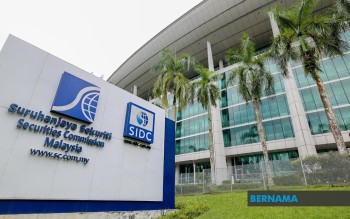
Malaysia is intensifying efforts to attract Russian capital into its Islamic finance sector, positioning itself as a bridge between Moscow and global halal markets. The government and Securities Commission Malaysia (SC) have committed substantial resources to building a comprehensive Islamic financial infrastructure designed to appeal to Russian investors and financial institutions seeking shariah-compliant investment vehicles.
The strategy reflects Malaysia's broader ambition to cement its role as the world's leading Islamic finance hub while tapping into underexploited markets in Eastern Europe and Central Asia. Rather than relying solely on traditional Gulf capital sources, Malaysian policymakers recognise that Russia and its neighbouring regions represent a significant untapped pool of wealth increasingly interested in diversifying investment portfolios beyond Western-dominated markets.
Central to this push is the Securities Commission's planned exploratory mission to Central Asia scheduled for 2026 or 2027. The visit forms part of the SC's internationalisation agenda for the Islamic capital markets and aims to evaluate how receptive these markets are to Islamic finance products and services. Beyond merely identifying investment opportunities, the initiative seeks to strengthen networks among financial stakeholders across the region and establish the foundational relationships necessary for long-term capital flows.
A particularly significant development emerged in May 2025 when the Head of the Republic of Tatarstan expressed formal interest in adopting Malaysia's Islamic finance development model. This endorsement from a major Russian region could prove transformative, as it signals potential political support for broader Russian engagement with halal finance. Should Tatarstan move forward with implementing Malaysian-style Islamic finance frameworks, it could catalyse similar movements across other Russian regions and create standardised pathways for financial integration.
Beyond direct investment attraction, Malaysia sees substantial commercial opportunity in exporting its accumulated shariah expertise to Russian markets. This encompasses a range of high-value professional services including shariah advisory, financial consultancy, capacity-building programmes and specialised training. As Russian institutions and policymakers develop Islamic finance capabilities, they will require guidance from established practitioners, creating a natural market for Malaysian expertise. Such service exports would generate revenue while simultaneously deepening bilateral financial relationships.
The groundwork for these ambitions has been laid through multiple bilateral engagements over recent years. The Securities Commission conducted strategic meetings with the Central Bank of Russia and the Saint Petersburg International Mercantile Exchange (SPIMEX) in both 2023 and 2025, establishing official channels of communication and demonstrating mutual interest in financial cooperation. These dialogues have moved beyond preliminary discussions, with both sides apparently committed to concrete institutional collaboration.
Malaysia's broader framework for achieving these objectives is embedded in the Capital Market Masterplan 2026-2030, which emphasises strengthening regulatory frameworks, fostering product innovation and expanding international partnerships. The plan recognises that attracting Russian capital requires not merely marketing existing Islamic finance products but continuously evolving the regulatory environment and developing new instruments tailored to the specific needs and preferences of Russian investors.
Regulatory coherence and international standards compliance feature prominently in Malaysia's approach. The government has explicitly stated its welcome for legitimate Russian investments, provided they adhere to Malaysia's domestic legal requirements and internationally recognised standards. This carefully calibrated stance balances openness to capital inflows with prudent oversight, reassuring both Malaysian stakeholders and international partners that capital flows will occur within transparent, accountable frameworks.
The Malaysian initiative reflects deeper geopolitical and economic shifts in Asian finance. As Western capital markets become more restrictive for Russian entities facing sanctions regimes, Asian financial hubs increasingly attract Russian wealth seeking diversification and legitimate investment vehicles. Malaysia's Islamic finance sector offers Russian investors both alternative investment exposure and the additional appeal of shariah-compliant principles, which align with values important to certain Russian communities and institutions.
For Malaysia specifically, Russian capital could help diversify the funding sources for Islamic finance expansion beyond traditional Middle Eastern investors. This diversification strengthens the sector's stability and reduces over-dependence on any single geographic source. Additionally, bringing Russian institutional capital into the Malaysian market enhances the truly global character of Islamic finance, supporting Malaysia's claims to international leadership in this sector.
The implications extend throughout Southeast Asia, as Malaysia's success in attracting Russian investors could encourage other regional competitors to develop similar strategies. This potential competitive dynamic might accelerate Islamic finance infrastructure development across the region while also distributing capital flows more widely across multiple centres. However, it could also intensify rivalry between emerging Islamic finance hubs for limited pools of non-traditional investment capital.
Longer term, establishing robust financial relationships between Russia and Malaysia's Islamic finance ecosystem creates foundations for expanded trade, investment in other sectors and deepened bilateral relationships more broadly. Financial integration typically precedes and facilitates broader economic cooperation, suggesting that successful Islamic finance partnerships could generate spillover benefits across multiple industries.

