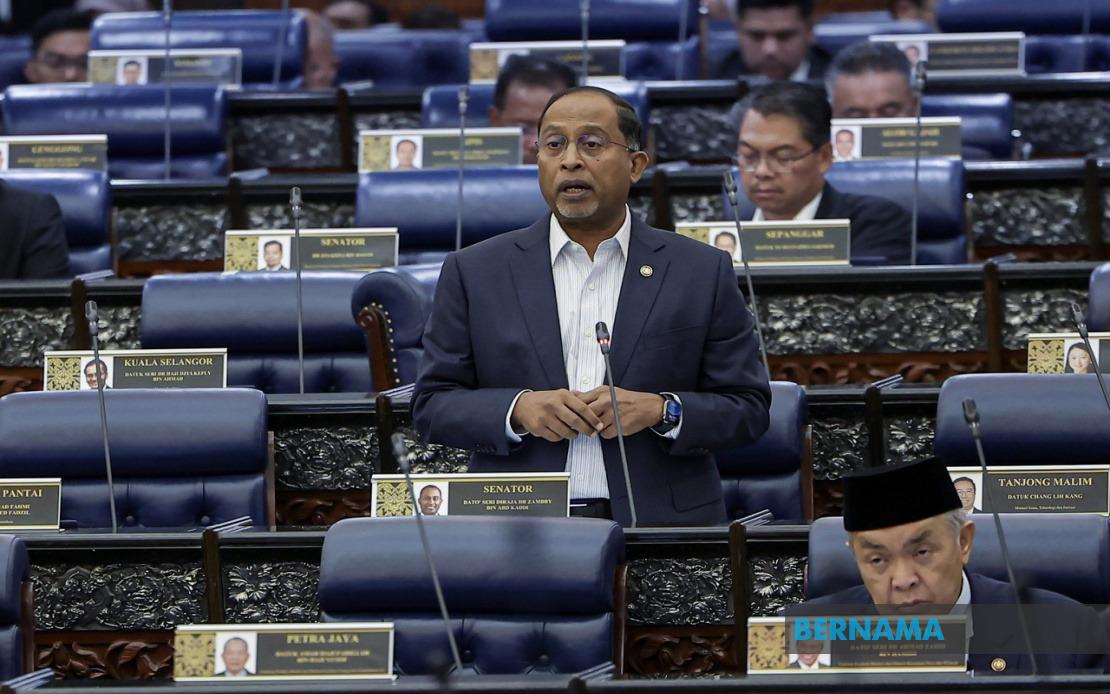
The Malaysian higher education landscape is undergoing a fundamental shift in how research is valued and deployed. Speaking in parliament, Higher Education Minister Datuk Seri Dr Zambry Abd Kadir outlined a strategic reorientation that moves beyond the traditional academic emphasis on publishing papers and instead prioritises translating university discoveries into tangible economic returns. This pivot reflects a growing recognition that Malaysia's innovation ecosystem has struggled to convert research excellence into commercial success—a bottleneck that threatens the nation's competitiveness as it seeks to establish itself as a regional technology hub.
The previous model, heavily weighted towards academic publications, has produced considerable scholarly output but failed to sufficiently bridge the gap between laboratory discoveries and market-ready solutions. Zambry acknowledged this disconnect, explaining that the Ministry of Higher Education is now implementing an impact-driven framework designed to ensure research directly addresses industry needs and societal challenges. This represents not merely a rhetorical adjustment but a fundamental reimagining of how public universities allocate resources, set priorities, and measure success across their research portfolios.
The concrete evidence of this strategy's early gains emerged in Zambry's parliamentary response to Datuk Seri Dr Wee Jeck Seng's inquiry about R&D performance in public higher education institutions. Between 2022 and 2024, more than 200 products developed within Malaysia's university system achieved commercial deployment, while 286 technologies and knowledge assets secured licensing agreements with industry partners. These figures, while representing meaningful progress, underscore why the ministerial focus has intensified—they demonstrate both the potential and the substantial unrealised opportunity within the nation's academic research base.
Central to this reorientation is a deliberate concentration of research capacity and funding towards domains with immediate strategic relevance. The five research universities, which represent Malaysia's premium academic institutions, have been tasked with leading world-class investigations in food security, green technology, artificial intelligence, and advanced engineering. These sectors align with both regional economic priorities and global technology megatrends, positioning Malaysia to compete for talent, investment, and intellectual property leadership within Southeast Asia and beyond. The selection of these fields reflects a sophisticated understanding that Malaysia cannot compete across all research frontiers but must instead establish distinctive expertise in areas where regional advantage and market demand converge.
To operationalise this strategy, MOHE has deployed several institutional mechanisms designed to reduce friction between academic researchers and commercial actors. The Malaysian Laboratories for Academia-Business Collaboration, the Industry Matching Grant programme, and the Public-Private Research Network represent structured approaches to fostering sustained engagement between university scientists and industry practitioners. These initiatives serve a dual purpose: they channel research toward problems industry actively seeks to solve, thereby improving commercialisation prospects, while simultaneously reducing the funding burden on government by encouraging private sector investment in research aligned with corporate interests and market opportunity.
The Malaysian Research Assessment framework has been recalibrated to measure success through this new lens. Rather than simply tallying publications or citation metrics, the assessment now incorporates indicators of real-world impact and commercialisation potential. This shift in evaluation methodology carries profound implications for how university researchers prioritise their work, how institutional leaders allocate departmental resources, and ultimately how Malaysia's entire research ecosystem evolves. When funding and promotion decisions reward practical application as vigorously as they reward theoretical contribution, behaviour within academic institutions invariably adjusts accordingly.
For Malaysian enterprises, particularly small and medium-sized companies seeking technological innovation, this reorientation creates opportunities previously less systematised. Rather than navigating an ad hoc landscape where university collaboration depended on personal relationships or chance encounters, businesses can now engage with formalised mechanisms specifically designed to connect them with academic expertise. This institutional clarity reduces search costs and transaction friction, making university-industry partnerships more accessible to firms beyond the largest multinational corporations that traditionally maintained dedicated research relationships with academic institutions.
The regional competitive context sharpens the urgency of this initiative. Singapore has long leveraged its universities and research institutions to drive innovation-led economic development, while other Southeast Asian nations increasingly recognise that higher education institutions represent critical assets for technological advancement. Malaysia's effort to strengthen university commercialisation reflects both defensive necessity—maintaining competitive position—and offensive opportunity, positioning the nation to attract research funding and investment from multinational corporations seeking regional innovation hubs.
Looking ahead, the University Research, Innovation and Investment Summit scheduled for September represents a crucial inflection point for this strategy. By assembling industry leaders, investors, and academic researchers under a single institutional framework, MOHE aims to catalyse a cultural shift where investable research ideas receive rapid attention from capital sources. This summit format, increasingly common globally, creates conditions where promising innovations can be rapidly identified, vetted, and funded by commercial actors, dramatically accelerating the path from academic discovery to market deployment. For Malaysia, hosting such a convening signals confidence in the nation's research potential and positions it as a serious destination for innovation investment within the Asian region.
The success of this commercialisation push ultimately depends on whether sufficient market demand exists for Malaysian university research outputs, whether researchers genuinely embrace applied rather than purely theoretical orientations, and whether industry partners develop sufficient confidence in university innovation quality. These behavioural and market conditions cannot be mandated through policy alone. Yet by restructuring incentives, creating institutional pathways, and demonstrating commitment through high-profile summits and targeted funding, MOHE has created conditions where impact-driven research becomes increasingly possible. Whether Malaysia can translate this promising foundation into sustained commercialisation momentum will significantly influence the nation's economic trajectory over the coming decade.

