Malaysia's political landscape continues to be shaped by the long shadow of the 1MDB scandal, with the high-profile civil suit against former Prime Minister's wife Rosmah Mansor advancing toward a June 2027 trial date. The court has scheduled a Mareva hearing—a critical procedural step to freeze assets pending the outcome—for September 28, signalling the judiciary's intention to move these cases toward resolution. The government's total financial obligation stemming from 1MDB remediation efforts has been quantified at RM51.4 billion, underscoring the scale of the scandal's impact on national finances and constraining budgetary flexibility for other priorities.
Denials from the Prime Minister's office regarding alleged involvement in the scandal have continued, with the government categorically rejecting claims that fugitive financier Jho Low has entered Malaysian territory to discuss repayment arrangements. Similarly, the Prime Minister has dismissed suggestions that he purchased a new BMW for personal use, addressing what some have characterised as an attempt to distract from governance issues. These defensive postures reflect the persistent reputational damage the 1MDB affair has inflicted on Malaysian institutions and the lingering public appetite for transparency and accountability.
Courts are also examining the relationship between political patronage and government contracting. During proceedings, a company with connections to former Deputy Prime Minister Muhyiddin Yassin was revealed to have secured a RM141 million government contract, raising questions about how procurement decisions intersect with political alignment. Such revelations feed into broader Malaysian conversations about merit-based governance versus patronage-driven systems, particularly as citizens grow more conscious of how public resources are allocated.
The upcoming Johor state elections have emerged as a pivotal test of political sentiment. The ruling Barisan Nasional coalition faces pressure from both the opposition Pakatan Harapan and the increasingly assertive Bersatu party. Bersatu officials have pointedly stated that denying BN a two-thirds majority is essential for maintaining institutional checks and balances, suggesting that the party intends to position itself as a guardian of democratic accountability. Johor's Menteri Besar Onn Hafiz has rejected what he describes as Pakatan's reliance on fear-based messaging, framing his coalition's approach as forward-looking rather than defensive.
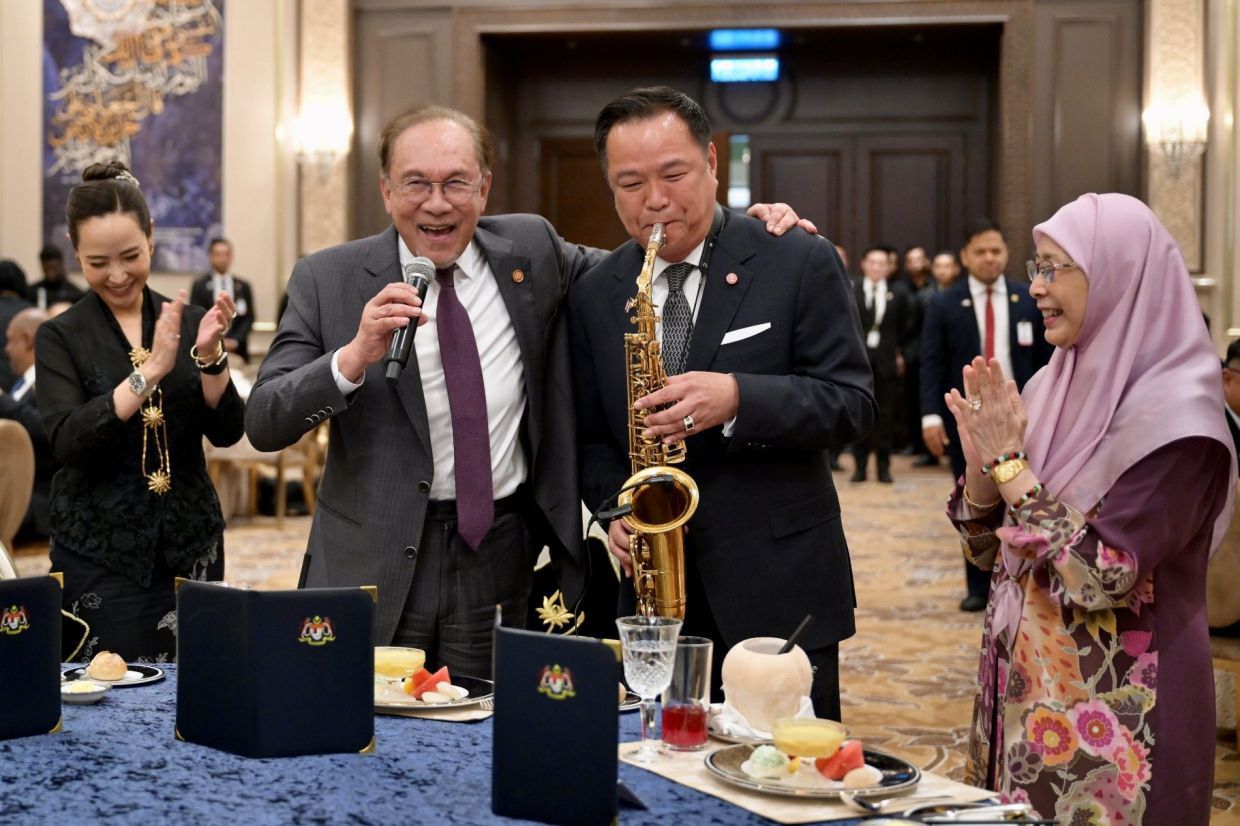
Regional political courtesy has also surfaced, with Thai Deputy Prime Minister Anutin extending well wishes to Prime Minister Anwar Ibrahim ahead of the Johor contest. This gesture reflects ASEAN's tradition of maintaining diplomatic cordiality even amid domestic electoral competition. Meanwhile, disagreements over political structure have intensified, with Onn Hafiz declaring that no PAS assemblymen would receive nominations should BN return to power in Johor, signalling potential friction within the ruling coalition's component parties.
The government has sought to demonstrate even-handedness in resource distribution, with the Prime Minister asserting that no state faces marginalisation based on its political affiliation and that development assistance is dispensed according to objective criteria rather than electoral considerations. Over 96,000 Form Six students are set to receive Early School Aid, reflecting targeted social support measures. Additionally, the government has honoured a ten-year tax incentive scheme following intervention by economic policymakers, demonstrating a commitment to maintaining investor confidence.
Enforcement efforts have intensified across multiple domains. The Malaysian Anti-Corruption Commission has initiated investigations into 69 cases involving fraudulent PERKESO grants and is preparing to recommend charges. Police have dismantled a World Cup betting operation in Kuala Lumpur, arresting eleven individuals. In a contemporary twist, authorities are scrutinising business owners and content creators who flaunt luxury lifestyles across social media platforms, suspecting potential money laundering activity. Such moves indicate expanding law enforcement attention to financial crimes occurring in digital spaces, where traditional surveillance mechanisms may be less effective.
Community relations have shown positive movement in specific areas. The Indian community has regained control of the Nambikei community space under the Madani government framework, reflecting efforts to restore minority community assets and rebuild trust. A Perlis state legislator and exco representative have stepped down from Bersatu's supreme council to concentrate on state-level responsibilities, suggesting occasional tensions between national party structures and subnational governance demands.
Practical governance matters also command attention. Malaysia's fuel supply situation remains stable through December, alleviating earlier concerns about energy security. Thai-Malaysian fishery disputes have been substantially resolved through diplomatic channels, easing tensions along the maritime border. The Parliament's Accounts Committee has urged the government to renegotiate a Spanco vehicle supply agreement following delivery delays, indicating parliamentary oversight of contractual performance.
Transport infrastructure has featured in campaign efforts, with an NGO offering complimentary bus services during the Johor elections while Keretapi Tanah Air Malaysia has doubled train capacity, presumably to facilitate voter movement. A senior citizen recently required rescue from a locked Sungai Besi residence after sustaining injuries, highlighting occasional gaps in community welfare systems. The Bursa Malaysia Index declined at midday ahead of the central bank's policy rate announcement, reflecting investor caution regarding monetary policy direction.
These intersecting developments—spanning accountability mechanisms, electoral competition, community relations, and routine governance functions—collectively illustrate Malaysia's navigation of post-1MDB recovery while managing near-term political transitions and longer-term institutional reform imperatives.

