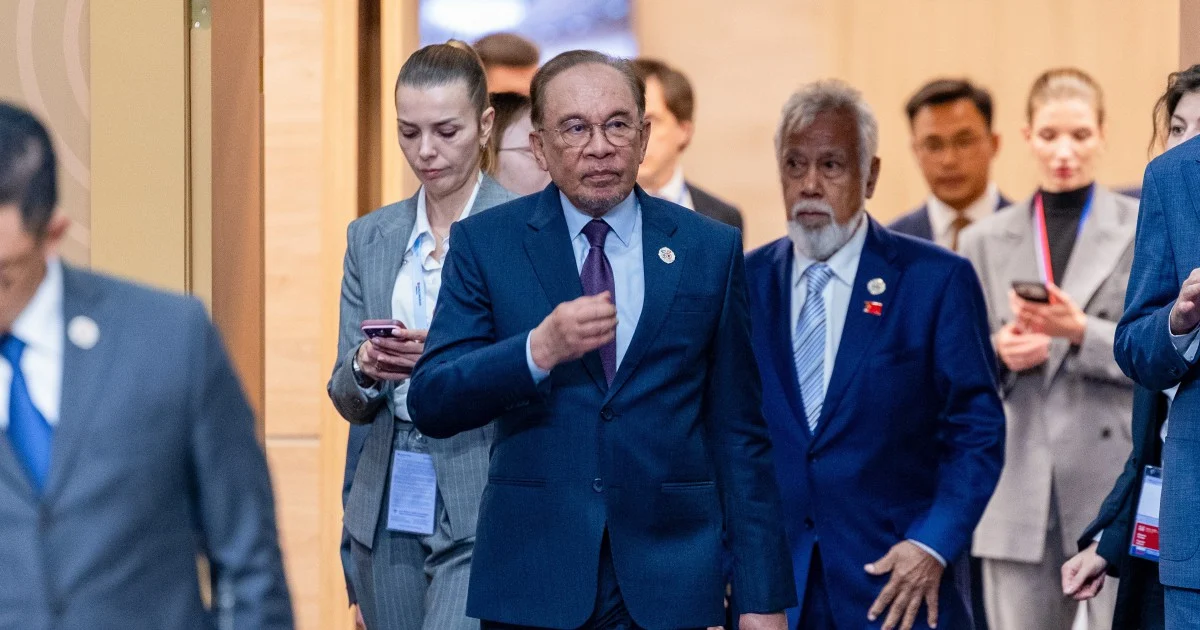
Prime Minister Anwar Ibrahim has called for Malaysia to pursue a more forceful and strategic approach in deepening economic relationships with Russia and Central Asian economies, marking a notable shift in the country's focus toward untapped regional markets. Speaking from Kazan, Anwar emphasised that Malaysia cannot afford to remain passive in cultivating commercial ties with nations that present significant growth opportunities, particularly as global trade dynamics continue to shift and new partnerships become increasingly critical for regional economies.
The Prime Minister's remarks reflect a broader recalibration of Malaysia's foreign economic policy, moving beyond traditional trading partnerships to explore emerging opportunities in Eurasian markets. This positioning aligns with Malaysia's multi-pronged approach to economic diversification, seeking to reduce over-reliance on established trading blocs and establishing footholds in regions with substantial untapped potential. The emphasis on a more proactive stance suggests that previous engagement levels with Russia and Central Asia have been insufficient to capture available commercial opportunities, and that a change in mindset and approach is necessary at the highest levels of government.
Russia presents particular interest for Malaysian businesses across multiple sectors, from energy and mining to technology and manufacturing. Despite historical trade relationships, economic interaction between Malaysia and Russia remains modest compared to Malaysia's engagement with other major economies, suggesting considerable room for expansion. Central Asian countries including Kazakhstan, Uzbekistan, Turkmenistan, and Kyrgyzstan represent emerging markets with growing consumer bases, developing infrastructure projects, and untapped resource extraction opportunities that align well with Malaysian expertise in finance, engineering, and services.
The timing of Anwar's comments in Kazan, a major Russian economic hub, underscores Malaysia's intention to signal serious commitment to these partnerships. By delivering this message from within Russia's territory, the Prime Minister demonstrates willingness to engage directly and maintain high-level diplomatic presence in the region, a gesture that carries symbolic weight beyond the literal words spoken. This approach suggests Malaysia is prepared to elevate bilateral discussions beyond routine government-to-government exchanges to encompassing serious economic negotiations and business facilitation efforts.
For Malaysian entrepreneurs and corporations, Anwar's call represents both encouragement and implicit direction to explore investment opportunities in Russian and Central Asian markets more systematically. Companies in sectors ranging from palm oil processing to financial services have traditionally focused on Asian and Western markets, leaving Russian and Central Asian channels comparatively underdeveloped. Government support through enhanced trade missions, improved financing mechanisms, and diplomatic backing could unlock significant commercial potential for Malaysian exporters and investors willing to navigate the complexities of these emerging markets.
Central Asia's position along major trade corridors connecting China, Russia, South Asia, and the Middle East makes the region strategically valuable for Malaysian businesses seeking to position themselves within broader Eurasian supply chains. Kazakhstan's mineral wealth, Uzbekistan's cotton and textiles production, and the region's collective agricultural output create natural complementarities with Malaysian economic strengths. Furthermore, Central Asian nations increasingly seek partners from Southeast Asia, viewing the region as a more neutral and commercially pragmatic alternative to traditional Western or Russian-dominated relationships.
Anwar's framing of necessary aggression and boldness in economic engagement carries implicit critique of existing bureaucratic structures that may have inhibited earlier expansion into these markets. Malaysian government agencies and state-owned enterprises appear positioned for a more dynamic role in facilitating business connections, removing regulatory obstacles, and providing financial incentives for companies willing to establish presence in Russia and Central Asia. The emphasis on boldness suggests that risk-averse approaches have constrained Malaysia's penetration of these markets, and that a recalibration toward calculated entrepreneurialism is required.
The geopolitical context surrounding this economic pivot merits consideration, particularly amid international tensions and varying international alignments regarding Russia. Malaysia's traditional policy of non-alignment and pragmatic foreign relations allows the country to maintain economic engagement with Russia while preserving broader international relationships. This position contrasts with Western nations that have implemented sanctions or reduced engagement, potentially creating opportunities for Malaysian businesses to capture market share in sectors where Western competitors face restrictions or constraints.
Central Asia's growing importance in global affairs, particularly regarding energy security, technological development, and the Belt and Road Initiative dynamics, makes early Malaysian involvement potentially valuable for long-term strategic positioning. Countries in the region are actively diversifying their international partnerships, creating windows of opportunity for new entrants willing to commit resources and demonstrate sustained engagement. Malaysia's credibility as a Muslim-majority Southeast Asian nation with moderate governance also provides diplomatic advantages in engaging predominantly Muslim Central Asian societies.
Implementing Anwar's vision requires coordinated effort across multiple government agencies, private sector mobilisation, and sustained commitment to market development. Malaysian banks and financial institutions will need to develop expertise in conducting business across these regions, understanding local regulatory frameworks, and managing currency and political risks. Trade associations and chambers of commerce should intensify business delegations and facilitate introductions between Malaysian companies and potential Russian and Central Asian partners.
The economic stakes justify such proactive engagement. Combined GDP across Russia and Central Asian nations exceeds $3 trillion, with substantial portions generated from untapped sectors where Malaysian expertise could add genuine value. Population growth, rising middle-class consumption, and infrastructure development projects create expanding demand for precisely the kinds of services and products Malaysia excels in providing. Over the coming decade, early-mover advantages in establishing business networks and reputation within these markets could translate into significant revenue generation and geopolitical influence.
Anwar's call ultimately reflects recognition that Malaysia's economic future depends on capturing opportunities wherever they emerge, rather than confining engagement to traditional spheres. Russia and Central Asia represent the kind of frontier markets that could meaningfully contribute to Malaysia's growth objectives while simultaneously strengthening the country's diplomatic influence and regional relevance. The challenge now lies in translating ministerial rhetoric into concrete policy changes, institutional reforms, and commercial successes that demonstrate Malaysia's capacity to operate effectively across diverse international contexts.

