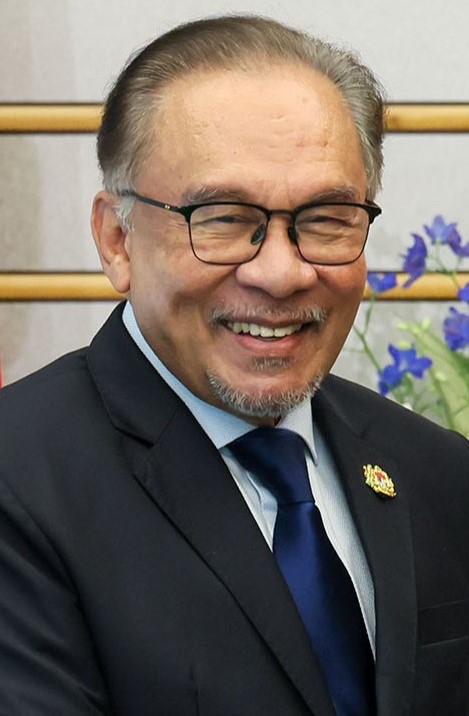
Malaysia's government has issued a public appeal for citizens to maintain compassionate and humane values when engaging with discussions about the Rohingya community, even as growing public concern and increased media scrutiny place the matter squarely in the national spotlight. The statement represents an attempt to navigate mounting domestic pressure while upholding the nation's international humanitarian commitments and constitutional values that underscore human dignity.
The minister's intervention underscores a fundamental tension characterizing Malaysia's approach to one of Asia's most protracted refugee crises. As home to approximately 180,000 Rohingya—the world's largest concentration outside refugee camps in Bangladesh—Malaysia occupies a uniquely sensitive position in regional geopolitics. The government's dual responsibility involves meeting legitimate public concerns about integration, resource allocation, and social cohesion while simultaneously acknowledging the humanitarian imperatives that demand protection for a stateless population fleeing persecution in Myanmar.
Public sentiment in Malaysia has grown increasingly complex around the Rohingya question. While Malaysia has historically positioned itself as a compassionate refuge for vulnerable populations, recent years have witnessed a shift in domestic discourse. Economic anxieties, concerns about housing and employment competition, and debates over welfare resource allocation have begun intersecting with discussions about refugee presence. Social media amplification of both sympathetic and critical viewpoints has intensified polarization, creating an environment where measured policymaking faces considerable challenges.
The government's emphasis on humanity reflects constitutional commitments enshrined in Article 8 of the Malaysian Constitution, which guarantees equality and prohibits discrimination based on origin, descent, and status. These foundational principles create legal and moral obligations that extend beyond citizenship categories. The minister's statement signals recognition that Malaysia's international standing and domestic legal framework both demand acknowledgment of universal human dignity, regardless of citizenship status or public opinion fluctuations.
Simultaneously, the invocation of legal frameworks indicates the government's awareness that legitimate regulatory concerns cannot be dismissed as xenophobia. Malaysia faces genuine administrative challenges in managing a population lacking citizenship rights, official documentation, and formal legal status. Questions regarding public health provision, security screening, and labor market integration represent substantive governance issues requiring systematic approaches, not merely compassionate rhetoric.
The Rohingya's predicament stems from decades of systematic marginalization and statelessness in Myanmar, where they have been denied citizenship despite historical presence. The 2017 military crackdown in Rakhine State triggered mass exodus to Bangladesh, while Malaysia emerged as a secondary destination for those with resources or networks facilitating onward travel. This historical context illustrates why framing the issue as merely a matter of public preference proves inadequate—the Rohingya presence in Malaysia results from forces largely beyond their control and state-level persecution mechanisms.
Malaysia's regional role compounds these considerations. As an ASEAN member and a signatory to various humanitarian conventions, Malaysia operates within frameworks that constrain purely domestic-focused policymaking. Regional credibility and standing in international humanitarian circles depend partly on consistency between public statements and actual treatment of vulnerable populations. The government's balancing rhetoric acknowledges these external dimensions while attempting to retain domestic political viability.
The intensified media attention surrounding Rohingya issues reflects broader global awareness of the crisis, amplified by social media networks and international advocacy organizations. This attention can productively highlight vulnerabilities and rights violations, but it also creates space for narratives emphasizing threat or burden. Managing this informational environment while maintaining factual accuracy and nuanced understanding represents an ongoing challenge for policymakers and media institutions alike.
Moving forward, the government's approach must translate rhetorical commitment to humanitarian values into concrete policies addressing public concerns. This requires investment in integration programs, transparent communication about resource allocation, and clear articulation of security and administrative frameworks. Without demonstrating that compassion and operational competence can coexist, the government risks either appearing disconnected from legitimate public concerns or abandoning humanitarian commitments under political pressure.
The minister's statement ultimately reflects an aspiration rather than a resolution—the recognition that Malaysia's identity as a diverse, multicultural, constitutionally-grounded nation inherently involves balancing individual and community interests with obligations toward the vulnerable. Success requires moving beyond polarized positions that treat humanity and law as opposing forces rather than complementary imperatives. The challenge facing Malaysia extends beyond administrative management to fundamental questions about what values the nation wishes to embody in an increasingly complex regional and global context.