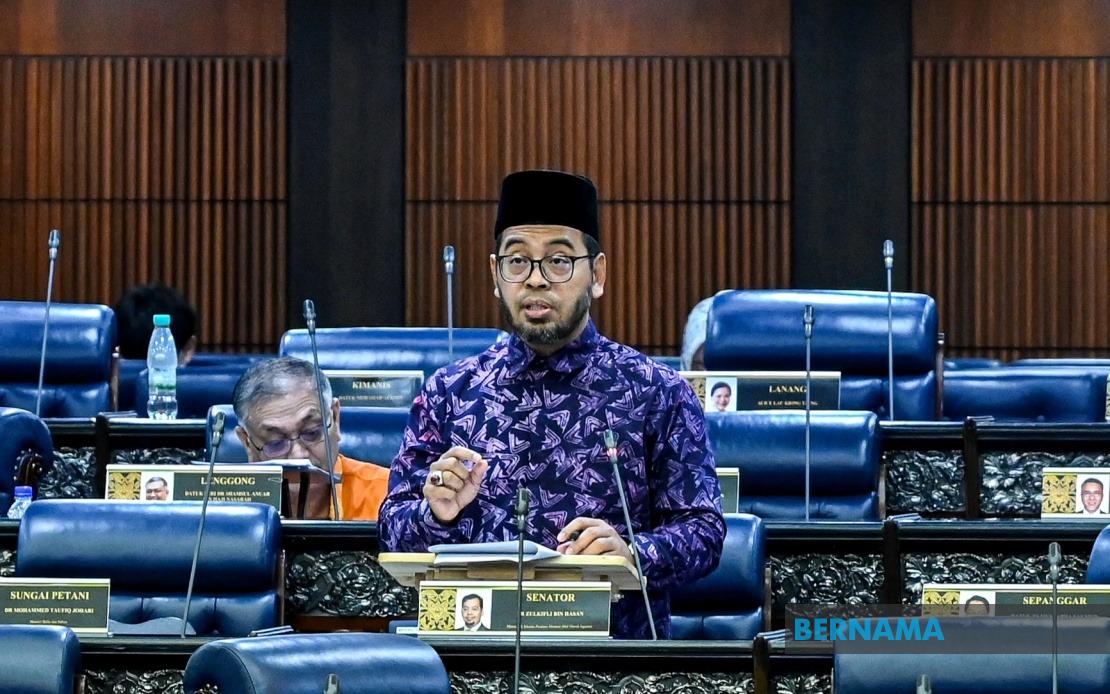
Malaysia's government is escalating its surveillance and enforcement operations against Islamic teachings considered outside the mainstream Ahli Sunnah Wal Jamaah tradition, recognising that digital platforms have fundamentally transformed how heterodox doctrines spread across the country and beyond its borders. Minister in the Prime Minister's Department (Religious Affairs) Dr Zulkifli Hasan outlined the expanded strategy during parliamentary proceedings, acknowledging that the enforcement landscape has become considerably more complex as deviant teachings migrate from localised, clandestine gatherings to decentralised online spaces where they can reach vastly larger audiences across Southeast Asia.
The shift from physical to digital dissemination has forced authorities to rethink their approach entirely. Where once religious authorities could monitor and intercept teachings through underground networks and face-to-face meetings, contemporary propagandists exploit the anonymity and borderless nature of messaging applications, social media platforms and encrypted channels. More insidiously, these groups now obscure their religious messaging within apparently benign frameworks including personal development courses, wellness programmes, charitable foundations and informal educational initiatives, making detection and intervention substantially more difficult for regulators and law enforcement personnel.
The sophistication of these digital campaigns lies partly in their psychological architecture. Groups employ motivational rhetoric, spiritual narratives drawing on established Islamic concepts, psychological manipulation techniques, conspiracy theories and the cultural influence of charismatic figures to construct compelling ideological frameworks. This multi-layered approach proves particularly effective in attracting younger demographics and individuals seeking authentic spiritual meaning within conventional religious structures, rendering traditional counter-messaging efforts increasingly ineffective.
In response, the government has established a whole-of-government coordination mechanism bringing together multiple agencies under shared enforcement objectives. Beyond the Department of Islamic Development Malaysia (JAKIM) and state-level Islamic religious authorities, the coordinating framework incorporates the Royal Malaysian Police, the Malaysian Communications and Multimedia Commission, the National Security Council, local government bodies, the Immigration Department and the National Registration Department. This institutional integration reflects recognition that combating transnational religious movements requires capabilities spanning law enforcement, telecommunications regulation, border security and administrative population management.
Recent enforcement operations demonstrate the practical implementation of this coordinated approach. In May, authorities detained 288 followers of Ahmadiyya Qadiani in Sabah, while a subsequent operation targeting a Syiah religious centre in Petaling Jaya resulted in the apprehension of 226 foreign nationals. These actions represent significant interventions, though observers note the substantial numbers of foreign participants suggest these movements have successfully established international recruitment networks and may indicate Malaysia's position within broader Southeast Asian religious dynamics.
Beyond enforcement, the government emphasises rehabilitative and preventative interventions designed to address root causes of attraction to non-mainstream teachings. These include targeted counselling programmes for affected individuals and movement leaders, court-ordered placement in faith rehabilitation facilities, and structured religious education programmes conducted under Islamic authority supervision. The approach recognises that detention alone cannot counter ideological appeal, requiring instead sustained engagement addressing underlying religious uncertainties and spiritual searching that draw adherents toward heterodox movements.
Central to preventative strategy is the National Steering Committee to Address Threats to Faith, a multi-ministry body incorporating representation from educational portfolios, higher education institutions, home affairs and religious affairs departments. This committee coordinates initiatives intended to strengthen religious understanding and resilience among young Malaysians before exposure to alternative doctrines occurs. These initiatives include programmes operated by Institut Pemantapan dan Perkaderan Akidah Malaysia (IPHAM), the My Insaniah Programme and the Rakan Masjid Programme, implemented through partnerships with the Ministry of Youth and Sports.
The government has also prioritised curriculum enhancement, particularly through KAFA 2.0 (Quran and Fardu Ain) programmes designed to foster stronger Islamic identity and religious resilience among youth populations. The underlying logic assumes that comprehensive religious education grounded in orthodox teachings and delivered through established institutions provides protective frameworks against alternative ideological appeals. Whether curriculum enhancements can effectively compete with personalised, digitally-mediated messaging from global networks remains an open question.
For Malaysian policymakers, the enforcement challenge reflects broader Southeast Asian patterns where religious heterodoxy, transnational Islamic movements and digital organising intersect. The region contains multiple overlapping communities of non-mainstream Islamic practitioners, many leveraging diaspora networks and cross-border communications to maintain religious communities. Malaysia's response, combining digital surveillance and enforcement with rehabilitation and preventative education, represents one regional model for managing these complex dynamics while maintaining official religious authority.
The implications extend beyond religious governance into questions of digital rights, state surveillance capacity and online religious freedom. As Malaysian authorities intensify monitoring of messaging applications and digital platforms, they join regional governments expanding state access to digital communications ostensibly for security purposes. The precedent established through religious surveillance creates technical and institutional foundations potentially available for broader surveillance applications, raising tensions between security objectives and privacy protections that will likely become increasingly salient across Southeast Asia.
Successfully containing teachings deemed heterodox across digital platforms poses extraordinary technical and institutional challenges. Decentralised networks, encrypted communications and international coordination among believers render centralised monitoring fundamentally limited. The government's emphasis on preventative education and rehabilitation suggests recognition of these enforcement limitations, indicating that long-term strategy must address why individuals find non-mainstream teachings appealing rather than relying primarily on surveillance and detention.

