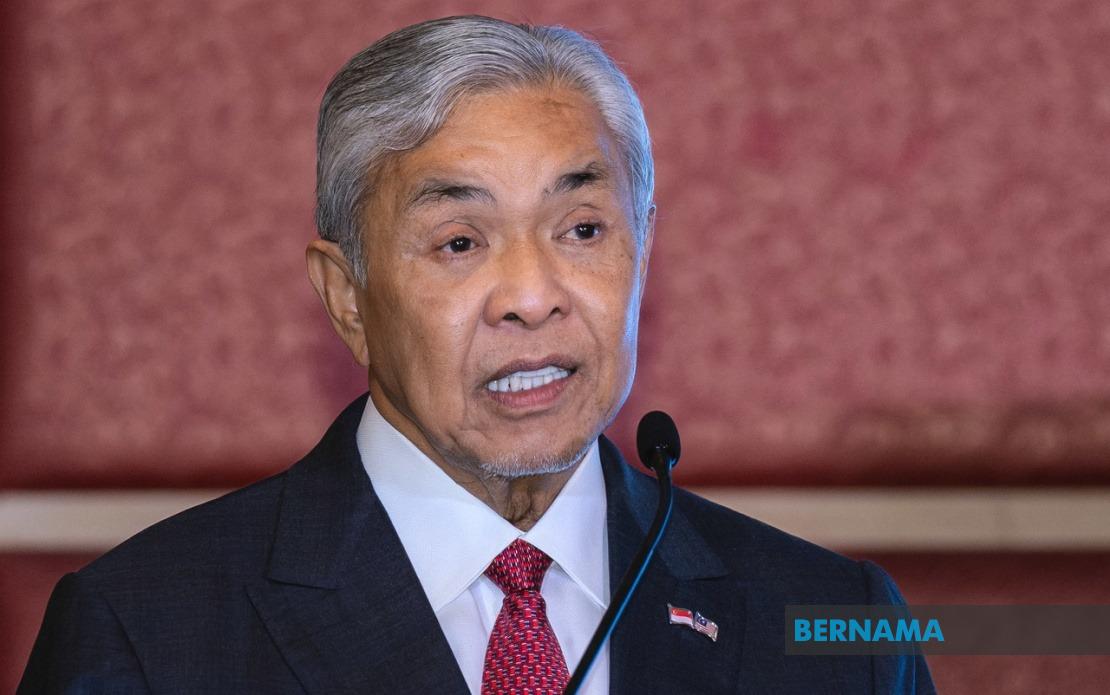
Malaysia is charting a self-reliant course in managing its refugee population through the implementation of a domestically designed governance framework that sidesteps reliance on international organisations. Deputy Prime Minister Datuk Seri Dr Ahmad Zahid Hamidi announced that the nation will operate under its own mechanism established through National Security Council (NSC) Directive No. 23 on the Policy and Mechanism for the Management of Refugees and Asylum Seekers, which underwent revision in 2023. This strategic shift reflects growing recognition that Malaysia's unique circumstances—hosting more than 126,000 registered Rohingya refugees alongside asylum seekers from other nations—demand tailored solutions rather than importing wholesale foreign policy models.
The framework Ahmad Zahid articulated represents a comprehensive attempt to reconcile Malaysia's dual imperatives: maintaining stringent security protocols while simultaneously acknowledging humanitarian responsibilities. The mechanism prioritises three interconnected pillars: operational efficiency in managing the refugee population, robust enforcement of existing national laws, and coordinated policy implementation spanning multiple government touchpoints. Rather than creating entirely new institutions, the directive clarifies the specific functions and responsibilities that existing ministries and government agencies must perform within the refugee management ecosystem. This approach leverages Malaysia's existing bureaucratic infrastructure while introducing clearer lines of accountability and coordination.
Access to essential services forms a central component of this refined policy architecture. The directive explicitly encompasses pathways for eligible refugees to obtain healthcare services, pursue educational opportunities, and access employment prospects within Malaysia's regulated economy. This represents a deliberate acknowledgment that containing a refugee population through restriction alone proves both inhumane and economically counterproductive. By formalising access to these services within a structured framework, the government aims to prevent the underground informal mechanisms that currently flourish—arrangements often exploitative to refugees themselves and damaging to Malaysia's social fabric.
Ahmad Zahid's parliamentary response illuminated a persistent friction point in refugee management: the enablers within Malaysia's own society who facilitate irregular refugee movements for personal profit. Landlords extracting excessive rental payments from refugee communities, employers accessing below-market labour through hiring undocumented migrants, and other opportunistic individuals undermine government enforcement efforts. The deputy prime minister characterised this not as isolated criminality but as systemic complicity rooted in economic incentives. Addressing these dynamics requires complementary law enforcement alongside community education—a recognition that managing displacement requires managing both displaced persons and the local actors who benefit from their marginalised status.
The temporal significance of this announcement cannot be overlooked. Prime Minister Datuk Seri Anwar Ibrahim signed NSC Directive No. 23 on June 14, 2023, positioning refugee management as a priority within the current administration's governance agenda. This timing reflects mounting pressure from multiple directions: humanitarian organisations documenting inadequate service provision, host communities experiencing resource strain, and security agencies concerned about extremism or trafficking networks exploiting refugee populations. Rather than respond to each pressure point separately, Malaysia has opted for integrated policymaking that attempts simultaneous responsiveness to security, humanitarian, and economic concerns.
Malaysia's position as a non-signatory to the 1951 Refugee Convention complicates its international standing on displacement issues. By developing its own comprehensive domestic mechanism, Malaysia establishes de facto refugee management capacity without surrendering sovereignty to international treaty frameworks. The Refugee Registration Document (DPP) system mentioned in the parliamentary exchange provides the operational foundation—a database enabling authorities to distinguish registered refugees from undocumented migrants and asylum seekers awaiting determination. This administrative distinction permits graduated policy responses rather than treating all non-citizens identically.
The Rohingya population specifically represents Malaysia's largest refugee cohort, predominantly arriving from Myanmar in successive waves following communal violence. The 126,000 registered Rohingya exist within a broader context of over 180,000 total displaced persons in Malaysia, creating cumulative strains on urban infrastructure, labour markets, and social services. Many concentrate in Kuala Lumpur and Selangor, where their presence intersects with local employment patterns, housing markets, and school enrolment. Articulating clear management mechanisms provides affected communities with predictability while establishing parameters for resource allocation.
The interministerial coordination contemplated under the directive addresses a historic governance gap. Education, health, labour, home affairs, and security agencies have historically operated with inconsistent refugee policies, creating confusion and exploitation. Formal coordination mechanisms theoretically eliminate gaps where refugees fall between institutional responsibilities. When a refugee child requires school enrolment, healthcare agencies must interface with education authorities; when employment verification occurs, labour departments coordinate with security services. This systemic integration, if successfully implemented, represents meaningful infrastructure improvement over fragmented agency approaches.
Malaysia's approach reflects broader Southeast Asian trends toward domestically-designed displacement governance. Countries throughout the region face similar pressures from refugee populations without recourse to Convention frameworks. Thailand, Indonesia, and other nations have developed parallel domestic mechanisms reflecting regional preferences for state-centric solutions rather than international mandates. Malaysia's explicit articulation of this position contributes to regional policy discourse while signalling that solutions must emerge from national contexts rather than universal prescriptions.
The balance Ahmad Zahid articulated—between enforcement rigour and social responsibility—suggests a maturation in Malaysian refugee policy. Earlier approaches emphasised restriction and deterrence; current formulations incorporate service provision as integral to effective management. This reflects both pragmatic recognition that marginalised populations create secondary social problems and humanitarian acknowledgment of refugee vulnerability. Whether implementation matches these stated principles remains uncertain, but the framework establishment represents necessary prerequisite groundwork.
Immediate implications extend to Malaysia's labour market dynamics. Formalising refugee employment access could regularise informal sectors currently dependent on migrant labour, potentially benefiting both refugees and Malaysian workers through transparent wage standards and workplace protections. Healthcare and education provisions similarly signal intent to prevent disease outbreaks and intergenerational disadvantage that ultimately affect host communities. These downstream effects matter to ordinary Malaysians navigating crowded public health facilities and schools, justifying refugee policy as matters of legitimate domestic concern rather than purely humanitarian abstraction.
Implementation challenges loom substantially. NSC directives require sustained interagency cooperation, adequate budget allocation, and frontline staff retraining. Enforcement against local enablers demands political will to prosecute community members—potentially unpopular in contexts where informal employment provides economic opportunity. Refugee access to welfare and services will inevitably attract opposition from segments claiming preference for citizens in resource allocation. Success depends on resolute government commitment to balanced implementation and transparent communication about policy rationale to Malaysian publics.

