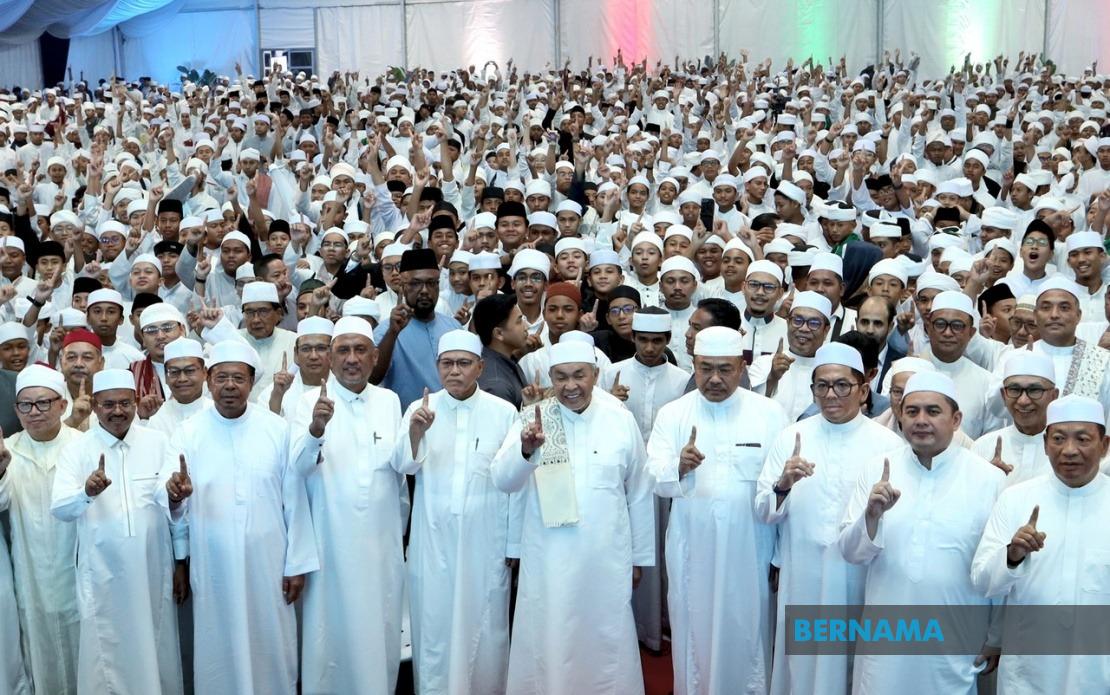
The Malaysian federal government has given formal approval to establish the National Tahfiz Council, a significant institutional development aimed at bringing coherence and structure to Islamic Quranic education across the nation. Deputy Prime Minister Datuk Seri Dr Ahmad Zahid Hamidi announced the decision at the Pahang State Huffaz Gathering 2026 in Kuantan, noting that Prime Minister Datuk Seri Anwar Ibrahim has appointed him as the council's chairman. This formal recognition of tahfiz education represents a watershed moment in how Malaysia's education system integrates Islamic studies with conventional pathways.
The establishment of this council addresses longstanding challenges within Malaysia's tahfiz education sector. Previously, Islamic memorization schools operated with varying standards and little formal recognition within the broader education framework. Students who completed tahfiz programmes often faced barriers when attempting to transition into conventional university education or professional careers, their qualifications carrying ambiguous standing in the wider economic and academic system. The new council is explicitly designed to rectify these disconnects by setting uniform direction, standardizing education models across institutions, establishing consistent recognition benchmarks, and mapping clear academic trajectories for students nationwide.
Ahmad Zahid articulated an ambitious vision for the council's role in transforming tahfiz education from a parallel pathway into a fully integrated component of Malaysia's education ecosystem. He emphasized his desire to enable tahfiz students to advance seamlessly from madrasah education into university study, to transition from pure memorization into applied skills, and ultimately to enter professional careers with recognized qualifications and genuine economic prospects. This integration agenda signals recognition that the estimated 200,000-plus huffaz in Malaysia represent a significant human capital resource that requires proper channelling into productive societal roles.
Pahang state has emerged as a notable model for comprehensive tahfiz education development. Ahmad Zahid highlighted how the state has constructed a multi-layered knowledge framework beginning in early childhood, continuing through structured schooling phases, and extending to international levels. The initiative draws inspiration from Sultan Al-Sultan Abdullah Ri'ayatuddin Al-Mustafa Billah Shah's vision, manifested through initiatives such as Tadika Tahfiz Negeri Pahang, which seeks to instill appreciation for Quranic study from preschool age. By establishing this foundation early, Pahang demonstrates how tahfiz education can evolve into a coherent, progressive pathway rather than an isolated educational track.
The government is simultaneously advancing several complementary initiatives under the revised National Tahfiz Policy 2.0, which commenced implementation this year. These include TVET Tahfiz programmes linking vocational training with Islamic studies, the Malaysian Tahfiz Certificate 2.0 providing standardized qualifications, and the Graded Hafazan Certification system recognizing varying levels of memorization achievement. Additionally, the Huffaz Financing Scheme aims to improve accessibility by addressing financial barriers, while the Malaysian Tahfiz Recognition Standard establishes consistent quality metrics across institutions. Strategic partnerships with higher learning institutions and technical skills institutes represent institutional mechanisms for translating these policy frameworks into practical educational outcomes.
The formal gathering of more than 5,000 huffaz from across Pahang provided both symbolic and substantive momentum for this institutional reform. Such large assemblies of memorization specialists underscore the scale and social significance of tahfiz education within Malaysia, particularly in regions with strong Islamic traditions. The event's success in coordinating this massive participation demonstrates the organizational capacity within tahfiz networks and validates government recognition that these communities merit structured support and integration.
A memorandum of understanding signed at the event between Yayasan Pahang, the Community Development Department (KEMAS), and Majlis Amanah Rakyat (MARA) institutionalizes collaborative mechanisms for tahfiz education advancement. KEMAS operates extensive community development programmes reaching rural populations, while MARA focuses on skills development and entrepreneurship support. Their formal engagement with tahfiz sector development suggests integrated policy implementation, where Islamic education institutions gain access to established networks for skills training, financing, and professional placement support. This inter-agency coordination addresses a critical gap where tahfiz graduates previously lacked systematic connections to economic opportunity programmes.
For Malaysia's broader education policy landscape, the National Tahfiz Council represents acknowledgment that Islamic education requires dedicated institutional architecture rather than ad-hoc integration. The council's establishment follows years of discussion within education and religious circles regarding how to formalize tahfiz education without compromising its spiritual dimensions or imposing secular frameworks incompatible with religious objectives. The compromise solution—creating a dedicated council operating within government structure while maintaining Islamic institutional autonomy—reflects Malaysia's complex negotiation between pluralistic governance principles and religious institutional traditions.
Regionally, Malaysia's formalization of tahfiz education pathways carries significance for Southeast Asian Islamic education discourse. While Islamic schools operate throughout the region, Malaysia's systematic approach to standardization, credential recognition, and university integration offers a potential template. Other Muslim-majority Southeast Asian nations grappling with similar integration questions may examine Malaysia's policy mechanisms. The emphasis on skills development alongside memorization particularly reflects contemporary regional economic demands, where Islamic education advocates increasingly argue that religious studies must facilitate rather than hinder employment outcomes.
The practical implications for Malaysian tahfiz students are substantial. Prospective students can now reasonably anticipate that investing years in Quranic memorization will yield credentials with documented value in education and employment contexts. Parents considering tahfiz education for children gain greater certainty that this choice does not preclude subsequent university access or professional advancement. Teachers and administrators within tahfiz institutions will benefit from standardized frameworks, professional development guidelines, and integration mechanisms with government education structures, potentially improving teaching quality and institutional sustainability.
Challenges remain in translating policy frameworks into consistent implementation across Malaysia's diverse tahfiz sector. Institutions vary considerably in resources, teaching quality, and existing infrastructure. Some rural tahfiz schools operate with minimal funding and limited infrastructure, while better-resourced urban institutions already maintain higher standards. Ensuring that the council's standards genuinely lift all institutions rather than merely codifying advantages for well-established schools requires sustained government investment and technical support. Additionally, balancing standardization with the diversity of Islamic jurisprudential traditions and pedagogical approaches within Malaysia's tahfiz sector demands careful navigation to maintain institutional buy-in.
The National Tahfiz Council's establishment ultimately reflects Malaysia's maturing approach to pluralistic education governance. Rather than treating Islamic and secular education as competing systems requiring hierarchical resolution, the government is attempting to create institutional frameworks accommodating both traditions within a unified national education structure. Success in implementing this vision could meaningfully expand opportunities for Malaysia's tahfiz students while strengthening the nation's human capital development. The coming months will be critical as Ahmad Zahid and the new council translate these policy intentions into concrete mechanisms affecting real institutions and students.

