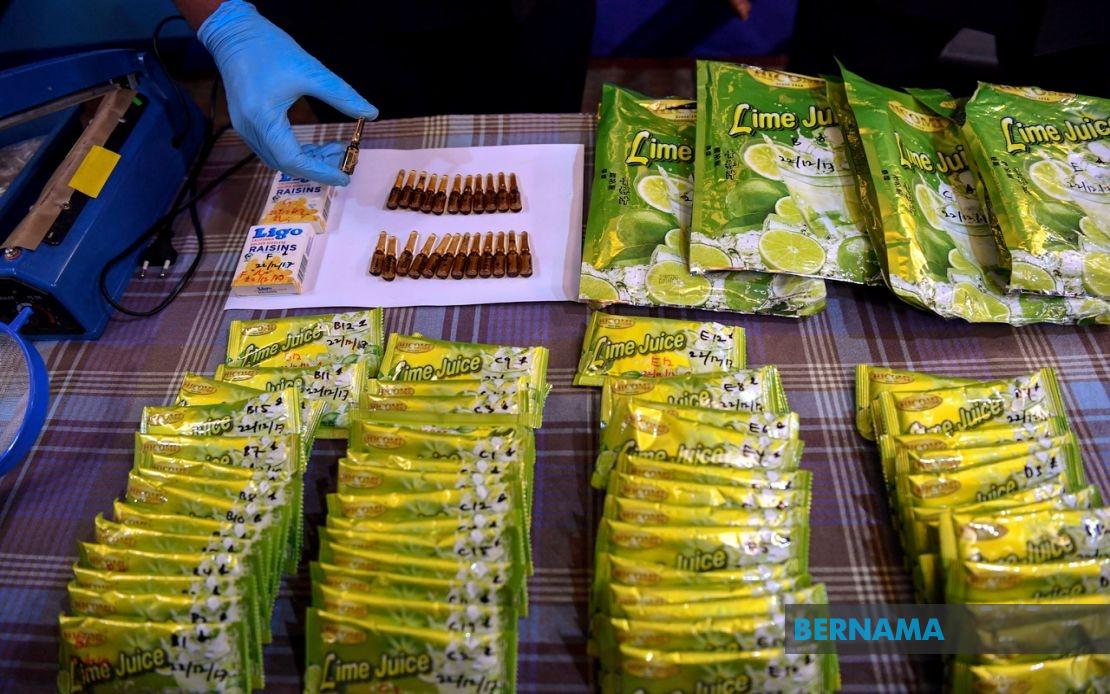
The Malaysian government is mounting an increasingly aggressive response to the proliferation of synthetic drugs across the nation, recognising the profound threat posed by substances that combine high addiction potential with catastrophic health consequences. Home Minister Datuk Seri Saifuddin Nasution Ismail articulated this urgency when addressing parliament recently, emphasising that methamphetamine, psychoactive pills marketed as "piu-piu," and fentanyl have emerged as pressing challenges requiring coordinated enforcement and preventive action at every administrative level.
The scale of drug-related enforcement activity underscores the seriousness of the situation. Between 2023 and June 2026, the Royal Malaysia Police recorded 238,704 arrests nationwide for synthetic drug offences across all categories—from trafficking and possession to consumption. This substantial figure reveals not merely isolated incidents but a systemic problem demanding sustained governmental intervention. The Home Ministry's decision to provide these statistics transparently signals recognition that public awareness of the crisis's magnitude is essential for generating political will and community support for countermeasures.
Operational intensity has accelerated through coordinated police initiatives including Op Tapis and Op Tapis Khas, which blanket urban settlements, agricultural areas, and geographically isolated regions with enforcement presence. These operations represent a departure from traditional reactive policing, instead employing preventive saturation strategies across varied terrain. Collaborating agencies including the National Anti-Drugs Agency and Royal Malaysian Customs Department pool resources and intelligence, creating synergies that enhance effectiveness where individual organisations might face capacity constraints. This inter-agency framework reflects international best practice in drug enforcement, acknowledging that trafficking networks operate across administrative boundaries and therefore require coordinated responses.
Technological integration has become central to contemporary drug enforcement strategy. The deployment of drones for aerial surveillance and camera networks enables authorities to monitor trafficking corridors, clandestine production sites, and distribution points with unprecedented granularity. These capabilities prove particularly valuable in detecting operations in remote territories where traditional foot patrols face logistical challenges. For Malaysia, a nation spanning peninsular and insular regions with substantial geographical variation, such technological force-multipliers address fundamental enforcement constraints while simultaneously reducing the physical risk exposure of personnel operating in dangerous circumstances.
Legislative adaptation represents a forward-looking component of the strategy, as authorities recognise that criminal enterprises continuously develop novel chemical formulations to circumvent existing prohibitions. The Home Ministry is actively pursuing amendments to the Dangerous Drugs Act 1952 to incorporate emerging synthetic drugs and New Psychoactive Substances into the legislation's regulatory schedules. This proactive legal recalibration prevents the scenario where traffickers exploit regulatory gaps by introducing compounds that technically fall outside existing substance lists. For neighbouring Southeast Asian nations grappling with similar cross-border trafficking challenges, Malaysia's legislative modernisation may establish precedent for regional harmonisation of drug control frameworks.
Sarawak presents a particularly acute case demanding intensive focus, given its geography and cross-border proximity. Between January and early June 2026, Sarawak authorities arrested 7,097 individuals, comprising 342 trafficking suspects, 1,314 persons found possessing drugs, and 5,441 identified users. Within the identical timeframe, enforcement operations seized 418.01 kilogrammes of drugs valued at RM53.73 million—a substantial financial impact on trafficking organisations' operational capacity. Additionally, authorities detained 13 individuals under preventive detention provisions and took action against 131 hardcore addiction cases, while confiscating RM1.95 million in syndicate assets. These metrics demonstrate that enforcement extends beyond simple arrest statistics to encompassing asset interdiction and financial disruption, methodologies proven effective in destabilising trafficking networks' economic viability.
Prevention and community engagement constitute the preventive pillar complementing enforcement. Between 2023 and June 2026, authorities conducted 1,144 drug prevention programmes nationwide, targeting public consciousness-raising around addiction risks, overdose dangers, and available rehabilitation pathways. This substantial investment in awareness programming acknowledges a fundamental reality: enforcement alone cannot resolve demand-side factors driving consumption. Malaysian communities, particularly in youth demographics, require accessible information about synthetic drug hazards and the escalated dangers posed by fentanyl—an opioid thousands of times more potent than morphine and responsible for catastrophic overdose epidemics in North America and increasingly across Asia.
Forensic laboratory capabilities represent a technical infrastructure often overlooked in public discourse but crucial for enforcement effectiveness. The Home Ministry emphasises continuous enhancement of forensic profiling systems designed to identify and characterise emerging synthetic compounds, including fentanyl analogues and designer opioids. When novel substances appear in seizures, rapid forensic analysis enables authorities to understand chemical composition, potency profiles, and manufacturing origins—intelligence critical for disrupting supply networks at production junctures rather than merely intercepting retail transactions. Enhanced laboratory capacity thus multiplies enforcement efficiency by enabling more targeted intelligence-led operations.
The specific concern regarding Sarawak reflects broader Southeast Asian vulnerabilities to synthetic drug trafficking. Sarawak's position near international maritime routes and land borders creates inherent trafficking risk, while rural populations in interior regions face particular vulnerability to substance abuse given limited healthcare and rehabilitation infrastructure. The parliamentary inquiry from Mohamad Shafizan Kepli representing Batang Lupar constituency indicates that elected representatives are actively monitoring federal enforcement responses and accountability in constituencies with acute drug problems. This parliamentary engagement provides essential democratic oversight while generating pressure for sustained ministerial commitment.
Strategic amendments to the Dangerous Drugs Act 1952 merit particular attention for Malaysian policymakers and regional observers. Current legislation, initially enacted during the colonial period and subsequently amended, requires continuous updating to remain effective against evolving chemical innovation in illicit drug manufacturing. New Psychoactive Substances—compounds deliberately synthesised to evade legal restrictions—represent a persistent challenge requiring regulatory flexibility. By proactively amending legislation to encompass emerging substances, Malaysia reduces the enforcement window during which novel drugs circulate legally before regulatory incorporation, contrasting sharply with more reactive legislative approaches that leave gaps exploitable by criminal enterprises.
The financial dimensions of drug enforcement warrant recognition, particularly regarding asset confiscation. The RM1.95 million in syndicate assets confiscated in Sarawak during a single six-month period demonstrates that enforcement generates financial consequences for trafficking organisations. When aggregated across nationwide operations, asset forfeitures create cumulative economic pressure on trafficking networks' operational capacity and profitability. Malaysian authorities have increasingly recognised that financial enforcement complements traditional criminal prosecution, addressing the economic rationale underlying trafficking participation.
For Malaysian citizens and regional observers, this intensified drug enforcement campaign reflects recognition that synthetic substances represent a qualitatively different threat compared to traditional narcotics. Fentanyl's extreme potency, piu-piu pills' accessibility to youth demographics, and methamphetamine's stimulant properties creating escalating addiction profiles all demand sophisticated, multi-faceted responses. The government's commitment to technological innovation, legislative modernisation, inter-agency coordination, and community prevention suggests comprehensive strategic thinking. However, sustained success requires continued political commitment, adequate resource allocation, and regional cooperation mechanisms addressing trafficking networks that operate across national boundaries.

