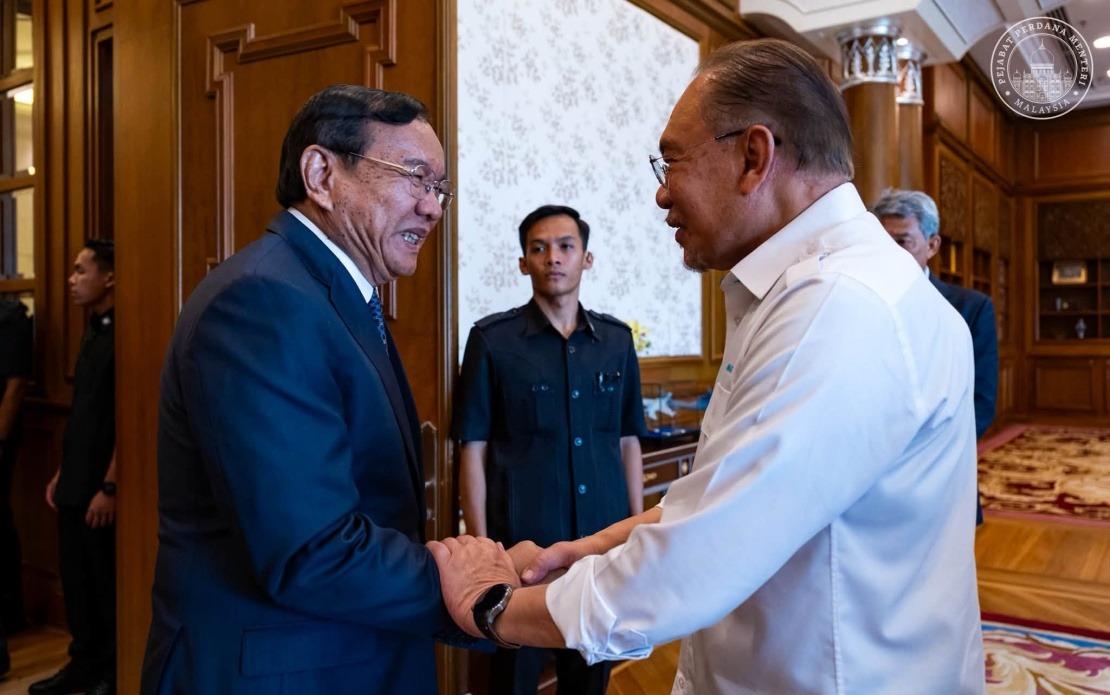
Prime Minister Datuk Seri Anwar Ibrahim has signalled Malaysia's determination to forge deeper partnership with Cambodia across an ambitious spectrum of economic and security priorities, moving beyond traditional diplomatic courtesies to address contemporary regional challenges. The overture comes as Cambodian Deputy Prime Minister and Minister of Foreign Affairs and International Cooperation Prak Sokhonn concludes the opening day of an official two-day visit to Malaysia, cementing a relationship that both governments view as foundational to Southeast Asian stability and prosperity.
The bilateral engagement encompasses six substantive policy domains that reflect the evolving nature of regional cooperation. Beyond established areas of mutual interest, the two nations are now prioritising the digital economy and artificial intelligence—sectors where Southeast Asia collectively seeks to build technological sovereignty and reduce dependence on external tech ecosystems. Cambodia's development trajectory increasingly relies on digital infrastructure, while Malaysia positions itself as a regional hub for AI innovation and digital entrepreneurship. This convergence creates natural opportunities for knowledge transfer, joint ventures and capacity building that could amplify both economies' competitive advantages.
The halal industry represents another strategic focus, particularly significant given Malaysia's global leadership in halal certification and standards-setting. Cambodia, with its growing Muslim population and aspirations to participate in the multi-billion-dollar halal economy, stands to benefit substantially from Malaysian expertise in product development, compliance frameworks and market access. This cooperation signals how religious and cultural identity can drive pragmatic economic partnership within ASEAN, positioning the bloc as a unified force in the global halal marketplace rather than as competing individual actors.
Food security emerges as an increasingly critical pillar of their partnership, reflecting broader regional anxieties about supply chain resilience and agricultural sustainability. The Mekong region, encompassing both Cambodia and Thailand, produces significant rice and agricultural exports that influence prices across Southeast Asia. Coordinating policies around production, storage, distribution and climate adaptation serves mutual interests and contributes to regional stability. Malaysia's advanced agricultural technology and Cambodia's vast arable land resources present complementary assets that neither nation could fully optimise alone.
Human capital development initiatives underscore recognition that long-term competitiveness depends on building skilled, educated workforces capable of thriving in knowledge-based economies. Educational exchanges, vocational training programmes and professional mobility agreements between Malaysia and Cambodia can facilitate brain circulation within ASEAN, ensuring talented individuals contribute to regional development rather than migrating exclusively to distant Western economies. This approach aligns with ASEAN Community Vision 2045 objectives around human development.
Cross-border crime prevention constitutes perhaps the most pressing security dimension of the bilateral relationship. The porous maritime and land boundaries between Malaysia and Cambodia create vulnerabilities to human trafficking, drug smuggling, illegal fishing and weapons proliferation. Joint law enforcement operations, intelligence sharing and capacity building in maritime security address threats that no single nation can manage independently. The Strait of Malacca and surrounding waters, vital to global commerce and integral to Southeast Asian geography, require coordinated stewardship from multiple states including Cambodia's cooperation from its Mekong and maritime domains.
The Third Malaysia-Cambodia Joint Commission for Bilateral Cooperation meeting scheduled for August 4 serves as the institutional vehicle for translating these broad commitments into concrete mechanisms, workplans and resource allocations. Such commissions, typically involving senior officials and technical experts from relevant ministries, transform political will into actionable partnerships with measurable outcomes and accountability structures. The presence of Cambodia's foreign minister on a two-day official visit indicates the substantive nature of discussions rather than ceremonial engagement.
The timing of this visit carries historical weight for both nations. Malaysia and Cambodia are preparing for the 70th anniversary of diplomatic relations in 2027, a milestone that both Prime Minister Anwar and Deputy Prime Minister Prak Sokhonn explicitly referenced as a future landmark. This forward-looking perspective frames current cooperation as building momentum toward that anniversary celebration, potentially envisioning expanded agreements and deepened institutional ties by that date. Such long-term framing reflects mature diplomatic practice where immediate negotiations occur within a broader strategic timeline.
As ASEAN member states confronting similar regional dynamics, Malaysia and Cambodia share overlapping interests in preserving the bloc's effectiveness and relevance amid great power competition. Both nations have strategic concerns about maintaining Southeast Asian centrality in regional architecture, protecting freedom of navigation, and resisting external pressures that could fragment ASEAN consensus. Their bilateral strengthening contributes to intra-ASEAN cohesion, particularly among the Mekong nations and maritime states that share specific geographic and developmental characteristics.
The breadth of sectors addressed—from cutting-edge technology to traditional agriculture, from security to culture—reflects a holistic approach to bilateral relations that transcends narrow commercial transactions. Malaysia seeks to position itself as a trusted development partner and technology leader within Southeast Asia, while Cambodia gains access to expertise, markets and investment opportunities essential for its sustained economic transformation. Neither nation appears content with the status quo of their relationship; instead, both signal appetite for qualitative upgrading of their partnership intensity.
For Malaysian policymakers and businesses, deepening Cambodia engagement opens pathways into a market of 17 million people experiencing steady economic growth, while also securing a stable neighbour and partner in addressing transnational challenges. Cambodia's geographic position as a gateway to Indochina provides Malaysian enterprises with platforms for broader regional expansion. Conversely, Malaysia offers Cambodia technological sophistication, institutional expertise and access to regional and global networks that accelerate its development agenda. The mutuality underlying these arrangements suggests both parties perceive genuine advantage rather than one-sided benefit.

