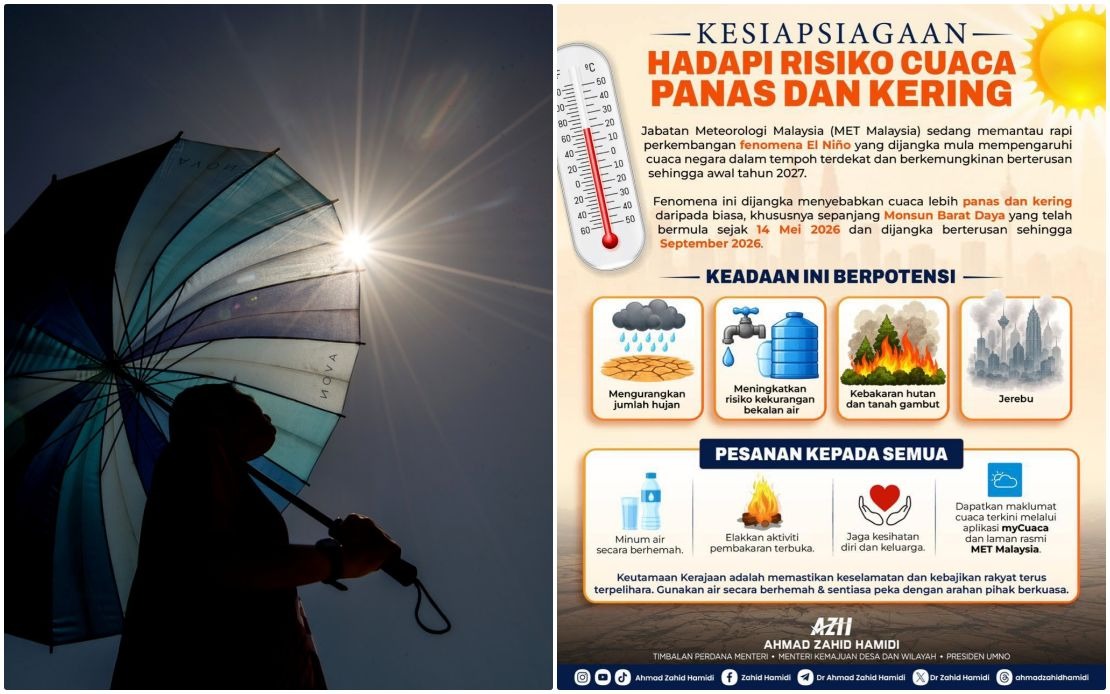
Malaysia faces an extended period of abnormally hot and dry weather as El Niño conditions are poised to take hold across the country, persisting until the opening months of 2027, according to a warning issued by Deputy Prime Minister Datuk Seri Dr Ahmad Zahid Hamidi. The announcement comes as meteorological agencies prepare the public for significant climate disruptions during the crucial Southwest Monsoon season, which commenced in mid-May and is forecast to last through September.
Ahmad Zahid, who chairs the Central Disaster Management Committee, underscored the broader implications of the El Niño phenomenon for Malaysia's climate patterns and resource management. During the Southwest Monsoon period, the country typically experiences certain weather characteristics, yet the superimposed effects of El Niño are projected to substantially intensify heat and suppress moisture across multiple regions. This convergence of seasonal and oceanic climate patterns creates particular vulnerability for areas already prone to dryness.
The convergence of El Niño with the monsoon season carries cascading consequences for water availability, agricultural productivity, and environmental stability. Meteorological projections indicate that rainfall across numerous districts will fall below historical averages, potentially straining water supply systems that serve both urban populations and agricultural communities. The risk calculus extends beyond immediate water stress to encompass secondary hazards including heightened susceptibility to uncontrolled wildfires in forested regions and potential degradation of peatland ecosystems, which are particularly vulnerable to ignition during extended drought periods.
Air quality represents another dimension of concern. Forest and peatland fires triggered by dry conditions can generate substantial transboundary haze that affects visibility, respiratory health, and the broader Southeast Asian region. Malaysia's experience with severe haze episodes in preceding El Niño years demonstrates the compounding nature of such environmental crises, where fire suppression becomes increasingly difficult and smoke dispersal patterns render neighbouring countries equally vulnerable.
In response to these projected hazards, Ahmad Zahid issued a comprehensive advisory to all Malaysians emphasizing behavioral modifications and preventative measures. The Deputy Prime Minister called for judicious water consumption practices, abandoning open burning activities regardless of location, and heightened attention to personal and family health—particularly for populations demonstrating elevated vulnerability to heat stress, including the elderly, young children, and individuals with pre-existing medical conditions. The framing of these recommendations reflects recognition that individual preparedness and collective responsibility are equally critical.
Official channels for weather monitoring have been emphasized as essential resources for staying informed. The myCuaca mobile application, developed by Malaysia's meteorological authorities, offers real-time weather updates and forecasts tailored to specific geographic areas. Complementing this digital resource, the Malaysian Meteorological Department maintains traditional communications infrastructure through which Malaysians can access authoritative climate information and seasonal outlooks.
Dr Mohd Hisham Mohd Anip, the director-general of MetMalaysia, reaffirmed the meteorological department's assessment in a formal statement. His analysis corroborates Ahmad Zahid's characterization of expected climatic conditions, specifying that the Southwest Monsoon phase—which began on May 14—will encounter superimposed El Niño warming and drying influences. The Southwest Monsoon's typical duration through September means that peak vulnerability extends across four months of the year, coinciding with a period when many regions experience reduced moisture availability as standard seasonal pattern.
The Malaysian government's approach emphasizes proactive monitoring and coordinated institutional response. Ahmad Zahid pledged that authorities will maintain vigilant surveillance of meteorological developments and atmospheric conditions, positioning themselves to deploy appropriate interventions and resource allocations as circumstances warrant. This commitment to continuous situational awareness reflects the complexity of managing climate-related crises that unfold gradually yet carry significant cumulative impacts on public welfare and national infrastructure resilience.
For Southeast Asian context, El Niño's regional footprint extends across multiple nations with shared meteorological systems and transboundary environmental consequences. Malaysia's vulnerability sits within a broader pattern affecting the entire region, where coordinated preparedness and information-sharing enhance collective capacity to manage cascading effects. The extended timeframe—stretching into early 2027—necessitates sustained rather than episodic attention to risk mitigation and resource planning.
Water security emerges as a particular concern given Malaysia's growing urban populations and industrial demands alongside agricultural needs. Reservoir management strategies, demand-side conservation measures, and infrastructure investments in water-capture systems may require acceleration. Simultaneously, fire management agencies must position themselves for potentially intense suppression demands, particularly in forested regions and on peatlands where fires can smoulder undetectably and reignite with minimal provocation.
For Malaysian households and businesses, the implications span multiple domains including utility costs, health precautions, and operational adjustments. Agricultural sectors dependent on consistent water availability and predictable rainfall patterns face production uncertainties requiring contingency planning. Construction and outdoor service industries must contend with heat-stress challenges affecting workforce productivity and safety protocols.
The early 2027 endpoint for this El Niño episode remains provisional, subject to revision as oceanic and atmospheric indices evolve. Nevertheless, the government's transparent communication regarding the anticipated duration signals that this represents a medium-term climate challenge rather than a brief seasonal fluctuation, warranting strategic preparation across sectors and communities.