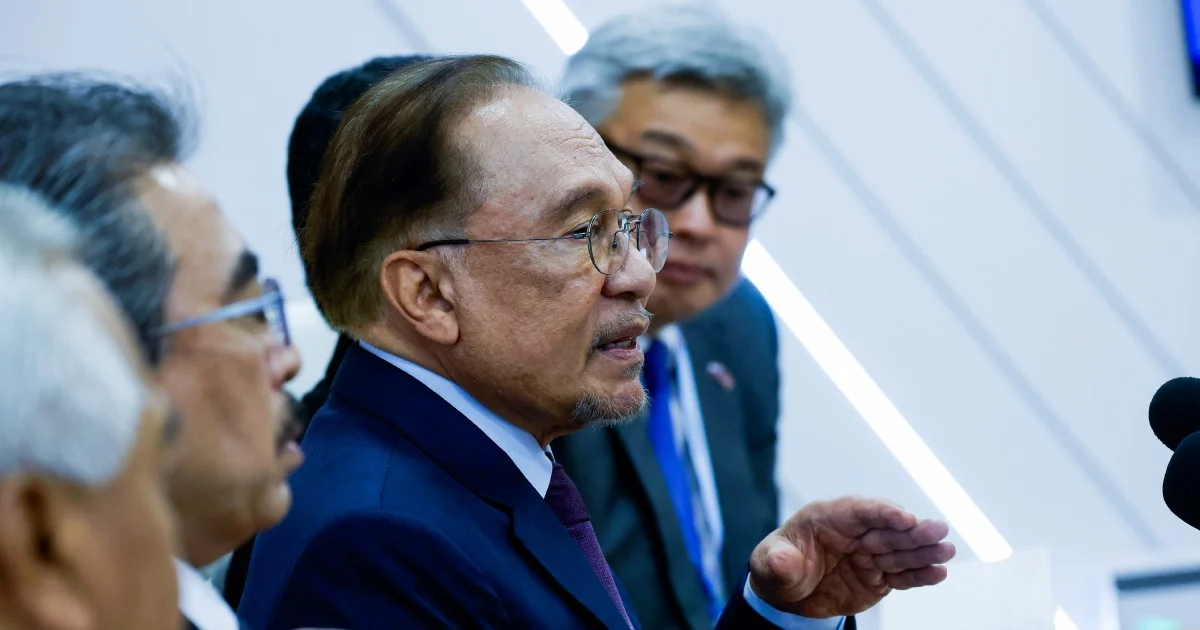
Malaysia's government has publicly endorsed a peace agreement between the United States and Iran, signalling Kuala Lumpur's openness to diplomatic solutions in an increasingly volatile Middle Eastern region. The endorsement, made during high-level discussions in Kazan, reflects Malaysia's broader foreign policy commitment to conflict resolution and regional stability through dialogue rather than escalation. However, the Malaysian position carries a notable caveat: any progress achieved through US-Iran engagement must be coupled with genuine efforts to resolve the humanitarian emergencies unfolding in Gaza and Lebanon, two flashpoints that have destabilised the broader region and drawn international humanitarian concern.
The significance of Malaysia's stance lies in its dual acknowledgment of progress whilst refusing to overlook persistent crises. For Malaysian policymakers, the US-Iran agreement represents a potential turning point in Middle Eastern geopolitics, where direct military confrontation between the region's most powerful actors could give way to negotiated settlements. This shift carries implications for maritime security in the Strait of Hormuz and the Persian Gulf, critical shipping lanes through which Malaysia's own oil and trade flows, making regional stability a matter of direct national interest. A sustained US-Iran understanding could reduce the risk of sudden escalations that threaten global energy markets and international commerce upon which Malaysia's economy depends.
Yet Malaysia's emphasis on Gaza and Lebanon underscores a critical limitation of bilateral US-Iran diplomacy: such agreements, however carefully constructed, cannot address proxy conflicts and humanitarian emergencies that exist independently of great power negotiations. The humanitarian situation in Gaza has deteriorated dramatically, with widespread civilian casualties, destruction of infrastructure, and displacement affecting millions of Palestinians. Lebanon, meanwhile, faces compounded crises stemming from political dysfunction, economic collapse, and military tensions along its borders, creating a humanitarian emergency that rivals Gaza in scope if not in international media attention. Malaysia's insistence on addressing these issues reflects the concerns of Muslim-majority nations throughout Southeast Asia, where public opinion remains deeply engaged with Palestinian and Lebanese suffering.
The Malaysian position also reflects a strategic calculation about what genuine Middle Eastern peace requires. Bilateral superpower agreements, while essential, represent only one layer of conflict resolution. True stability demands that the root causes of sectarian tensions, the legitimate grievances of affected populations, and the humanitarian imperatives facing millions of displaced persons receive sustained international attention. Malaysia, as a non-aligned nation with significant Muslim populations and traditional ties to both Arab and broader Islamic communities, carries particular standing to articulate these concerns on the international stage.
From a Southeast Asian perspective, Malaysia's balanced stance offers a template for the region's approach to Middle Eastern affairs. Rather than aligning rigidly with either Western or Iranian-led blocs, Malaysia advocates for universal principles of conflict resolution and humanitarian protection. This positioning allows Malaysia to maintain constructive relations with diverse international partners whilst preserving credibility with domestic constituencies for whom Middle Eastern developments carry both religious and political significance. Other ASEAN nations likely view Malaysia's diplomatic messaging as a reasonable articulation of regional sentiment that respects sovereignty whilst demanding accountability from all parties to conflicts.
The timing of Malaysia's statement carries weight, emerging as various international actors recalibrate their approaches to Middle Eastern geopolitics. The US-Iran agreement potentially reshapes strategic calculations throughout the region, affecting the calculus of Israel, Saudi Arabia, the United Arab Emirates, and various non-state actors. Malaysia's conditional welcome signals that Asian nations will not simply accept great power settlements as sufficient solutions, but will continue advocating for vulnerable populations and durable peace frameworks that address systemic grievances.
Looking forward, Malaysia's intervention in this diplomatic conversation establishes expectations that any sustainable Middle Eastern peace architecture must integrate humanitarian protection, civilian security, and equitable political settlements for populations affected by prolonged conflict. For Gaza specifically, Malaysian leadership can amplify calls for reconstruction assistance, accountability mechanisms, and political solutions that address Palestinian aspirations for self-determination. For Lebanon, Malaysia can support international efforts to strengthen state institutions, reduce military tensions, and address the economic catastrophe that has paralysed the country.
The Malaysian approach also recognises that peace between major powers does not automatically translate into peace for populations experiencing civil conflict, sectarian violence, or state failure. US-Iran cooperation, properly leveraged, could theoretically facilitate pressure on proxy forces operating in Iraq, Syria, Lebanon, and Yemen to cease hostilities. Yet Malaysia's cautious framing suggests scepticism that such cooperation will be forthcoming without sustained international pressure and clear incentive structures. The onus remains on the United States and Iran to translate their bilateral agreement into tangible relief for communities ravaged by years of warfare and neglect.
Ultimately, Malaysia's measured response to the US-Iran peace deal reflects the complexity of Southeast Asian foreign policy in an era of great power competition and regional instability. Supporting diplomatic breakthroughs serves Malaysia's interests in global stability and reduced military tensions. Yet refusing to allow such agreements to overshadow ongoing humanitarian emergencies demonstrates Malaysia's commitment to principles that transcend geopolitical convenience. As Middle Eastern negotiations evolve, Malaysia's voice will likely remain a steady advocate for comprehensive peacebuilding that prioritises human welfare alongside strategic stability.

