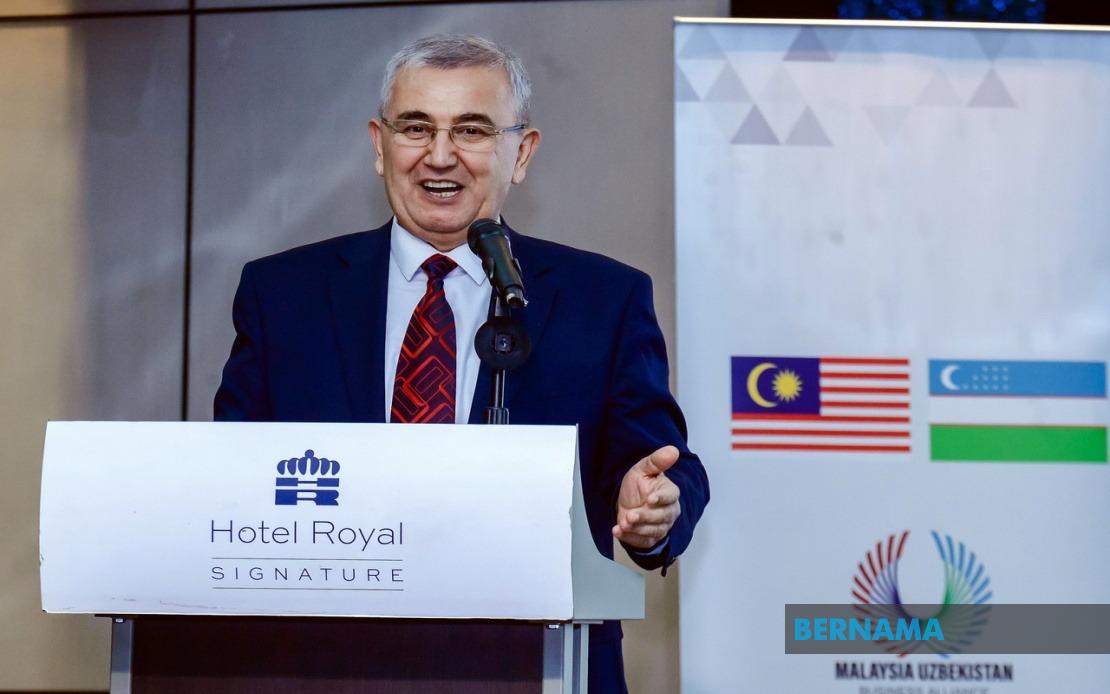
Malaysia and Uzbekistan are moving to establish a comprehensive agricultural partnership that harnesses the distinctive strengths of both nations in farming innovation, food production, and technology deployment. The initiative signals growing recognition among policymakers in Kuala Lumpur and Tashkent that bilateral cooperation in the agricultural sector offers substantial benefits for both economies, particularly as food security concerns intensify globally and the region grapples with climate-related challenges to crop yields and aquatic productivity.
Uzbek Ambassador to Malaysia Dr Karomidin Gadoyev emphasised that agriculture has consistently occupied a prominent position in high-level discussions between the two countries, underscoring its strategic importance beyond commercial considerations. This diplomatic focus crystallised during Malaysian Prime Minister Datuk Seri Anwar Ibrahim's visit to Uzbekistan in May 2024 and President Shavkat Mirziyoyev's earlier visit to Malaysia in February 2023, conversations that laid essential groundwork for the sector-specific collaboration now taking shape. The recent official mission by Agriculture and Food Security Minister Datuk Seri Mohamad Sabu to Uzbekistan represented a turning point, opening avenues for substantive technical exchanges and concrete commercial partnerships between government agencies and private sector enterprises from both nations.
The foundation of this emerging partnership rests on complementary expertise that each nation brings to the table. Malaysia has developed considerable capabilities in paddy cultivation systems, aquaculture operations, fisheries management, precision farming methodologies, and agricultural research infrastructure centred on institutions like MARDI. Uzbekistan, conversely, possesses advanced knowledge in energy-efficient irrigation systems suited to arid and semi-arid regions, horticultural production, and integrated agri-food processing that connects farm output to consumer markets. This natural division of strengths creates opportunity for knowledge transfer and joint project development that could yield productivity improvements for both countries while establishing viable business models for commercial application across Central Asia and Southeast Asia.
Digital transformation and artificial intelligence have emerged as critical focal points in the bilateral discussion framework. Both governments recognise that conventional agricultural methods increasingly struggle to meet rising food demand while contending with resource constraints, climate variability, and pressure to reduce environmental impacts. Incorporating smart and digital technologies into farming operations promises measurable productivity gains and greater resilience in supply chains. Uzbekistan intends to draw substantially on Malaysian experience and expertise in implementing these technologies, viewing the partnership as accelerated pathway to agricultural modernisation that would otherwise require years of independent development and experimentation.
Tangible collaboration is already progressing beyond diplomatic statements. Malaysian company Miracule has opened its first agricultural drone showroom in Uzbekistan, positioning the nation to transition from importing such technology to eventually assembling advanced agricultural drones domestically. This progression from distribution to localised manufacturing exemplifies how partnerships can build indigenous capacity and create long-term employment while reducing import dependence. The expanded deployment of drones across Uzbek agricultural fields promises significant improvements in crop monitoring, targeted pesticide application, and harvesting optimisation. Simultaneously, research institutions including MARDI have begun formal engagement with Uzbek counterparts to identify agricultural innovations applicable to Uzbekistan's specific agro-climatic conditions and production objectives.
Aquaculture represents particularly fertile ground for bilateral cooperation given Uzbekistan's distinctive geographic and demographic circumstances. As a double-landlocked nation with a growing population approaching 40 million people, Uzbekistan confronts escalating demand for seafood products that its domestic waters cannot satisfy. Malaysia has accumulated substantial expertise in biofloc technology, an advanced aquaculture method that dramatically reduces feed requirements by approximately 30 per cent while simultaneously raising productivity and diminishing production expenses. These efficiency gains translate into substantially lower unit costs and improved economic viability for shrimp farming and broader aquaculture operations. Malaysian companies have already commenced preliminary exploration of investment opportunities in Uzbek shrimp farming and fisheries ventures, suggesting confidence that the regulatory environment and economic fundamentals support profitable operations at scale.
Current bilateral trade data illuminates the existing commercial relationship and hints at latent expansion possibilities. Agri-food trade between Malaysia and Uzbekistan totalled more than RM338 million during 2025, with palm oil and allied palm products dominating Malaysia's export portfolio to Uzbekistan. Ambassador Gadoyev has articulated an ambitious vision of doubling or potentially tripling agri-food trade volumes within the next five to ten years, reflecting substantial confidence in market growth trajectories. Malaysia presents itself as potential processor and regional distributor of crude palm oil destined for Central Asian markets, adding value through processing while establishing supply chains serving Uzbekistan's neighbouring countries. Conversely, Uzbek enterprises stand to expand exports of premium fresh fruits, dried fruits, and processed food products into Malaysian and broader Southeast Asian markets where consumer demand for diverse agricultural products continues climbing.
The strategic logic underlying this trade expansion framework reflects deeper economic complementarities. Malaysia possesses established international marketing capabilities, sophisticated port infrastructure, and processing facilities that can transform raw agricultural commodities into value-added products suitable for multiple market segments. Uzbekistan possesses vast agricultural land, increasingly modern production methodologies, and access to Central Asian markets where Malaysian agricultural products remain relatively novel and command premium pricing reflecting their quality reputation. By combining these respective advantages, both nations can achieve economies of scale that reduce costs while expanding market reach far beyond what isolated national efforts could accomplish.
Looking toward medium-term development, both countries envision themselves becoming mutually reinforcing agricultural partners that collectively enhance food security across their regions. The integration of Malaysia's technological prowess with Uzbekistan's extensive agricultural experience and natural resources creates synergies extending beyond bilateral trade to encompass investment flows, technology licensing agreements, and possibly joint ventures targeting third markets. This interdependence fosters political stability and economic cooperation grounded in shared commercial interest rather than dependence, creating durable foundations for long-term partnership resilience.
Malaysia's invitation for Uzbekistan to participate in the Malaysia Agriculture, Horticulture and Agrotourism Exhibition (MAHA) 2026 symbolises the practical mechanisms through which partnership deepens. Such exhibitions provide platforms for private sector entities from both nations to establish direct commercial contacts, negotiate supply agreements, and explore joint venture opportunities removed from formal governmental channels. Ambassador Gadoyev characterised MAHA 2026 as invaluable opportunity to introduce Uzbekistan's agricultural sector, premium fruit offerings, and processed foods to Malaysian business and consumer audiences unfamiliar with Uzbek agricultural capabilities. The exhibition thus functions simultaneously as trade promotion vehicle, technology showcase, and networking forum catalysing bilateral deal-making that generates employment and strengthens economic ties.
This emerging agricultural partnership carries implications extending beyond bilateral Malaysia-Uzbekistan relations into broader Southeast Asian and Central Asian regional dynamics. Malaysia's role as established agricultural technology exporter and processor positions it as potential bridge facilitating Central Asian integration into regional food security frameworks. Uzbekistan's position as major Central Asian power capable of supplying diverse agricultural products establishes it as valuable partner for Southeast Asian nations seeking diverse sourcing options and reduced dependency on any single supplier. The successful implementation of this partnership model could inform similar collaborative frameworks between other Southeast Asian and Central Asian nations, gradually knitting together previously disconnected agricultural supply chains and creating more resilient, diversified regional food systems capable of withstanding supply disruptions or climate shocks affecting particular production zones.

