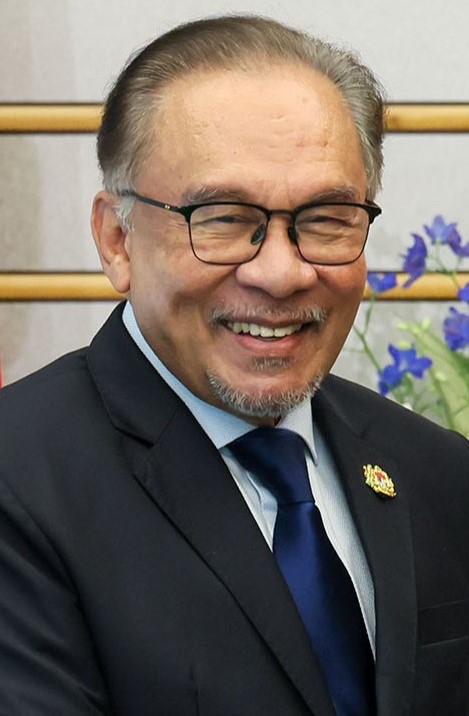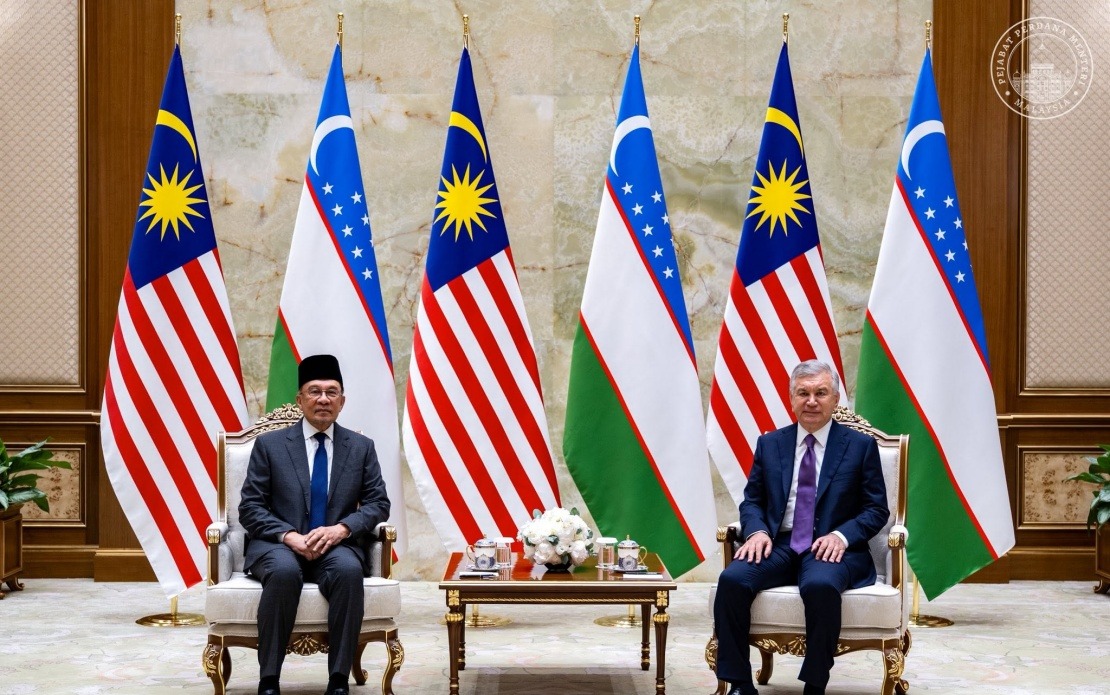
Prime Minister Datuk Seri Anwar Ibrahim has signalled Malaysia's readiness to forge a more substantive partnership with Uzbekistan, identifying multiple sectors where the two nations can unlock mutual economic and strategic gains. The announcement came after a high-level meeting between Anwar and Uzbekistan President Shavkat Mirziyoyev in Tashkent, held during the Prime Minister's transit en route to the ASEAN-Russia Commemorative Summit in Kazan on June 17-18.
The conversation between the two leaders reflected a deliberate effort to move beyond ceremonial diplomacy and establish concrete frameworks for collaboration. Beyond the traditional touchstones of bilateral engagement, both sides recognised that their relationship remains underdeveloped relative to its potential, particularly given geographic distance and historical ties through Islamic civilisation. The brief but substantive discussion underscored a shared conviction that deepening engagement serves broader geopolitical objectives for both nations, particularly in navigating an increasingly multipolar global order where smaller and medium-sized powers must cultivate diverse partnerships.
Energy cooperation emerged as a priority area with immediate economic implications for Malaysia. Anwar highlighted the potential for expanded collaboration in the gas and petroleum sectors, domains where Uzbekistan commands significant regional reserves and technical expertise. For Malaysia, which remains energy-intensive despite progress in renewable energy transition, securing alternative energy partnerships beyond traditional suppliers offers both economic diversification and enhanced energy security. Such arrangements could prove strategically valuable amid evolving dynamics in global energy markets and broader efforts to balance supply chains across multiple geographies.
Trade and investment frameworks represent another pillar of the envisioned relationship. Both nations identified scope for Malaysian enterprises to participate in Uzbekistan's reconstruction and modernisation initiatives, while Uzbek firms could find opportunities in Malaysia's established manufacturing and services sectors. The emphasis on investment flows demonstrates recognition that contemporary bilateral relations require substance beyond rhetorical commitments, with concrete capital deployment that generates employment and technology transfer in both directions.
The halal industry occupies particular significance in this partnership architecture. Malaysia's position as a global halal certification and standards leader positions it as a natural partner for Uzbekistan, a Muslim-majority nation increasingly seeking to capitalise on growing international halal market demand. This sector transcends simple commerce; it represents an opportunity for Malaysia to exercise soft power and institutional influence while simultaneously creating revenue streams for Malaysian businesses. For Uzbekistan, access to Malaysia's halal infrastructure and expertise could unlock export opportunities to markets across Southeast Asia and beyond.
Educational cooperation featured prominently in the discussions, reflecting both nations' commitment to human capital development. Malaysian institutions, particularly those with strength in Islamic studies, sciences and engineering, can provide pathways for Uzbek students while simultaneously deepening cultural and intellectual exchanges. Anwar's specific reference to strengthening cooperation in preserving Islamic civilisational heritage and scholarly traditions suggests the partnership extends beyond utilitarian educational exchanges to encompass cultural and intellectual renewal—a dimension that elevates engagement from transactional to transformational.
Tourism represents an often-overlooked but strategically important cooperation vector. Uzbekistan's historical significance along the historic Silk Road makes it an attractive destination for Malaysian and broader Southeast Asian travellers, while Malaysia's position as a regional tourism hub offers Uzbekistan pathways to access growing Asian leisure markets. Enhanced connectivity, visa facilitation and joint tourism marketing can generate employment and foreign exchange benefits for both economies while fostering people-to-people connections that deepen mutual understanding.
Anwar's emphasis on Uzbekistan's evolving role in Central Asia reflects Malaysia's broader strategic calculus regarding its engagement with non-Southeast Asian regions. By strengthening ties with Uzbekistan, Malaysia cultivates influence within a region of growing geopolitical importance, particularly as major powers vie for strategic positioning. This engagement aligns with Malaysia's historical foreign policy tradition of maintaining pragmatic relationships across multiple geographic zones rather than confining its diplomacy to immediate neighbourhood.
The temporal context of this bilateral engagement merits consideration. Uzbekistan under President Mirziyoyev has pursued systematic economic liberalisation and international reengagement, creating openings for partnership that did not exist previously. Malaysia, navigating post-pandemic economic recovery and seeking new growth vectors, finds in Uzbekistan a partner aligned with contemporary development imperatives. The convergence of mutual interests suggests the timing is propitious for substantive institutionalisation of cooperation.
Crucially, Anwar framed the partnership not primarily through narrow economic metrics but through a broader civilisational lens emphasising human dignity, knowledge advancement and equitable development. This rhetorical positioning carries implications beyond diplomacy—it positions Malaysia as guardian of a particular vision of modernisation rooted in Islamic and humanistic values rather than pure market dynamics. For Uzbekistan, such framing offers validation for its own development model while providing ideational foundations for partnership extending beyond mere commercial transactions.
The practical outcomes of these discussions remain to be formalised through institutional mechanisms—joint commissions, memoranda of understanding and sectoral working groups that translate political intent into operational reality. The success of Malaysia-Uzbekistan cooperation will ultimately depend on whether governments translate current enthusiasm into sustained bureaucratic engagement and whether private sectors in both nations identify bankable opportunities warranting capital deployment. The window of opportunity opened by this high-level engagement must be capitalised upon through consistent follow-up and institutionalised dialogue channels.
For Malaysia's broader regional positioning, deepening Uzbekistan ties represents strategic hedging and diversification of partnerships as Southeast Asian nations navigate competing influences from major powers. By expanding its diplomatic and economic footprint into Central Asia, Malaysia reinforces its identity as a nation with regional and global reach rather than purely Southeast Asian fixation, thereby enhancing its diplomatic influence and economic resilience in an era of geopolitical uncertainty and supply chain reconfiguration.