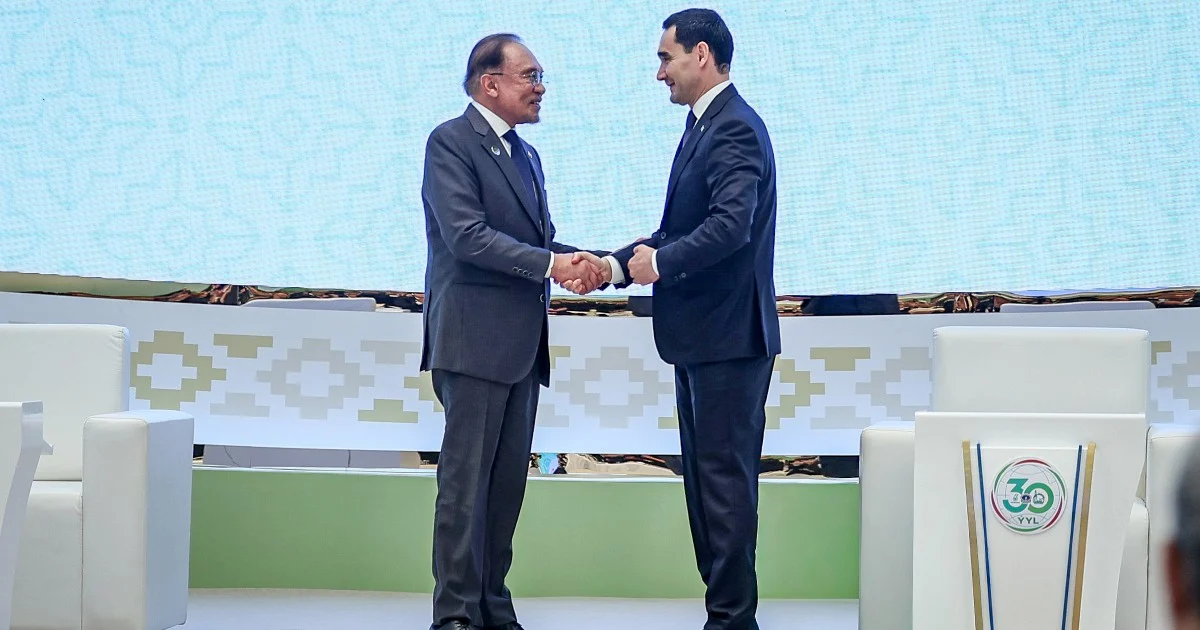
Malaysia and Turkmenistan have signalled their intent to strengthen bilateral relations through a comprehensive engagement framework covering energy, trade, and multiple development sectors, cementing ties forged during Prime Minister Datuk Seri Anwar Ibrahim's official visit to the Central Asian nation. The agreement underscores Malaysia's strategic pivot toward diversifying partnerships beyond traditional markets and tapping into emerging opportunities in energy-rich regions.
Turkmenistan, as one of Central Asia's largest natural gas producers and a significant energy exporter, represents a valuable partner for Malaysia's long-term resource security and economic expansion. The energy cooperation framework is particularly significant given Malaysia's evolving energy landscape and the need to explore diverse supply channels. As a country sitting at the crossroads between Asia and Europe, Turkmenistan offers Malaysia alternative pathways for energy acquisition while simultaneously providing Turkmen interests with access to Southeast Asian markets and regional expertise.
The bilateral accord extends well beyond hydrocarbons, reflecting a more sophisticated approach to economic partnership typical of modern international relations. Trade and investment collaborations will likely focus on creating conditions for Malaysian enterprises to explore opportunities in Turkmenistan's developing market, while facilitating Turkmen investors' interest in the Malaysian economy. Such reciprocal arrangements benefit both nations by promoting cross-border commerce and fostering entrepreneurial connections between business communities.
Transportation and logistics cooperation represents a particularly strategic dimension of the agreement. Turkmenistan's geographical position and infrastructure development initiatives align with Malaysia's interests in expanding regional connectivity. Enhanced transportation links could facilitate smoother trade flows between the two nations and potentially position Malaysia as a gateway for Central Asian goods entering Southeast Asia, thereby creating value-addition opportunities for Malaysian logistics and trading sectors.
Educational exchanges and technology transfer mechanisms embedded within the cooperation framework carry substantial long-term implications for human capital development. Malaysian universities and research institutions collaborating with Turkmen counterparts can facilitate knowledge-sharing in sectors ranging from energy engineering to sustainable development. These academic partnerships often serve as the foundation for more substantive business relationships, as they build familiarity and trust among decision-makers and professionals across borders.
From a geopolitical perspective, Malaysia's outreach to Turkmenistan reflects a deliberate diversification strategy in foreign economic policy. The region presents investment opportunities distinct from traditional markets, and direct high-level engagement signals Malaysia's commitment to exploring fresh partnerships amid a complex global environment. For Turkmenistan, engagement with Southeast Asian nations offers alternative diplomatic and economic channels, particularly given regional dynamics and the importance of maintaining diverse international relationships.
The timing of the Prime Minister's visit carries significance within Malaysia's broader regional strategy. Central Asia represents largely untapped terrain for Malaysian business expansion, and official diplomatic missions serve to legitimise and accelerate private sector interest in these markets. By personally championing the engagement, Anwar Ibrahim has demonstrated government-level commitment, which typically encourages Malaysian companies to invest due diligence and resources into exploring opportunities in the region.
Energy cooperation specifically may involve discussions around liquefied natural gas supplies, pipeline infrastructure, or joint ventures in petroleum-related sectors. Malaysia's expertise in downstream energy industries and liquefaction technology could complement Turkmenistan's substantial upstream production capabilities. Such technical collaboration could position both nations as more efficient producers and traders within the global energy marketplace, particularly as international energy markets undergo transition and reconfiguration.
The agreement's incorporation of multiple sectors demonstrates recognition that contemporary economic partnerships succeed through diversification rather than single-sector focus. Investment in multiple domains reduces vulnerability to sector-specific volatility and creates multiple points of contact between institutional, government, and private actors. This layered approach to cooperation typically yields more resilient and enduring relationships than narrowly-focused arrangements.
For Malaysia's business community, the formalised cooperation framework provides clearer signals regarding government support for market entry and operations in Turkmenistan. Such backing can reduce perceived risks and transaction costs for Malaysian companies contemplating Central Asian expansion, potentially accelerating investment flows. Similarly, Turkmen businesses gain clarity regarding Malaysia's openness to partnerships, facilitating their strategic planning and resource allocation decisions.
The broader context suggests Malaysia is positioning itself as an active participant in emerging economic corridors that connect East Asia with Central Asia through Southeast Asia. As global supply chains reconfigure and nations seek to build resilience through diversified relationships, such positioning offers strategic advantages. Turkmenistan's resources combined with Malaysia's connectivity and technical expertise create complementary strengths that both nations can leverage collaboratively.
Looking forward, the effectiveness of this cooperation framework will depend on translating diplomatic agreements into tangible commercial transactions and institutional collaboration. Government support must translate into regulatory clarity, ease of doing business provisions, and concrete facilitation mechanisms for both Malaysian and Turkmen enterprises. The degree to which private sectors in both nations mobilise around these opportunities will ultimately determine whether this partnership becomes transformational or remains primarily symbolic in nature.

