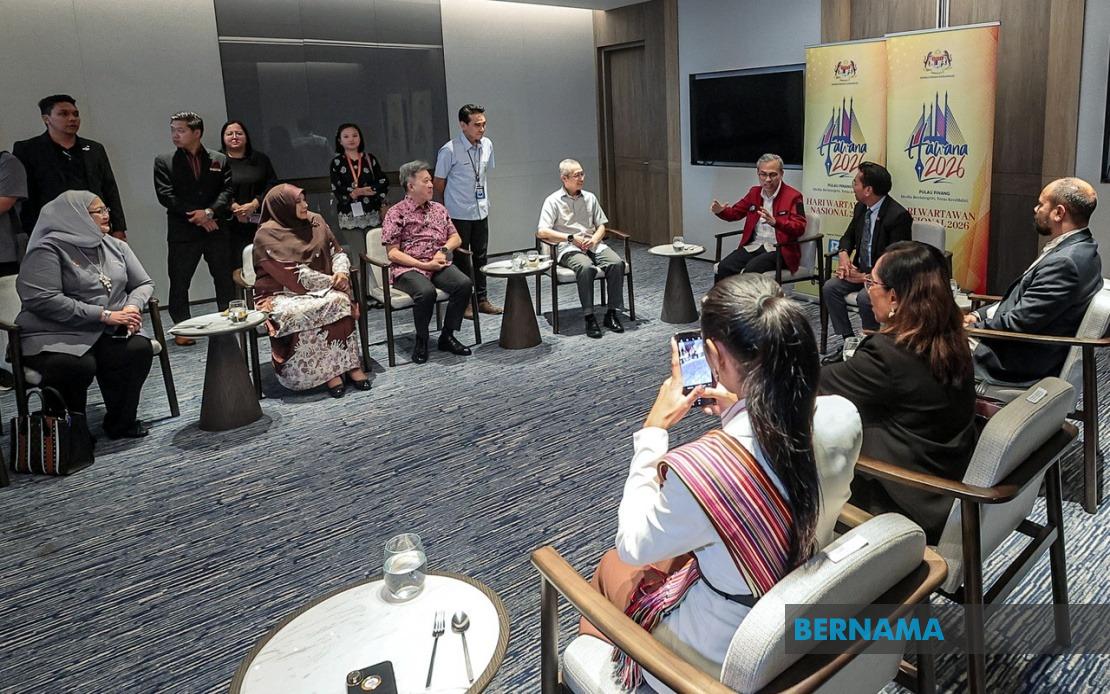
Malaysia is pursuing a more substantive media partnership with Timor-Leste, signalling the Communications Ministry's intent to deepen institutional ties across Southeast Asia's information ecosystem. During a meeting in Butterworth on June 20, Communications Minister Datuk Fahmi Fadzil discussed collaborative frameworks with Timor-Leste's Secretary of State for Social Communication, Expedito Loro Dias Ximenes, centring on joint initiatives between Malaysia's leading news organisations and their counterparts in the young Southeast Asian nation.
The bilateral engagement reflects a strategic pivot toward regional media integration under the MADANI Government's administration. Fahmi's proposals encompassed direct partnerships between the Malaysian National News Agency (Bernama) and Radio Televisyen Malaysia (RTM) with Timor-Leste's national news agency, Agencia Noticiosa de Timor-Leste (TATOLI). Beyond institutional collaboration, the minister advocated for capacity-building through the Tun Abdul Razak Broadcasting and Information Institute (IPPTAR), which would host training programmes designed to upskill journalists from Timor-Leste, addressing the technical and editorial capabilities essential for emerging media systems.
The timing of this initiative carries significance within the broader regional context of press freedom discourse. During their discussions, both officials examined Timor-Leste's exceptional performance in the World Press Freedom Index, published annually by Reporters Without Borders. Remarkably, Timor-Leste ranks first across Southeast Asia and achieved a global ranking of 30th out of 180 countries assessed, a position that underscores the credibility of its media environment despite the nation's relative youth and development challenges. This standing positions Timor-Leste ahead of several regional peers and demonstrates that press freedom advancement does not necessarily correlate with economic development alone.
Malaysia's position within the same index framework presents a more complex narrative. The country currently ranks second in Southeast Asia, trailing Timor-Leste, a distinction that has prompted renewed attention within government circles. Fahmi acknowledged that while Malaysia's trajectory has improved markedly over the preceding three to four years compared with earlier administrations, the nation retains considerable scope for enhancement. This candid assessment suggests the government recognises that press freedom remains a competitive metric through which regional standing is assessed, both by international observers and domestic constituencies.
The MADANI Government has articulated a commitment to policy and initiative refinement aimed at elevating Malaysia's standing in international press freedom rankings. This positioning reflects acknowledgment that credibility—both institutional and national—hinges partly on how external indices perceive the operating environment for journalism and information dissemination. The gap between Malaysia and Timor-Leste, though seemingly narrow in numerical terms, carries diplomatic and reputational implications that resonate within regional forums and international relations discourse.
The meeting itself occurred at the HAWANA 2026 conference, the sixth iteration of a flagship gathering that assembled approximately one thousand local and international media practitioners. The event, held at the PICCA Convention Centre @ Butterworth Arena, centred on the theme of media integrity and its role in sustaining public credibility. This backdrop amplified the significance of the Malaysia-Timor-Leste discussions, as both delegations were engaged within a space explicitly dedicated to examining journalism standards and institutional accountability across borders.
Timor-Leste's delegation, comprising not only Ximenes but also senior figures from TATOLI including president Noemio Mateus Soares Falcao and deputy president Madalena DE JCP Carlos, indicated the seriousness with which the nation's leadership viewed the exchange. The composition of Malaysia's team—including Communications Ministry secretary-general Datuk Abdul Halim Hamzah, Bernama chairman Datuk Seri Wong Chun Wai, and Broadcasting director-general Ashwad Ismail—reflected institutional weight and signalled substantive engagement rather than ceremonial courtesy.
The proposed journalist training initiative through IPPTAR holds particular relevance for developing media systems in the region. Capacity-building programmes targeting editorial standards, technical production capabilities, and newsroom management represent tangible investments in bilateral knowledge transfer. For Timor-Leste, access to Malaysian institutional expertise and training infrastructure supplements efforts to sustain its advantageous press freedom position. For Malaysia, hosting such programmes reinforces its positioning as a regional media hub and knowledge centre, offsetting perceptions that its own press environment faces constraints.
The media cooperation framework also extends to competitive benchmarking and institutional learning. By examining how Timor-Leste achieved its superior press freedom ranking despite smaller population and resource base, Malaysian policymakers and media leaders can identify structural and policy factors that may warrant replication or adaptation. This knowledge exchange operates bidirectionally; Malaysia's developed broadcast and news infrastructure offers practical value to Timor-Leste's younger institutions seeking to scale operations and enhance reach.
Regionally, this bilateral initiative contributes to a broader narrative of Southeast Asian media development and cross-border institutional collaboration. As nations within the Association of Southeast Asian Nations (ASEAN) increasingly engage with questions of information integrity, misinformation, and journalism standards, partnerships between established and emerging media systems facilitate mutual learning. Malaysia's outreach to Timor-Leste exemplifies how press freedom improvement need not occur in isolation but can benefit from structured regional dialogue and institutional exchange.
Prime Minister Datuk Seri Anwar Ibrahim's scheduled presence at the HAWANA 2026 closing ceremony underscored government-level commitment to media engagement and press freedom discourse. This high-level attention legitimised the underlying initiatives and signalled that media cooperation and press freedom improvement constitute elements of broader national policy architecture under the current administration. The convergence of bilateral meetings, international conference participation, and prime ministerial engagement created a multifaceted diplomatic and policy moment centred on journalism and information systems.
Moving forward, the articulated proposals require operationalisation through formal agreements and resource allocation. The success of journalist training programmes, news agency partnerships, and information exchange initiatives will depend on sustained commitment from both governments and institutional leadership. For Malaysian readers and media professionals, these developments suggest government receptiveness to international collaboration on press standards and institutional development. For regional observers, the Malaysia-Timor-Leste engagement exemplifies how smaller nations' policy successes can catalyse broader regional dialogue and mutual institutional strengthening within Southeast Asia's media landscape.

