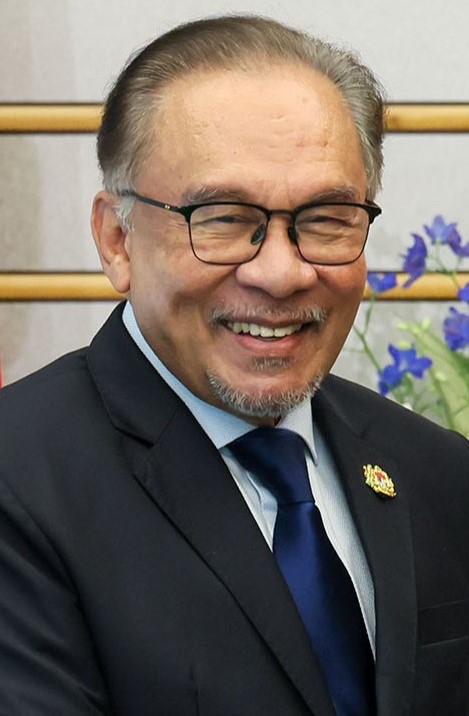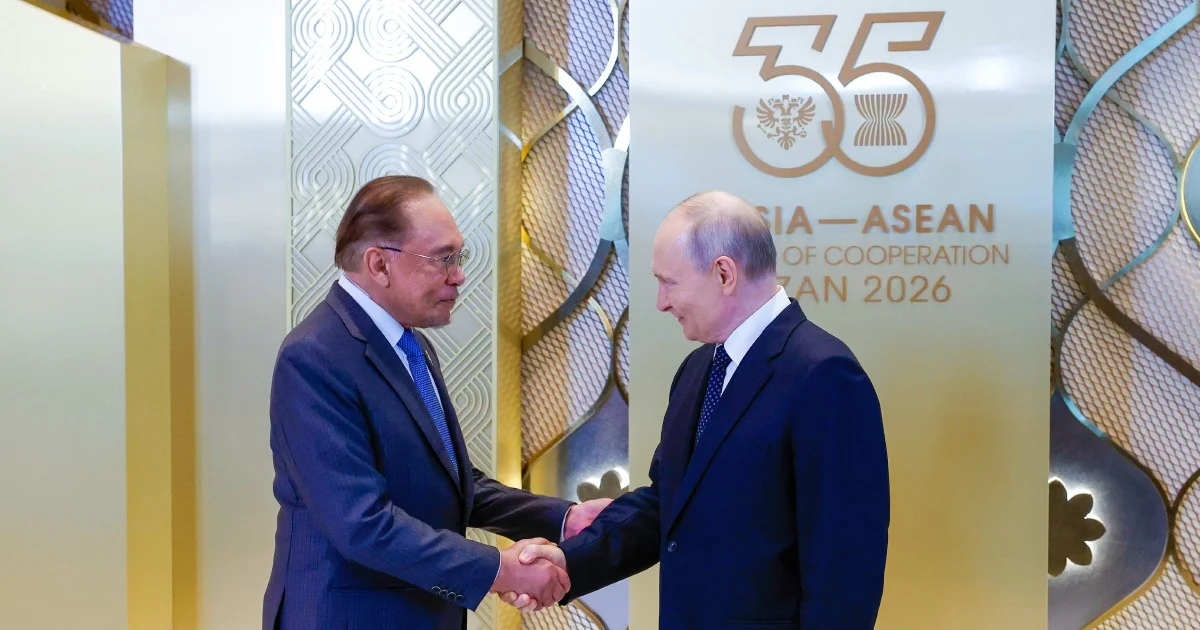
Prime Minister Datuk Seri Anwar Ibrahim and Russian President Vladimir Putin have committed to deepening the strategic partnership between Malaysia and Russia, with particular emphasis on securing energy supplies and broadening commercial engagement during their recent meeting in Kazan. The dialogue signals Malaysia's continued effort to maintain balanced international relations while diversifying its energy sources and trading partners beyond traditional Western-aligned markets.
Energy security has emerged as a critical focal point for both nations, reflecting broader regional concerns about supply chain resilience. For Malaysia, which relies significantly on energy imports to support its manufacturing sector and growing electricity demands, establishing stronger connections with Russia offers an alternative to traditional suppliers and provides negotiating leverage in global energy markets. Russia, conversely, continues to seek new markets for its energy exports as Western sanctions following its invasion of Ukraine have disrupted its European customer base. This convergence of interests creates a natural partnership opportunity that extends beyond mere commercial transaction into the realm of strategic stability.
The emphasis on trade conducted in local currencies represents a pragmatic response to the constraints imposed by international financial sanctions on Russian banking and dollar-dominated systems. By settling transactions directly in Malaysian ringgit and Russian roubles, both nations can circumvent the complications of using the US dollar, which has become a chokepoint for sanctioned economies. This approach also aligns with broader trends across Asia and the Global South toward reducing dependence on dollar-mediated trade and building parallel financial mechanisms that could insulate regional commerce from geopolitical pressures originating beyond the region.
Malaysia's position as a developing Southeast Asian nation with growing energy requirements places it in a unique position to benefit from Russian expertise and resources. The country's transition towards more diversified energy sources while maintaining its petrochemical and manufacturing advantages requires strategic partnerships that can provide both technological knowledge and commodity security. Russia's experience in energy infrastructure, despite its international isolation, remains technologically sophisticated in areas ranging from nuclear technology to offshore drilling, domains where Malaysian companies and authorities could potentially gain valuable insights.
The meeting also carries implications for Malaysia's foreign policy stance in a multipolar world increasingly characterised by competing great-power interests. Unlike some ASEAN neighbours that have taken more explicitly pro-Western or Chinese orientations, Malaysia has traditionally pursued a more independent course, seeking to maintain relationships across different power blocs. This approach allows Kuala Lumpur to extract maximum diplomatic and economic concessions while avoiding the perception of alignment that could alienate other regional partners or major powers including the United States, China, and India.
Bilateral trade between Malaysia and Russia, while modest compared to the volumes exchanged with China or Singapore, carries strategic significance beyond mere monetary value. Malaysian investment in Russian sectors and technology transfer arrangements could provide Malaysian companies with access to niche markets and expertise. Conversely, Russian firms engaged in energy and industrial sectors represent potential customers for Malaysian intermediate goods, petrochemical products, and services, creating employment and economic activity across multiple industries in Malaysia.
The energy dimension of their discussion reflects Malaysia's medium-term vulnerability to supply disruptions and price volatility in global oil and natural gas markets. While Malaysia itself is a hydrocarbon producer with substantial offshore reserves, its domestic production faces geological constraints and rising extraction costs. Establishing reliable supply arrangements with Russia, whether through direct purchases or joint investment in energy infrastructure, provides insurance against future market shocks and positions Malaysia advantageously in regional energy trading arrangements.
Regional implications of the Malaysian-Russian engagement should not be overlooked. ASEAN members collectively face challenges in meeting rising energy demands while managing environmental commitments and geopolitical pressures. Malaysia's exploration of diverse energy partnerships establishes a precedent that could encourage other Southeast Asian nations to pursue similar arrangements, potentially shifting the region's energy trading landscape. Such diversification benefits ASEAN countries by reducing their collective vulnerability to disruptions in any single supply chain while creating competitive pressure that may improve terms available to other buyers.
The discussion between Anwar and Putin occurs against a backdrop of broader Malaysian efforts to strengthen international partnerships across multiple domains. Malaysia seeks to position itself as a key player in regional affairs while maintaining sufficient flexibility to respond to changing global circumstances. The emphasis on practical cooperation in energy and commerce, rather than on geopolitical alignment or ideological commitment, reflects Malaysian pragmatism and its recognition that security and prosperity depend primarily on sustainable economic relationships and stable energy supplies.