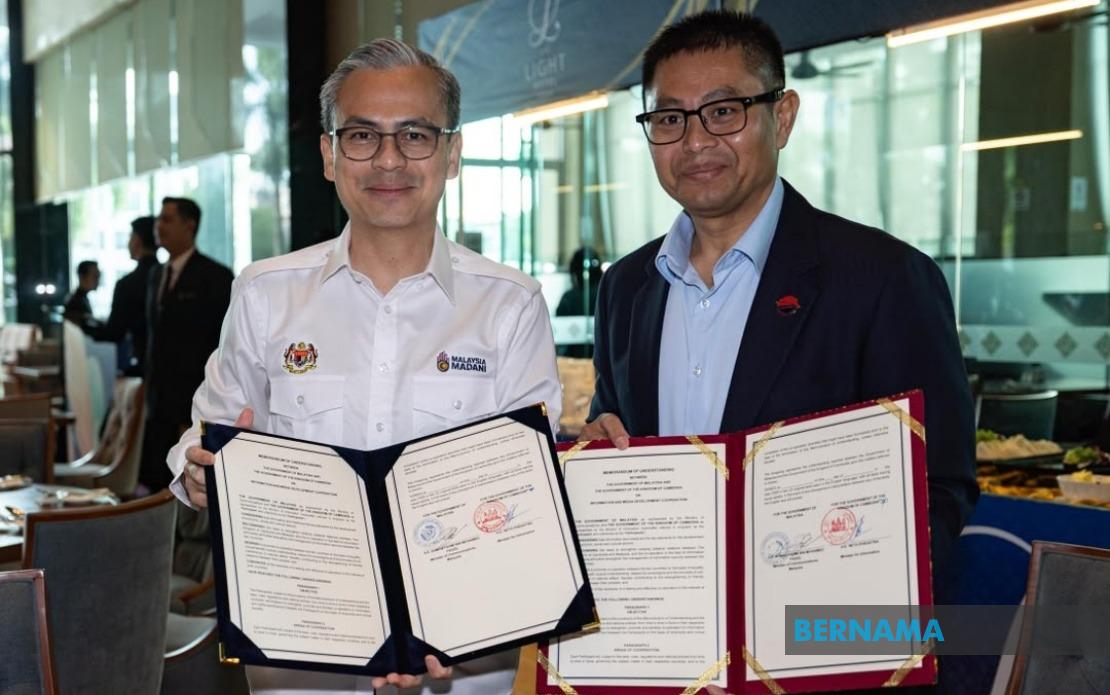
Malaysia and Cambodia have taken a significant step to expand their bilateral relationship by formalising cooperation in the media and communications sector. At a ceremony in Butterworth on June 20, Communications Minister Datuk Fahmi Fadzil signed a memorandum of understanding with Cambodian officials, representing a comprehensive commitment to collaborative development across multiple dimensions of information and media activity. The agreement, presented on behalf of Cambodian Information Minister Neth Pheaktra by Under Secretary of State Prak Thaveak Amida, signals the two nations' intent to leverage shared expertise and resources in an increasingly integrated regional media landscape.
The framework established through this MoU encompasses a wide range of practical cooperation mechanisms. Both countries have committed to facilitate the exchange of news and information, collaborate on radio and television broadcasting initiatives, and coordinate activities in printing and publishing sectors. Beyond traditional media functions, the agreement explicitly addresses emerging areas including film and documentary production, media cybersecurity protocols, information policy development, and regulatory harmonisation. This broad scope reflects recognition that modern media systems operate across multiple platforms and face diverse challenges ranging from technical infrastructure to content standards and security threats.
Human capital development represents a particularly significant component of the bilateral arrangement. By committing to knowledge and expertise exchange, Malaysia and Cambodia acknowledge that sustainable media sector growth depends upon building institutional capacity and professional competency. This dimension of the MoU likely envisions training programmes, professional exchanges, and collaborative research initiatives that would benefit journalists, broadcasters, and media managers across both nations. For Malaysia specifically, such arrangements strengthen the country's position as a regional hub for media excellence and professional standards within Southeast Asia.
The timing of this agreement demonstrates the priority both governments place on media cooperation within their broader diplomatic agenda. Prak Thaveak Amida was in Malaysia specifically to represent the Cambodian Information Ministry at the National Journalists' Day grand finale, a major professional gathering that underscores the institutional importance media development holds for both nations. This convergence of bilateral diplomacy with major professional events indicates how governmental support for media cooperation integrates with the region's broader communications infrastructure and civil society engagement.
The agreement also reflects evolving recognition among Southeast Asian governments regarding information security and regulatory alignment. By explicitly including media cybersecurity and information policy coordination, the MoU acknowledges that digital transformation brings both opportunities and vulnerabilities. As misinformation, cyberattacks, and cross-border information flows become increasingly complex challenges, bilateral frameworks allowing governments to share best practices in cybersecurity protocols and regulatory approaches become increasingly valuable. For Malaysia, such cooperation helps establish consistent security standards across the region and reduces vulnerabilities to coordinated disinformation campaigns or cyber threats targeting media infrastructure.
Innovation in media and broadcasting rounds out the substantive areas of cooperation. This forward-looking element suggests both countries recognise that media sectors must continuously adapt to technological change and evolving audience expectations. Whether through digital platform development, emerging broadcast technologies, or new content distribution models, maintaining cooperative frameworks allows both nations to benefit from innovations developed in each country and avoid duplicative research and development efforts. This innovation-focused approach positions Malaysia-Cambodia media cooperation as dynamic rather than static, enabling regular evolution as technologies and industry practices advance.
The MoU positions both nations to capitalise on opportunities presented by increasingly interconnected communications environments. Regional media consumption has become transnational; audiences across Malaysia and Cambodia consume content originating in both countries through digital platforms. By formalising cooperation frameworks, both governments acknowledge this reality and seek to harness it productively rather than allowing fragmented, uncoordinated approaches to dominate. Such coordination benefits content creators, broadcasters, and audiences alike by facilitating cross-border collaboration while maintaining regulatory clarity.
For Malaysia's media sector, this agreement carries particular strategic weight. As a regional player with sophisticated media infrastructure and professional standards, Malaysia gains opportunities to export expertise to neighbouring Cambodia while simultaneously accessing Cambodia's market and cultural perspectives. The arrangement reinforces Malaysia's standing as a serious partner in regional media development, contributing to the country's soft power objectives and economic interests in the communications sector. Malaysians working in media, from journalists to producers to technology specialists, potentially gain new professional opportunities through expanded bilateral networks.
The broader context of Malaysia-Cambodia relations also deserves consideration. Media cooperation rarely exists in isolation from wider diplomatic relationships; this agreement reflects and reinforces deeper bilateral goodwill and shared interests. By investing in media sector cooperation, both governments signal commitment to sustained engagement and mutual benefit. Such cooperation agreements often catalyse additional collaborative initiatives in adjacent policy areas, creating positive momentum in overall bilateral relations. For Malaysia, maintaining and strengthening relationships with neighbouring ASEAN members remains a cornerstone of regional strategy and diplomatic influence.
The involvement of high-level officials including Prime Minister Datuk Seri Anwar Ibrahim in the associated National Journalists' Day event underscores how seriously Malaysian leadership regards media sector development and international cooperation in this domain. When prime ministers and cabinet ministers personally participate in media-related events, they signal to international audiences and domestic stakeholders alike that these matters command top-tier political attention. This governmental emphasis provides institutional support for implementation of the MoU and demonstrates commitment beyond the ceremonial signing.
Looking forward, practical implementation of the MoU will determine its actual impact on both nations' media sectors. Success depends upon both governments establishing dedicated resources, appointing responsible officials, and creating concrete mechanisms through which the broad commitments translate into specific projects and regular exchanges. Monitoring and evaluation mechanisms ensuring the agreement delivers tangible benefits to media professionals and institutions will prove crucial to sustaining momentum beyond the initial enthusiasm of the signing ceremony.
The Malaysia-Cambodia media cooperation framework arrives at a moment when Southeast Asian media sectors face particular challenges and opportunities. Digital transformation, changing audience behaviours, economic pressures on traditional media business models, and increasing information security threats all demand sophisticated, coordinated responses. By establishing this bilateral framework, Malaysia and Cambodia position themselves to address these challenges collaboratively, sharing solutions and best practices while respecting each nation's particular circumstances and regulatory sovereignty. The agreement ultimately represents an investment in both countries' future media health and the regional communications environment upon which increasingly interconnected Southeast Asian societies depend.

